A made-to-measure approach to berth protection
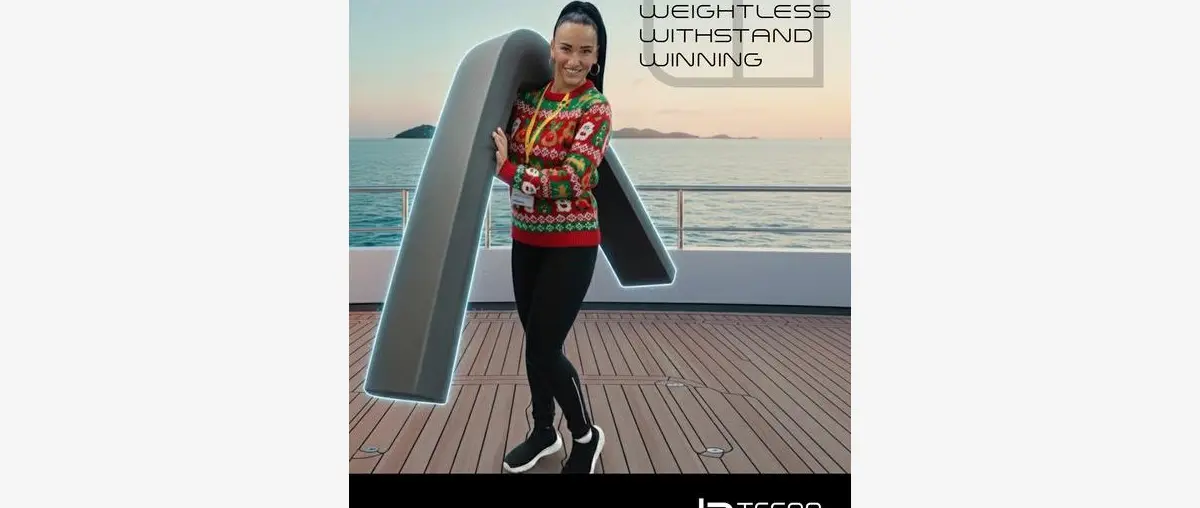
Spanish marine equipment supplier TECNOFENDER SL is showing its tailored fender offering in the 2026 METSTRADE catalogue, describing protective equipment designed around the requirements of individual boats. The manufacturer's product entry, dated 22 September 2026, states that its fenders are made to measure and emphasises a combination of low weight and resistance. Although the listing appears within the exhibition's specialist marine zones, it explicitly describes equipment for all kinds of boats, making the subject relevant to recreational motor and sailing craft under twelve metres. Fender selection is often treated as an afterthought, yet a small boat alongside a hard quay can suffer substantial cosmetic or structural damage if its protection is badly positioned. The official listing establishes a customisation service, but it does not publish universal impact ratings, exact materials or a performance comparison with standard inflatable fenders. Owners should evaluate a proposal for their actual hull and mooring conditions, not assume that custom equipment automatically performs better.
What the original product announcement says
TECNOFENDER's Spanish-language catalogue description identifies the product category as fenders or guardabarros, with an emphasis on tailoring the dimensions and arrangement to each client's needs. It says the company aims to balance lightness and strength and offers advice to help identify the correct solution. These are plausible reasons to investigate the service, but they remain supplier claims. The short description does not specify exactly how every fender is constructed, which colours or shapes are available, or the amount of energy a particular design is intended to absorb. It would be misleading to invent those details from a photograph or infer that every product in the company's range is identical. The first step for a buyer should be to request a current data sheet and clear quotation identifying the proposed material, dimensions, suspension method and intended use.
Why small hulls need carefully positioned protection
A motorboat of eight or ten metres may have a relatively high freeboard, a curved topside and vulnerable areas around a swim platform or cockpit. A small sailing boat can have a different shape and may sit much lower at the waterline. A standard cylindrical fender works well in many situations, but it is not always the best fit at every point of contact. The position of the dock, neighbouring boat or pile influences where protection is needed. A custom design could account for unusual hull geometry or a permanent home berth. However, no fender compensates for entering a berth at excessive speed or allowing a boat to bear against a hard structure under uncontrolled loads. Owners should examine the whole mooring arrangement, including lines, cleats and local wave action, before selecting accessories.
What it means for a fender to absorb energy
When a boat contacts a dock, the fender must deform or otherwise manage forces so that the hull is not directly struck. Its effectiveness depends on its material, size, construction and the way it is loaded. A product that feels soft when squeezed by hand may behave differently under the forces of a moving boat. Conversely, a very stiff fender may transfer an undesirable shock even if it resists puncture. The TECNOFENDER summary does not include test curves or energy-absorption data, so owners should request engineering evidence where the application is demanding. Fenders should be selected for the vessel's size and the expected mooring forces rather than cosmetic preference alone. The correct arrangement may require several units positioned at suitable heights and spacings, especially where the dock structure is irregular.
The balance between light weight and strength
The company presents lightness and resistance as key objectives. For a small recreational boat, weight can affect how easily a fender is moved, especially if it must be lifted from a locker and positioned while the boat approaches a berth. Heavy protective equipment can be awkward for children or older crew members to handle. Yet low weight should not be confused with adequate capacity. A fender made from a lighter material may be convenient but still needs to withstand the conditions in which it is used. The owner should ask about durability, abrasion resistance and service limits for the actual product. A well-designed solution balances handling convenience with protection appropriate to the hull. The best equipment is not always the lightest item in a catalogue or the one with the largest dimensions.
Custom dimensions are only useful with proper measurements
A made-to-measure fender requires accurate information about the boat and berth. The owner may need to provide hull drawings, photographs, freeboard measurements and the distance between attachment points. A home marina with a particular quay profile can also influence the design. If the boat is regularly used at different marinas, a highly specialised arrangement for one berth may have limitations elsewhere. Owners should consider whether the fender will be stored aboard, left permanently on a dock or used only during a particular manoeuvre. The manufacturer should specify any assumptions underlying the proposal so the customer can judge whether they apply to normal use. A tailored product is valuable when the measurements and intended duty are realistic, not simply when it carries the name of the boat.
The effects of tidal change and passing wakes
A boat secured alongside may move vertically with tide or water-level change and horizontally in response to wind or passing traffic. Fenders must remain between the hull and the structure as these movements occur. A unit tied at one fixed height may ride above the contact point in some circumstances or become trapped below a dock edge in others. The design should consider the maximum expected movement and the geometry of the quay. A custom fender may offer an opportunity to address a recurring problem, but its position and suspension still need attention from the crew. Owners should inspect the arrangement after arriving at an unfamiliar berth rather than relying on the way it was set up elsewhere. A fender is part of a changing system, not a permanent guarantee that the hull will remain clear of every obstacle.
Protecting gelcoat, paint and rubbing strakes
The area of contact can influence the type of damage a fender is intended to prevent. Abrasion may leave marks on gelcoat or paint, while a concentrated load could affect a fragile fitting or sharp hull feature. Some small boats have substantial rubbing strakes designed for contact, while others use smooth finishes with little additional protection. Fender selection should complement the boat's original design. An owner should also consider whether a cover is needed to reduce marks and whether that cover can trap grit. The supplier should provide guidance on cleaning and use near painted surfaces. A high-quality fender can still scratch a hull if its surface contains sand or salt crystals. Regular washing and inspection are as important as the initial specification.
The difference between dock and boat-mounted solutions
Some fender arrangements are hung from the boat, while others are fitted to a permanent pontoon or quay. A made-to-measure service could potentially address either application, but the actual products available from TECNOFENDER need to be confirmed rather than assumed. Boat-mounted units offer flexibility when travelling but require storage and deployment. Fixed dock protection can reduce the amount of equipment carried but is useful primarily at the home berth. Owners may need both. A fender installed permanently at a marina must be compatible with local rules and must not obstruct shared access. The skipper should also plan for occasional visits to hard commercial quays or rafting alongside another boat. A single tailored unit is rarely a substitute for every form of protection required during a season of varied cruising.
Storage on boats under twelve metres
Small boats can have limited locker volume, particularly when the same space stores lifejackets, ropes and swimming equipment. A bulky fender may be inconvenient to carry even if it provides excellent protection. A lighter customised design may make storage easier, but its folded or packed dimensions need to be known. An owner should inspect where the fenders will live while underway and whether they can be retrieved quickly without moving essential safety gear. Stowing them loose in the cockpit can create a trip hazard or block access to the engine compartment. A practical product should be easy to secure and should dry or drain appropriately after use. Space planning is often overlooked when buying equipment for a small boat, yet it determines whether the crew will actually use the fenders consistently.
Fender lines and attachment points
The lines used to hang a fender need to be suitable for its weight and expected movement. A weak attachment can allow the fender to slip or disappear when the hull begins to press against the quay. The boat's rails and cleats also need to be appropriate for the intended load. A fender should not be attached to a fragile fitting merely because it is conveniently positioned. A custom unit may require a particular suspension arrangement, and the supplier should provide instructions on knotting or fastening it safely. Owners should avoid positioning lines where they might foul a propeller or catch under the hull. The entire setup should be rehearsed in calm conditions so crew members know how to deploy protection quickly without putting hands between the boat and the dock.
Choosing equipment for narrow berths
A narrow marina berth can leave little space between the boat and its neighbours, making fender thickness and shape important. An oversized standard fender may project too far, while an undersized one may allow contact with the hull. A tailored option could help match the available gap and the expected forces. However, a design that protects one surface may place greater pressure on another part of the hull. The captain should examine the clearance at the bow, widest beam and stern, as well as the way the boat changes position when lines are tensioned. No fender should be used to force a boat into a berth that is too narrow or otherwise unsuitable. Custom protection supports a safe arrangement; it cannot make an inherently unsafe berth acceptable.
Cleaning and inspection over time
Fenders can become dirty from quay surfaces, exhaust deposits and marine growth. The owner should follow the material manufacturer's cleaning instructions and avoid harsh products that might weaken the surface. A fender should be inspected for cuts, deformation and damaged attachment points, particularly after a hard contact. Some materials may tolerate repeated compression differently from others. The TECNOFENDER public summary does not provide a service-life figure, so one should not be invented. Owners should instead look for visible deterioration and refer to the supplier's replacement guidance. Keeping the surface free of grit may also reduce cosmetic damage to the hull. A well-maintained fender can remain a useful protective tool, whereas a neglected one may mark the boat or fail at the moment it is needed.
Evaluating the value of a custom solution
A made-to-measure fender may cost more than a widely available standard unit, though pricing depends on its specifications and the supplier's proposal. The best comparison considers the problem being solved. A boat that repeatedly rubs against an unusual pile or has an awkward home berth may justify a specialised arrangement. For ordinary visits to sheltered pontoons, a suitable set of standard fenders may already meet the owner's needs. The buyer should ask how the product was dimensioned, what loads it is intended to address and how it can be repaired or replaced. A transparent quotation and documented assumptions are more useful than general promises of superior performance. Owners should also consider the cost of hull repairs that might be avoided through better mooring practice and appropriate protection.
September 2026 catalogue context
TECNOFENDER's official exhibition entry was released in September 2026 and remains relevant to the marine equipment market in November. It establishes the company's made-to-measure approach and its stated goals of combining low weight with resistance, but it does not provide independent proof of universal superiority. For Leisure Boat Guide readers, the product's interest lies in the possibility of solving specific small-boat berthing problems through careful fitting. A manufacturer or dealer should be able to explain how its design differs from an ordinary inflatable fender and what limitations apply to the exact model proposed. A buyer should remain alert to the distinction between technical evidence and attractive product language. The right solution depends on the boat, the berth and the crew's operating practices.
A better fit is only one part of safe mooring
Made-to-measure protection can help an owner address awkward contact points, improve handling convenience and keep the deck less cluttered when it is carefully selected. It cannot replace competent seamanship, adequate mooring lines or checking the weather and berth conditions. TECNOFENDER's 2026 product listing provides a useful starting point for discussing materials, dimensions and practical installation. The next step is to obtain specifications appropriate to the actual boat and confirm that the fenders will remain in the right position as the vessel moves. For boats below twelve metres, the strongest reason to consider a custom product is a clearly identified problem that ordinary equipment does not solve well. Good protection should be simple to deploy, easy to maintain and dependable when the boat is exposed to the everyday knocks and movements of marina life.
Original industry sources and image credits
Reporting based on TECNOFENDER SL original Spanish-language first-party made-to-measure fender product entry in METSTRADE directory, released 22 September 2026.
Lead image: TECNOFENDER Custom Boat Fenders Highlight Fit and Weight in Small-Craft Mooring — original manufacturer product photograph. © TECNOFENDER SL. Original supplier image.