
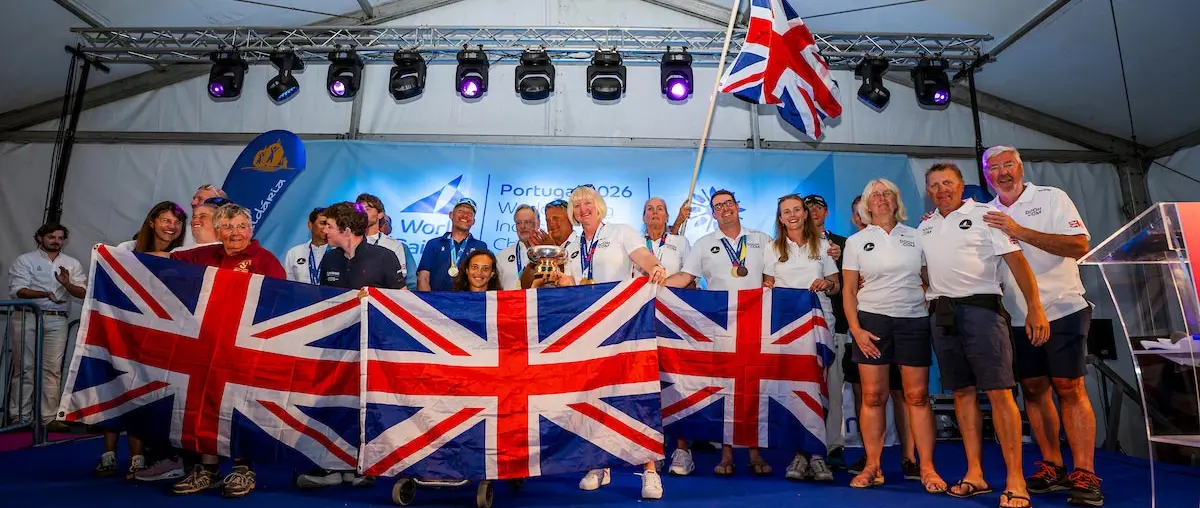
British sailors make their mark across inclusive disciplines
Great Britain has finished the second World Sailing Inclusion Championships in Portimão, Portugal, with the Nations Trophy, reflecting performances across several inclusive racing fleets. The Royal Yachting Association says 222 athletes representing 40 nations competed, a measure of the event's increasing reach rather than simply its strength at the top of the results sheet.
An important part of Britain's campaign came from James Coxon, who won the Para Inclusive One-Person Multihull title in the Challenger class. The result was especially notable because Coxon had made only a limited return to racing. The championship demanded consistent handling and tactical decisions in conditions that changed during the programme, rather than a single spectacular race.
Defending champions and a developing fleet
In the Vision Impairment competition sailed in RS21 keelboats, Lucy Hodges, Jamie Tylecote, Liam Cattermole and Steve Tylecote defended Britain's title. Their campaign was built on a strong position throughout the regatta, although competition from Spain and other emerging teams showed that this discipline is becoming more closely contested.
Those results followed different models of teamwork: a one-person multihull puts the emphasis on the individual sailor's command of boat balance and sail trim, while the RS21 format demands close communication and well-practised role allocation. Both are valuable demonstrations of how inclusive sailing can incorporate different boats and different types of physical challenge without reducing the sporting ambition.
The event also included seated wingfoiling as a demonstration discipline. Britain's Charlie Wolf was first, Jazz Turner second and Vietnam's Truc Diep third. Demonstration status is important: the discipline is still establishing its place in the wider event programme, and the result should not be confused with the established fleet titles.
Why participation matters beyond the podium
For clubs considering inclusive activities, the championship provides practical examples of the range of boats and instruction that may be required. Suitable equipment, trained coaches, access arrangements and regular opportunities to sail all affect whether interested participants can progress from a first session to meaningful competition.
The RYA highlights its Sailability network and coaching support as part of this pathway. The presence of 40 national teams also illustrates an objective shared by many inclusive-sport organisations: broad participation is as important to a sustainable championship as a small number of elite results. The British team's trophy is a significant sporting outcome, but the expanding field and debut of seated wingfoiling may have a lasting influence on what future editions look like.
Official source: Royal Yachting Association, 12 October 2026. Hero photograph: Gonçalo Melo / World Sailing, published by the RYA.