
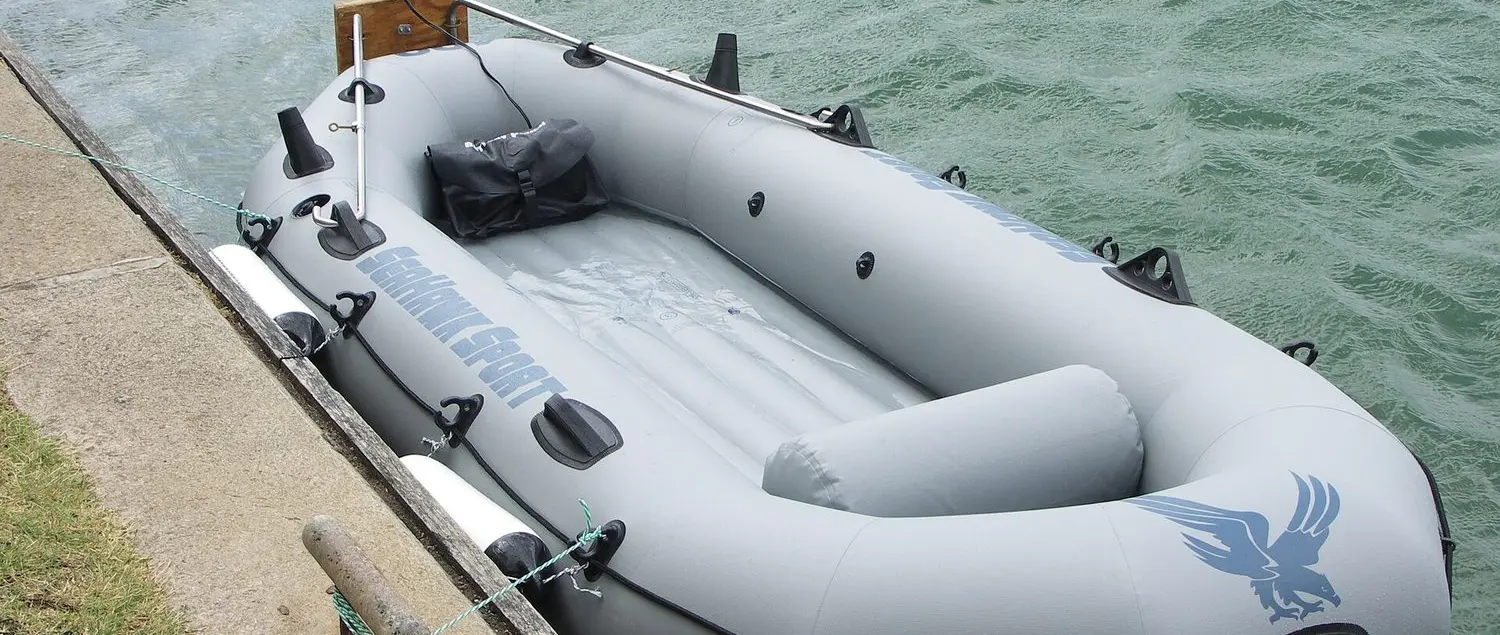
A tender designed to fit a backpack
The Takacat T220UL ultra-lightweight inflatable dinghy is drawing renewed attention after a New Zealand boating publication examined its practical use as a boat tender in November 2026. At 2.2 metres long and a quoted weight of 14 kilograms, it aims to address a common problem for owners of small cruisers and trailer boats: how to carry a useful tender without dedicating most of the deck or car boot to it. The manufacturer says it can be packed into a backpack-style bag.
This is not a newly invented form of inflatable boat, but the particular model and its packaging represent a deliberately compact design choice. A conventional rigid tender may be easier to leave ready for immediate use yet awkward to lift over a rail. The T220UL is meant to reduce that burden by allowing an owner to deflate, fold and stow the boat between uses. Its lightweight construction brings both useful advantages and limits that deserve examination.
The main dimensions tell the story
Takacat's New Zealand specifications list a length overall of 2.20 metres, a beam of 1.40 metres and an overall height of 0.42 metre. The usable internal length is 1.48 metres and the internal beam is 0.56 metre. Those numbers help explain the trade-off: a small external footprint allows easier storage, but the space between the tubes is narrower than the overall beam might suggest.
The manufacturer rates the boat for two passengers, a useful capacity for a short transfer from a moored cruiser to shore. That figure does not tell owners how much additional baggage can safely be carried alongside two people, nor does it mean every pair of adults plus equipment will be suitable in all conditions. Passengers should check the applicable payload label, their total weight and the state of the water before planning a trip.
Fourteen kilograms before the accessories
The advertised boat weight is 14 kilograms. That is an important number for a person lifting a tender alone, but it should not be mistaken for the fully loaded weight of a complete transfer package. An outboard, battery, oars, pump, inflation equipment, safety gear, lines and any bag are additional items unless a specific dealer package says otherwise. A tender that is comfortable to lift when empty may become inconvenient when assembled with its operating equipment.
Owners who transport a boat by car also need to measure the packed unit rather than assume it will fit beneath a seat. Takacat's published bag dimensions are about 0.86 metre high, 0.50 metre wide and 0.30 metre deep. That volume is small compared with a rigid dinghy, but a boot or locker with a narrow opening may still be unsuitable. A trial packing and unpacking exercise is therefore more informative than a photograph of the bag.
An inflatable catamaran-shaped platform
The T220UL uses the builder's inflatable catamaran approach, with two main hull tubes intended to provide stability and reduce the weight of rigid structures. A broad stance can be helpful when boarding, but the actual behaviour of a small inflatable changes as passengers move and as wind or waves affect the boat. Its compact dimensions make it suitable for sheltered transfers when conditions and the manufacturer's instructions allow, not an offshore substitute for a larger tender.
The model includes a removable motor-mount arrangement and thermally welded construction. The New Zealand product listing refers to SIJIATEX 0.7-millimetre PVC and pressure-relief valves. Material choice matters because inflatable tenders spend time exposed to sun, salt, abrasion and repeated folding. Cleaning and correct storage are still necessary, even when the fabric and seams are designed for marine use.
Motor power is deliberately limited
The Takacat New Zealand product page specifies support for electric outboards up to two horsepower and ten kilograms. Regional information from the company's European distributor describes some different optional motor limits and versions, so purchasers should not mix specifications from different markets or assume that every brochure refers to the identical configuration. The applicable model label and local supplier's written instructions should settle the allowed engine size and mass.
A very small electric outboard can be convenient for a short, quiet shore transfer, yet its endurance depends on the battery and conditions. Strong wind, a current running against the boat or two heavy passengers can significantly change performance. Owners should avoid planning a tender crossing at the limit of a battery's advertised range. Oars and a practical contingency plan are important, particularly if the motor or electrical system fails.
The open transom needs careful use
The T220UL's concept includes an inflatable transom and a clip-in outboard bracket. Such a solution can reduce the bulk and weight of a rigid stern structure, but it introduces components that must be correctly assembled and secured before launch. A user should confirm that the mounting system is complete, fitted as instructed and appropriate for the chosen engine. Loose accessories or a poorly attached bracket are particularly undesirable on a boat carrying passengers.
Inflation pressure is another practical concern. Tubes can change pressure as they heat in sunlight or cool in water, while leaks and accidental damage may reduce support. The equipment should be inflated and inspected according to the builder's instructions before leaving shore. The presence of several air chambers can be a useful design feature, yet it does not remove the need for lifejackets and a conservative assessment of the intended trip.
The tender may make sense for 7–9m cruisers
Takacat's European materials specifically identify small motorboats in the seven-to-nine-metre class as potential users. That is a realistic segment: many such boats do not have a dedicated tender garage, and a rigid dinghy could obstruct the cockpit or foredeck. A packable tender offers another option, especially for owners who occasionally anchor away from a public landing rather than carry a dinghy permanently.
Storage on a working deck must nevertheless be planned. A bag can become a trip hazard if placed where people need to reach cleats or emergency equipment. When stored in a locker, it should be dry enough to avoid unpleasant odours and fabric problems. A good tender system includes a safe place for the boat, engine, battery and pump, not just the inflatable hull. The small size is a benefit only if the full equipment package fits aboard.
Boarding and shore access have practical limits
A light inflatable can be appealing for beach visits, but transferring between a higher cruiser deck and a low dinghy still requires care. Passengers should board one at a time in a stable position, keeping weight as low and central as practical. At an exposed landing, a small boat can move quickly in waves or be pushed against rocks. Owners must match the planned journey to weather, shore access and the experience of those aboard.
The 2026 New Zealand review describes an opportunity to try the model around an annual maintenance haul-out. Such real-world use can reveal handling considerations that promotional specifications alone cannot. Still, one review in particular conditions is not evidence that every owner will find the boat suitable. A family transferring young children, elderly passengers or bulky gear may have different requirements from two experienced adults making a brief trip.
Comparisons should use like-for-like equipment
At 14 kilograms, the T220UL can appear considerably lighter than many small conventional tenders. But buyers comparing weight should confirm whether figures include a rigid floor, seats, mounting hardware and bags. An air-floor inflatable, a rigid-inflatable boat and a fully rigid dinghy have different storage and handling requirements. It is also necessary to compare usable cockpit space and operating limits, not just length or catalogue weight.
Durability and repairability influence ownership costs. A fabric dinghy may be easier to stow but more vulnerable to sharp edges or abrasive surfaces if used carelessly. Before buying, owners can ask about patch kits, replacement fittings, valve service and warranty support. The most suitable choice depends on how often the boat will be launched, whether it remains exposed to sunlight, and how far the shore transfer normally is.
What the November interest establishes
The renewed attention to Takacat's T220UL centres on a clear technical proposition: a 2.2-metre inflatable, quoted at 14 kilograms, packed into a backpack-sized bag and designed for two people. The builder publishes the relevant dimensions and motor restrictions, while a New Zealand boating publication has described its use as a tender. Those facts support a practical small-boat equipment story without suggesting that the model is suitable for every anchorage.
For Leisure Boat Guide readers, the most useful question is whether a portable tender solves a genuine storage problem without creating new safety or handling difficulties. Confirm the exact regional specification, the weight of the full kit, boarding arrangements and the conditions of the intended trips. A packable tender can be an elegant answer to limited deck space, provided its operating limits are treated with the same respect as those of a much larger boat.
Sources: Takacat New Zealand, T220UL product specifications and Boating New Zealand, 3 November 2026. Photograph: a separate inflatable boat photographed by NJR ZA, Wikimedia Commons, CC BY-SA 3.0. Illustrative inflatable-boat image, not the Takacat T220UL.
