
A digital logbook becomes part of the onboard network
Recording a sailing trip used to mean entering times, positions and observations in a notebook or reconstructing the passage later from memory. Amsterdam-based SWAY is offering a different approach, combining a hardware connection to a boat's navigation instruments with software intended to compile an automatic voyage record. METSTRADE's October 2026 start-up profile describes the company's plans to introduce a new version of its software to a wider marine retail audience, while SWAY's current product pages identify the Breeze device and its NMEA 2000 interface. The potential is particularly relevant on small cruisers, where an owner may have limited time to maintain records but still wants a useful history of trips, engine running and weather conditions. The value must be balanced against data quality, equipment compatibility and privacy. An automatically generated log is a convenient record, not a substitute for the skipper's legal responsibilities or continuous navigation awareness.
What Breeze connects to
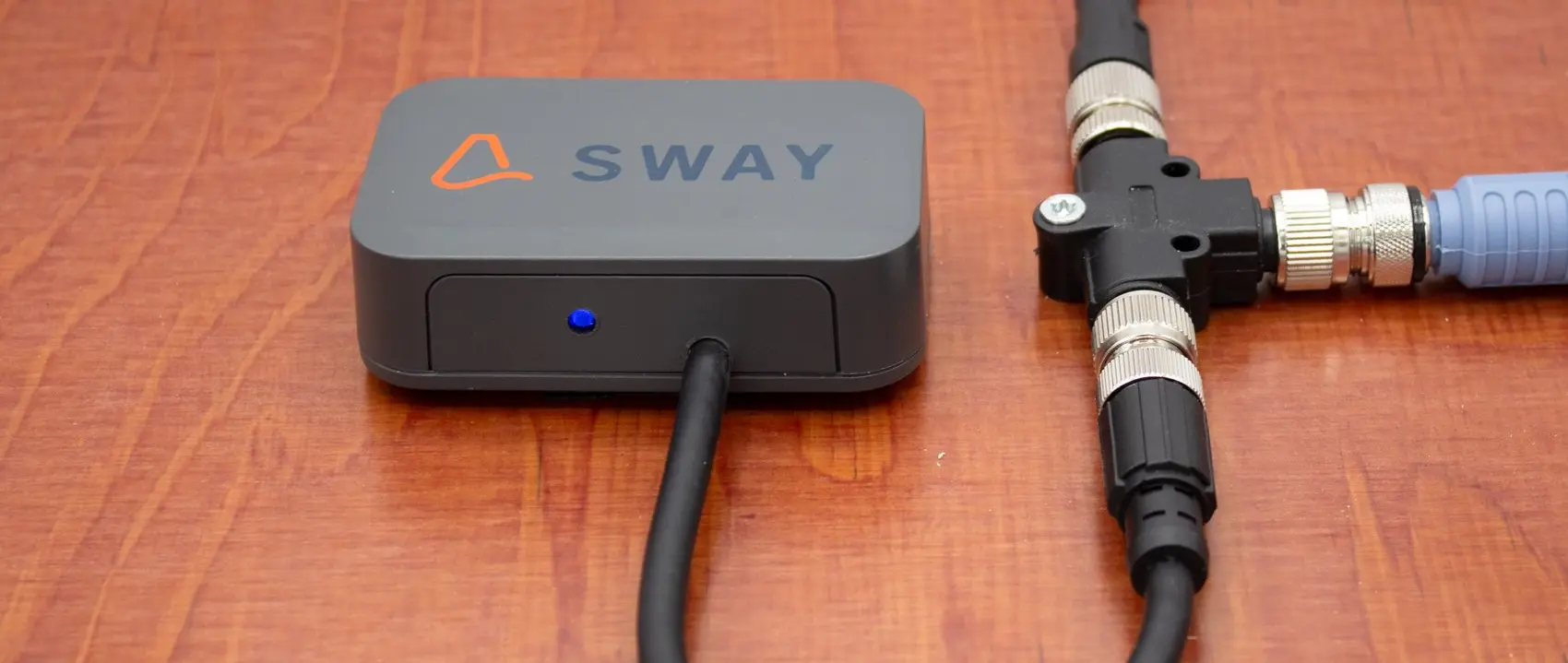
The manufacturer describes Breeze as a compact device that connects to an existing NMEA 2000 network. That is the common marine communications standard used by many instrument displays, GPS receivers, depth sensors and other electronics. A network connection allows a device to receive data already being transmitted by compatible equipment, avoiding the need to install a separate sensor for every function. SWAY's documentation also discusses converting selected data into standard NMEA 0183 messages for Wi-Fi applications. The details depend on the actual equipment installed and the messages made available by each manufacturer. A boat without a working NMEA network cannot be expected to produce a full automatically generated passage record simply because the owner has purchased the Breeze unit. The first practical step is to document which instruments the boat has, how they are interconnected and whether the data SWAY needs is actually present.
Why an existing small boat may be a good candidate
Many eight-to-twelve-metre sailing boats have gradually accumulated navigation electronics over successive refits. Their owners may already have a GPS, depth display and wind instruments working together, but no easy way to consolidate the resulting information into a trip history. A network-connected logbook could create value from equipment already fitted rather than requiring another expensive display at the helm. For a family cruiser, that might mean keeping track of favourite anchorages, the distance travelled and previous passages. For a sailing club, the same broad capability could help owners review a training cruise, although any formal performance analysis needs reliable and complete instrument data. Smaller boats also have limited electrical capacity and space, so a gateway that connects to existing infrastructure may be attractive. Compatibility and installation requirements should be confirmed before an owner assumes a simple plug-in experience.
Automatic does not mean complete
A boat's instruments can only record what they are actually measuring or receiving. A GPS can report position and movement, but it cannot on its own explain why the skipper diverted around a hazard or whether a crew member was unwell. A depth instrument may provide an instantaneous reading without documenting the chart datum or the exact position of the transducer. Fuel-consumption information may not exist on a small boat or may be available only through a separately configured engine interface. SWAY's organiser profile refers to voyage logging that can include course, speed, weather-related inputs, engine hours and other signals when connected. The phrase when connected matters. An owner should review a sample voyage produced by their actual instrument network and check which fields are populated. Missing or implausible readings should be corrected before anyone uses the record to support maintenance decisions or estimate fuel consumption.
What the 2026 software update represents
The METSTRADE profile quotes SWAY co-founder Erwin Marges as describing a version 3 software update during the company's push for wider distribution in Europe. This is a company announcement about software development and commercial plans, not evidence that every existing user has installed the new version or that all advertised functions work identically on every hull. Software revisions can bring improvements to the interface and data handling, but they also make clear update policies and compatibility essential. Buyers should determine which app platforms are currently supported, whether an account or subscription is required and what happens when a phone loses connectivity. They should ask how historical logs are preserved through software changes and whether exports are available in standard formats. A record of years of family sailing should not become inaccessible simply because a particular version of an application is retired.
Power and network integrity
NMEA 2000 devices are generally powered through a properly designed network, and adding a gateway increases the load on that network. A professional installer or knowledgeable owner should check the power budget, termination, cable lengths and connector condition rather than making improvised splices. Poor connections can create intermittent data errors that affect other important equipment. A device intended only to record data should not degrade the reliability of the navigation system on which the skipper depends. The exact current draw and installation requirements must be verified from SWAY's instructions, not guessed from the unit's small size. On a boat with restricted battery capacity, leaving a logger running all day may contribute to consumption that is easily overlooked. The sensible approach is to integrate it into a documented electrical plan and confirm that the system behaves predictably when the main navigation supply is switched off.
The useful difference between a voyage log and navigation
An automatic voyage log can help an owner remember where a trip went and compare previous routes. That is separate from using up-to-date charts, official warnings, tides and direct observation to navigate safely. Historical positions can be misleading if the boat's GPS configuration was incorrect or if a previous route passed safely through conditions that are now different. The existence of a recorded track should not tempt a skipper to follow it blindly around shallow water or traffic. A log is particularly valuable after a passage, when the crew can review distances, sailing time or equipment behaviour and add notes about decisions made. Such notes supply context that raw sensor data cannot capture. SWAY's presentation addresses the convenience of collecting information, while proper seamanship remains the responsibility of the operator and crew.
Records may help maintenance
Engine-hour data, when reliably available from compatible equipment, can inform service reminders and help an owner prepare a maintenance history. On a small motorboat, repeated short trips with substantial idling may place different demands on equipment from long passages at steady load. A cruising sailboat may use its engine intermittently, so the distance travelled is not a reliable substitute for engine-running hours. A digital log can make these patterns easier to observe, but the data should still be checked against manufacturer service intervals and actual engine information. Boats without an integrated engine interface may require manual entries. An owner should also be able to add inspections, parts changes and relevant receipts if the chosen software supports them. The broader objective is to create useful evidence for maintaining the vessel, not a large archive of numbers without meaning.
Sharing a passage raises privacy questions
A trip record may reveal a boat's usual berth, storage location, frequent anchorages and times when its owner is away from home. Publishing that information without thought can create avoidable security and privacy risks. Before using connected logbook sharing features, owners should examine the default visibility settings and determine who can view location history. Some routes can be shared with friends without exposing the exact home marina or every movement. They should also ask whether the service stores data in the cloud, how long records are retained and whether users can export or delete their own information. If a boat is shared by family members or a club, consent and access arrangements become more complicated. Convenience should not depend on turning a private travel record into a permanent public tracker. Good digital equipment makes privacy choices understandable and gives boat owners meaningful control.
The limits of weather records
When wind and other environmental readings are available through onboard instruments, a log can add useful context to a passage. But sensor placement, calibration and shielding affect what a device reports. Apparent wind data, for example, differs from true wind calculations and may be distorted by masthead movement or incorrect speed inputs. A track recorded during an unusually strong squall should not be interpreted as a scientific weather measurement without knowing how the system calculated the values. Owners can still gain practical value by reviewing a familiar boat's performance in varied conditions, provided they understand the limitations. Incomplete or incorrectly configured instruments may produce false certainty if displayed in polished graphs. The maker should identify which NMEA messages are supported and how missing values are represented. Clear data provenance is essential to prevent attractive visualisations from becoming misleading records.
Wi-Fi connections are useful but need boundaries
SWAY's product material describes passing selected NMEA data over Wi-Fi for compatible applications. This can help a tablet or phone display useful boat information without a separate physical connection. Yet an onboard wireless service should be configured with appropriate access controls and should not expose critical data interfaces unnecessarily. Users should know whether the device can be reached from a guest network, whether passwords are changeable and how firmware updates are authenticated. An owner who lends the boat to friends may need to restrict access to settings or historical records. Wi-Fi quality on a small boat can also be affected by equipment location and interference, so a wireless display should not be treated as the only available method of accessing essential navigation information. Simple, independent backups remain valuable when a phone battery runs down or a network connection fails.
The installation questions a buyer should ask
Before buying, owners should list every existing navigation device and identify whether the system uses NMEA 2000, older NMEA 0183 wiring or proprietary interfaces. SWAY's own support information makes clear that older protocols may require a converter; the physical connector alone is not a promise of data compatibility. The buyer should confirm power requirements, physical mounting, software platform support and any recurring service charges. A demonstration using the same instruments as those aboard the intended boat would be more convincing than a generic marketing video. After installation, test a short trip and compare the log's time, position and speed against the primary instruments. Any unexplained discrepancies should be investigated while the boat is still near home. Treating commissioning as a proper technical job reduces the risk of relying on inaccurate records later.
A simple example of practical use
Imagine the owner of a modest coastal cruiser who sails several weekends each month. The boat already has GPS, speed and depth data on a shared instrument network. A voyage logger could reduce the effort of recording departure and arrival times, distances and routes, letting the crew concentrate on the day afloat. After the trip, the owner might add notes about a weather change, an anchorage and a maintenance task that needs attention. Over a season, that information could support planning and make it easier to brief another family member about the boat's history. This example illustrates a possible use of the product, not a verified installation or trial aboard a named vessel. Its usefulness depends on real sensor data, stable software and the discipline to review the log rather than assuming that automatic capture guarantees accuracy.
What is independently established
The current SWAY website describes the Breeze hardware and its NMEA 2000 role. The company's support material explains the need for compatible equipment and discusses Wi-Fi data handling. METSTRADE's October 2026 start-up reporting records co-founder statements about development, the version 3 update and plans to reach more European retailers. These are appropriate primary sources for an article on the product direction, but they do not establish an independent endurance test, universal support for every engine or a guaranteed reduction in fuel use. The photograph accompanying this story is a genuine first-party image of the Breeze device and cables, not a software-generated mock-up of a boat's performance. The editorial emphasis is on separating what a connected logbook can record from what users must still check, interpret and protect themselves.
An incremental technology with a useful role
Small-boat owners rarely need another complicated screen, but they may appreciate better records from the equipment already aboard. SWAY illustrates how an unobtrusive connected device could turn fragmented navigation information into something easier to review after a trip. Its success will depend on reliable connections, comprehensible software, respectful handling of private information and a realistic total cost. An owner contemplating the product should begin with a small compatibility and privacy checklist, then test the actual outputs before treating them as maintenance or passage-planning evidence. The strongest use of automatic logging is to support good seamanship and a clearer ownership history, not to replace the skipper's judgement. If the company delivers those fundamentals consistently, its 2026 software and distribution push could find a practical audience among sailors who would rather spend their weekends enjoying the water than reconstructing the previous day's route from memory.
Primary reporting and image credit
Primary manufacturer and organiser source(s): https://sway-sailing.com/pages/sway-breeze-info. © SWAY sailing / original company photographer. First-party photograph of actual connected SWAY hardware, not proof that every boat instrument is supported. Image is used only for correctly attributed factual editorial coverage and never represented as open-licence stock photography.