
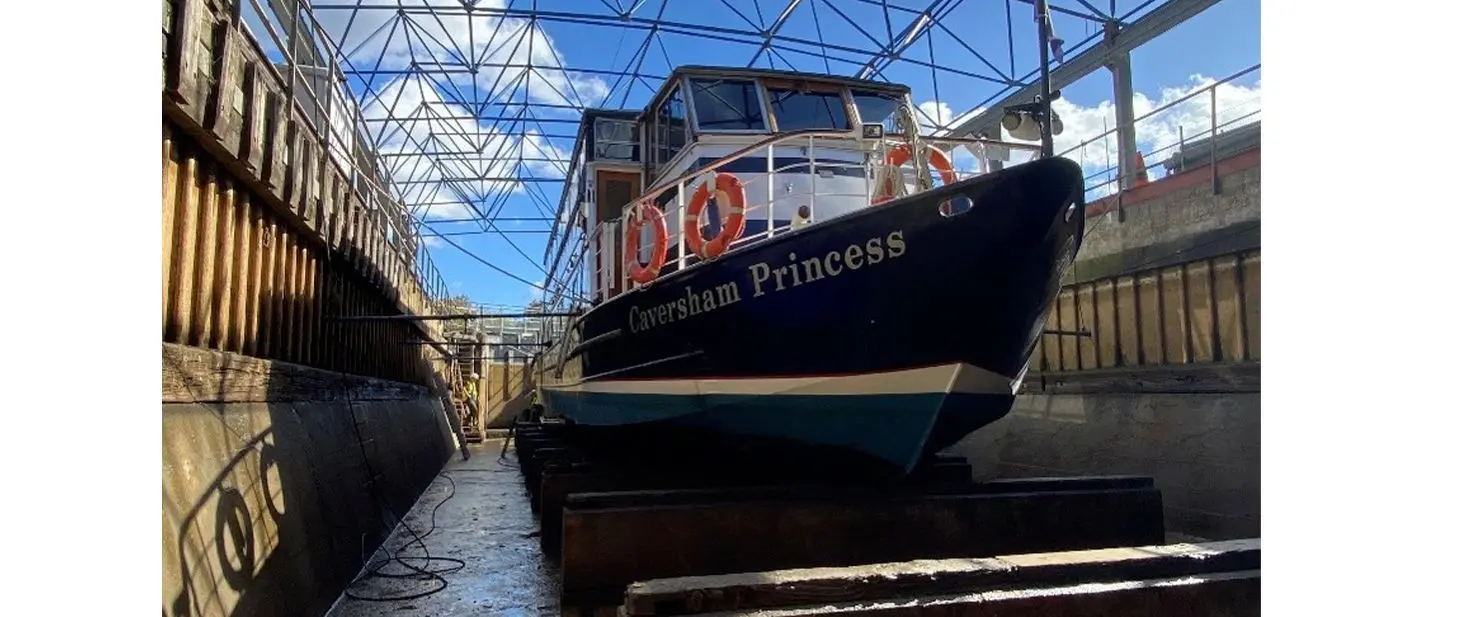
Thames dry dock returns after years of closure
Sunbury Dry Dock has reopened after being out of service since 2020, providing another location for essential vessel maintenance on the River Thames. British Marine announced the milestone on 14 October 2026, following a campaign by industry members and local representatives.
The Environment Agency agreed to a new lease arrangement with R8 Marine, which will operate the site. It is a practical development for boat owners whose maintenance requires lifting or docking rather than repairs that can be carried out afloat.
Caversham Princess becomes an early customer
Thames Rivercruise's passenger vessel Caversham Princess has already undergone an out-of-water survey at the reopened dock. The company welcomed the return of a local facility because some of its vessels are not easily removed from the water by crane.
The operator also has heritage craft such as Devon Belle, an older boat associated with the Dunkirk evacuation. For such vessels, the ability to enter a suitable dry dock can make required inspections less complicated.
Underwater inspections remain important
Out-of-water work allows technicians to inspect the hull, propellers, shafts, fittings and underwater coatings. Corrosion, damage and wear may be difficult to assess reliably without physically reaching these areas.
Owners of recreational motorboats should plan surveys and antifouling work before a busy cruising season where possible. Reopening an additional dock does not mean every size or type of boat can be accepted without technical checks.
What R8 Marine's operation could offer
The site's new lease arrangement provides a route for reinstating the services that were lost during the closure. British Marine says it supported the campaign because the facility was important to the wider Thames boating community.
Availability, permitted dimensions, booking terms and specific repair services must be checked with R8 Marine. The first successful docking establishes that the facility is functioning, but no comprehensive public schedule of future work was confirmed.
More reliable access for Thames cruising
Local maintenance options help reduce the need for time-consuming movements into tidal areas or distant boatyards. That can benefit private boat owners as well as passenger vessel operators who must manage regular statutory surveys.
The reopening is an example of how shoreside boating infrastructure influences ownership costs and convenience. Leisure Boat Guide will distinguish further confirmed developments from estimates of future capacity or economic impact.
What dry docking makes possible
A dry dock gives inspectors access to parts of a hull that remain difficult to examine while the vessel is afloat. Areas around propeller shafts, stern gear and hull fittings can be assessed for corrosion, impact damage or deterioration in protective coatings. For an inland passenger vessel, planned access may also be important in meeting the requirements of an operating certificate.
The process is more than lifting a boat out of the water. Docking arrangements must suit its shape, weight and structural loading, with supports positioned correctly. Owners should discuss the work scope with the yard before booking so that contractors, equipment and materials are available when the vessel arrives. Unplanned discoveries can otherwise extend the time out of service.
Why a local facility matters on the Thames
Moving a vessel to a distant boatyard has costs beyond fuel. Crew time, navigation constraints, temporary moorings and weather delays can complicate the journey, especially where a boat cannot safely be lifted by the available mobile cranes. A suitable dry dock nearer the operating area can reduce those logistical difficulties for operators carrying passengers or maintaining unusual historic craft.
The reopening does not guarantee unlimited capacity. The dock's dimensions, permissible weights and access arrangements will determine which boats it can receive. Commercial operators may need to arrange inspections around seasonal commitments and periods when the river is busy. Early discussions with the facility can help avoid booking assumptions that later prove impractical.
Planning a comprehensive inspection
Hull examination is most useful when the owner has previous survey records and maintenance history available. A surveyor can compare evidence of coating wear, corrosion or deformation with earlier findings, while the owner decides which recommendations require immediate attention. Photographs taken during the docking can help document areas that will again be concealed once the boat returns to the water.
If a problem is identified, the repair should be specified by an appropriately qualified person. Different materials, including steel, aluminium, wood and fiberglass, may need different techniques and environmental conditions. A hurried patch that looks tidy at launch is not necessarily a durable repair. Owners should request clear records of work and any limits on guarantees.
Environmental management at a repair site
Cleaning underwater surfaces can release paint particles, fouling and other material that should not enter the river unchecked. Responsible yards need suitable collection and disposal arrangements for residues from pressure washing, sanding and coating removal. The environmental obligations are particularly relevant to waterways where boatyards operate close to residential areas and sensitive habitats.
Owners can help by telling contractors what coatings or treatments may already be on the hull and by avoiding unsupported claims about product compatibility. Where possible, choose maintenance systems whose technical instructions are available. A smaller ecological footprint depends on correct handling of waste as well as the eventual paint applied.
After the boat leaves the dock
A successful docking concludes with checks that the vessel's underwater fittings and systems are functioning properly. Owners should verify that relevant openings are secure, propulsion operates as expected and any survey conditions have been recorded. A carefully planned relaunch can still be followed by minor defects that become apparent only when the boat is underway.
Scheduling the next inspection before the current work is forgotten makes long-term ownership easier. Sunbury's reopening gives Thames users another option, but the right decision will still depend on availability, specialist services and the individual craft. The benefit is greater choice for maintenance rather than freedom from maintenance obligations.
Booking a dock is also a useful opportunity to coordinate specialist inspections so the boat does not need to be moved out of the water repeatedly. Owners can ask the surveyor and yard to agree a clear sequence for pressure washing, inspection, testing and any required coating work. This reduces confusion over which contractor is responsible for a particular item and can make invoices easier to understand.
Owners should retain photographs and written evidence of significant repairs for future surveys or a possible sale. Records can help distinguish a recurring weakness from an isolated defect and demonstrate when parts were renewed. They also provide a reference for the next yard if the vessel eventually moves elsewhere. Keeping information organised is a practical part of managing the long life of a boat.