
Miami is ready for the 2026 Star Worlds
The 2026 Star World Championship is scheduled to begin its championship racing on Biscayne Bay, Miami, on Monday 9 November, bringing a fleet of 97 two-person keelboats representing 17 nations. Coral Reef Yacht Club is hosting the event, with six scheduled days of world championship racing through Saturday 14 November. The International Star Class published its latest event briefing in early November, identifying a field that includes former world champions, Olympic medallists and emerging sailors. As of the morning of the opening day, those scheduled races have not been completed, so no race winner can yet be reported.
The Star is a particularly appropriate subject for Leisure Boat Guide. At around 6.9 metres long, it is a small racing keelboat demanding precise teamwork rather than a large offshore yacht. The class has a long history, having been part of Olympic sailing from 1932 to 2012. Its continuing international following shows that traditional one-design boats remain relevant alongside newer foiling craft and high-technology racing fleets.
Ninety-seven crews from seventeen nations
The organisers' entry briefing lists 97 teams representing 17 countries. The United States supplies the largest contingent, with competitors also entering from Germany, Argentina, Canada, Brazil, Italy, Switzerland, Sweden, Croatia, Ireland and several other countries. These are registered entries rather than a confirmed count of boats that will start each individual race; damage, weather or other circumstances may influence the fleet afloat on a given day. The entry number nevertheless indicates a very substantial championship for a specialised keelboat class.
A large fleet creates a demanding starting environment. Competitors must maintain a clear lookout, manage boat speed and follow the racing rules even when other boats are close alongside. For spectators, dense one-design racing can be visually dramatic without involving the very high speeds of foiling multihulls. For owners of small racing boats, the fleet shows how different skill levels and generations can compete using broadly comparable designs in one international event.
Coral Reef Yacht Club hosts the competition
The championship is based at Coral Reef Yacht Club in Coconut Grove, a well-established sailing venue on the western side of Biscayne Bay. Organisers have planned registration, inspection and team weighing ahead of the racing period. The programme included practice racing and an opening ceremony on Sunday 8 November, with the first championship warning signal due at 12:55 local time on Monday. A warning signal is part of the racing sequence and does not mean every boat crosses the line at exactly that instant.
Biscayne Bay can offer a wide racing area, but local wind patterns, shallow areas and boat traffic require thoughtful event management. Race officials must select courses that suit the class and conditions on the day. A visitor should follow the organisers' current information about race areas and spectator access rather than assume that a familiar section of the bay will remain available for unrestricted recreation. The event also depends on volunteer and professional support craft performing their tasks safely.
The Star remains a two-person teamwork challenge
The Star's two-person format divides demanding tasks between helm and crew. Coordination of sail trim, boat balance and tactical decisions is vital, particularly during short manoeuvres or a crowded start. Unlike a large racing yacht, there is little opportunity to delegate work to several people. The boat's fixed keel provides stability, but hiking, sail controls and crew movement still have an important effect on performance. The class rewards disciplined boat handling rather than merely the ability to buy more sophisticated electronics.
One-design competition tries to keep boats within common rules so that crew skill is central to results. It does not mean every boat or sail is perfectly identical in age, condition or adjustment. Competitors invest time in rig tuning and preparation, and small differences in handling become important over a championship series. The World Championship presents those details at a particularly high standard, giving club racers a valuable example of the demands imposed by serious small-boat competition.
Former champions and Olympic sailors are competing
The entry list features sailors with substantial international experience, including former world champions and competitors known from Olympic and America's Cup programmes. Organisers have highlighted Olympic medallist Max Salminen alongside John Dane III and Ingo Borkowski sailing with Michael Illbruck. Bermudian Olympian Peter Bromby is also among the prominent competitors mentioned in the official briefing. The line-up mixes accomplished veterans with younger sailors seeking to establish themselves in a highly competitive class.
Reputation is not a result. A celebrated sailor can be beaten in a single race by a less familiar team that makes better decisions on the day. Conditions, equipment preparation and tactical choices will determine the positions as the series progresses. Pre-event reports should therefore avoid declaring a favourite to be the champion or presenting a historical medal as evidence of current performance. The attraction is the quality of the field and the uncertainty of the racing ahead.
A long championship history informs the occasion
The International Star was founded in the early twentieth century, and the world championship trophy was first awarded in 1922. The class has maintained a distinctive identity over more than a century of competitive sailing. Miami's 2026 championship is another chapter in that history. Older boat designs do not automatically cease to be challenging or useful when newer technologies arrive; sometimes well-developed class rules and active clubs sustain strong competition for decades.
For recreational boat owners, the lesson is relevant beyond racing. A small craft can remain valuable when its maintenance, fittings and crew skills are well understood. Owners of one-design boats often benefit from class associations that share technical information, organise events and preserve a supply of compatible equipment. The Star's international community illustrates how participation and organisation can sustain interest even as other parts of the marine industry emphasise new product launches.
Six race days mean endurance as well as speed
The official schedule allocates one championship racing day for each date from 9 to 14 November. The class convention involves a series of races over the championship, with the notice of race and sailing instructions determining scoring and procedures. The programme also includes time for social events, class activities and a final prizegiving. Competitors need to balance competitive focus with maintaining the boat and themselves throughout several days of racing.
One poor start or an equipment problem can affect a championship outcome, but the scoring rules may provide limited relief depending on the series conditions. Sailors should consult the current official documents for the treatment of discards, protests and any changes made by the race committee. This article does not predict how many races will be completed if weather intervenes. A published schedule is a plan, and responsible reporting should distinguish it from results actually achieved.
Race safety involves a fleet of small boats
Ninety-seven boats in close racing create substantial safety and organisation demands. Crews have to make independent decisions about whether their vessel and personal equipment are suitable for the conditions. Organisers establish rules governing measurement, race courses and support operations, but the skipper remains responsible for prudent seamanship. A boat's size does not diminish the importance of weather forecasts, equipment checks, communication procedures and preparation before heading out to the start.
Spectator craft should remain clear of competitors and official vessels, particularly near starting and finishing lines. Small racing boats can change direction rapidly, and their crews may be focused on fine control of speed and wind angle. A visitor approaching from a recreational motorboat should keep a generous margin and follow any instructions from local authorities or event safety staff. The excitement of a major regatta should not compromise safe passage for others.
What followers can check during the week
The official Star championship website provides event news, the entry field and information about racing. Separate results services may display scores as races are completed and verified. Those sources are more reliable than informal claims circulating before the race committee posts results. Readers following the event should take note of local Miami time when interpreting updates, because a European reader may see a race listed on a different part of the day.
A developing championship requires continuing coverage. Conditions may cause postponements, disqualifications or changes to the published programme. Early leaders may not remain ahead after several races. No result is assumed here: the confirmed facts at publication are the entrants, the host venue and the schedule. Later results must be reported with their actual race date and status, not merged into a pre-event preview as though they were known in advance.
Why the championship matters to small-boat sailing
The 2026 Star World Championship brings a substantial international field of small, two-person keelboats to Miami for six planned days of racing. The 97-team entry list and the class's long sporting history make the event a significant sailing story in its own right. It is also a reminder that a competitive boat need not be very long or filled with the latest technology to create demanding, internationally respected racing.
For Leisure Boat Guide readers, the championship offers an opportunity to follow practical sailing skills: accurate starts, clear crew communication, rig tuning and consistent decisions under pressure. The organisers and local club will determine the racing programme as conditions unfold. The next confirmed milestone is the actual completion of the opening race, after which a results report can distinguish demonstrated performance from pre-event expectations.
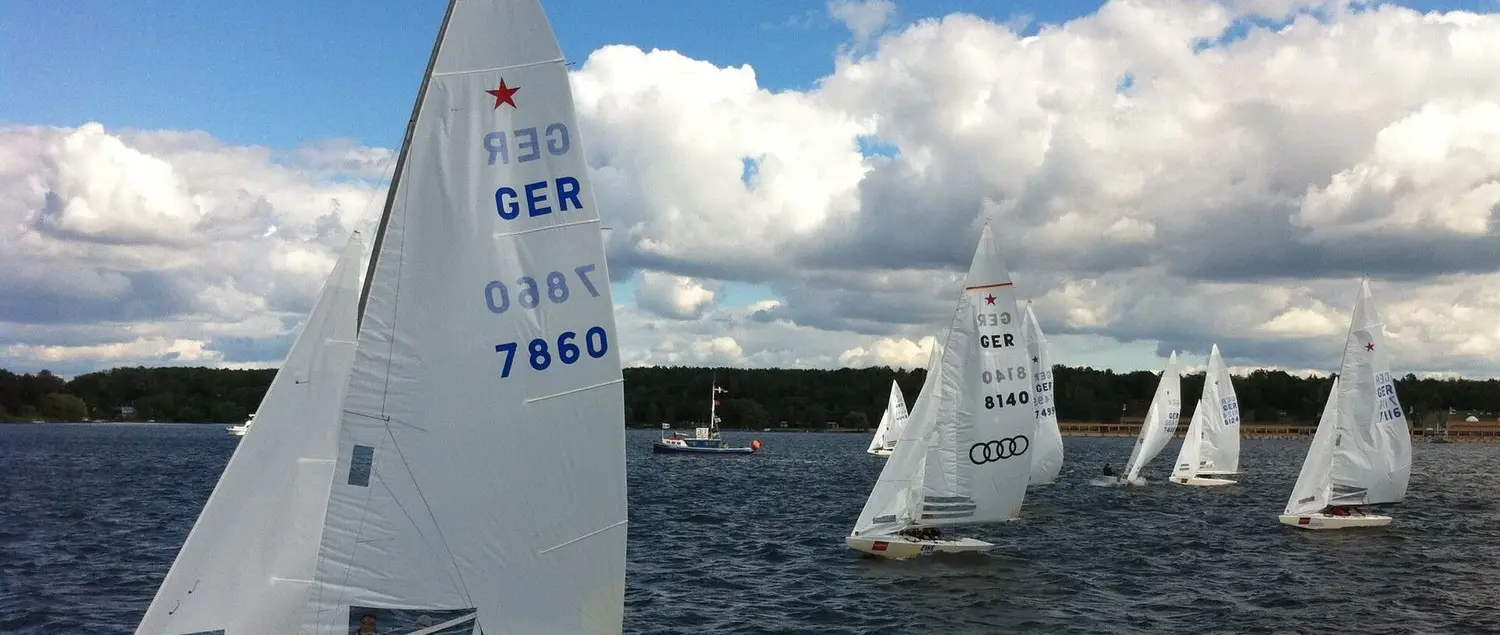
Sources: International Star Class official 2026 World Championship, official entry and race documentation on RegattaWeb and class pre-event news briefing. Photograph: Star-class racing in Wannsee, photographed by Sir James, Wikimedia Commons, CC BY 3.0; an archival illustration of the class, not the Miami 2026 championship.
