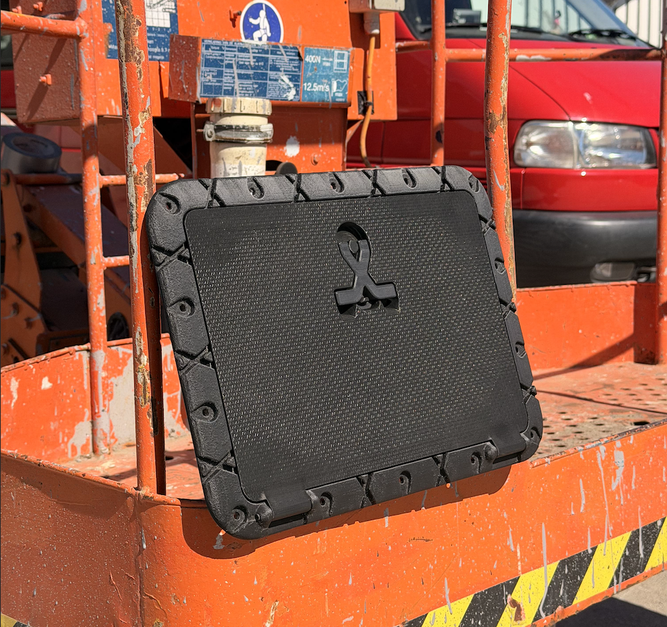
STALEX Marine is showcasing its 380-by-280-millimetre deck hatch in the METSTRADE marine equipment marketplace, presenting a compact, walkable access cover intended for boat decks and service compartments. The company's current product listing emphasises glass-fibre-reinforced nylon, resistance to ultraviolet exposure, an anti-slip surface, stainless-steel hinges and a five-point locking arrangement. The maker also claims a watertight seal and a rapid installation process using an integrated gasket. These are manufacturer-stated product characteristics, not a record of independent testing conducted for this article. For owners of small craft, the significance lies in a surprisingly important fitting: the hatch that protects onboard equipment while allowing the crew to get to it when needed.
A current exhibition listing, not an invented launch date
The STALEX Marine 380 hatch appears among the company's published products for the METSTRADE 2026 marketplace. The catalogue does not establish an exact first-release date, so it should not be presented as a brand-new invention that debuted at the November exhibition. The timely development is the availability of a specific manufacturer-described configuration for boatbuilders and refit buyers to assess. At industry shows, fittings can look minor beside propulsion systems and large electronics displays, but everyday deck equipment is often what determines how convenient and reliable a boat feels over years of ownership. A hatch combines access, sealing and the ability to withstand people moving across the deck.
Why smaller boats make access design critical
On a compact boat, lockers and machinery spaces are often positioned beneath seats, inside the cockpit sole or around an open deck. The deck plan may leave few alternative routes if one access cover is raised. An awkward hatch can make routine inspection inconvenient; a badly sealed hatch can allow water into stores or equipment spaces. Conversely, an access fitting that can be opened confidently and closed securely encourages owners to look after batteries, pumps and other items before problems develop. The fitting's proper purpose and load-bearing suitability have to be confirmed for each installation rather than inferred simply from its compact footprint.
The five-point locking system is central
STALEX describes a patented five-point locking mechanism intended to achieve a consistent seal around the cover. Multiple securing points may distribute closing force around a perimeter instead of depending on a single catch, but the actual sealing performance depends on the design, fitting tolerances and condition of the gasket. The claim of a reliable watertight closure is a manufacturer's statement. Owners should ask about opening effort, the correct locking sequence and whether the cover can visibly appear closed without every latch being properly engaged. It is also worth confirming whether a hatch can be operated safely by a person wearing wet gloves.
The phrase 100% watertight needs conditions
The exhibition listing calls the hatch 100% watertight. Such absolute language must be understood in the context of testing standards, installed orientation and the permitted loads or pressure conditions. A fitting that resists spray and wash-down water may not be intended for uninterrupted immersion, and a hatch suitable for a cockpit locker is not automatically approved for every position on an exposed deck. Without an independently reviewed test report, it would be misleading to treat the product description as universal proof. A prospective installer should request the maker's technical specification, intended locations, maintenance instructions and any applicable certifications.
Glass-fibre-reinforced nylon as a material choice
The company identifies ultraviolet-resistant, glass-fibre-reinforced nylon as the principal construction material. Composite engineering plastics can offer corrosion advantages over some metal alternatives, particularly when exposed to salt spray, but each formulation also has mechanical and temperature-related limits. Surface finish, resistance to impact and long-term performance around hinges and fixings warrant consideration. The manufacturer describes the body as corrosion-free, which relates to the polymer construction rather than proving that every connected component is immune to wear or environmental attack. A quality assessment should include the actual reinforcement, mounting arrangement and warranty terms instead of resting on one material label.
A4 stainless-steel hinges still need attention
The STALEX catalogue specifies A4, or 316-grade, stainless-steel hinges. This alloy is widely used for marine hardware, but corrosion resistance is not the same as an ability to ignore maintenance. Salt deposits, crevice conditions, dissimilar metals and contamination can all affect metal parts in service. A deck hatch also puts repeated mechanical loads on its hinges when the lid is opened, closed and occasionally exposed to wind. Owners should check whether stops restrain the cover appropriately and whether the specified fasteners suit the installation substrate. Loose hardware can compromise sealing even if the lid and frame remain in excellent condition.
What walkable should mean to an owner
The maker describes the hatch as fully walkable and equipped with an anti-slip surface. A cautious purchaser should ask for the exact load rating and permitted installation location before assuming that any adult can stand on it in all conditions. Weight is one consideration, but dynamic loads caused by stepping, jumping or stumbling can be substantially different from a stationary test. The surrounding deck must also support the fitting correctly. In a small cockpit, a hatch placed in the usual route to the transom is likely to receive more foot traffic than one tucked beneath a seat. Non-slip treatment should be assessed when wet, with deck shoes and from different directions.
The nominal dimensions may not be the cutout
The product name refers to a 380-by-280-millimetre hatch. Those dimensions should not be assumed to describe the deck opening or a template for cutting without reading the installation drawing. Overall frame size, usable access area, corner radii and mounting tolerances may differ. During a refit, an overly large cutout can weaken the surrounding structure or leave insufficient material for proper fastening. A boatbuilder or competent installer should measure the existing aperture, inspect local reinforcement and check clearance for the hatch lid when fully opened. The ability to replace an older fitting neatly is often as important to a refit budget as the new component's price.
Integrated gasket and sealant-free claims
STALEX says the integrated gasket allows a quick, sealant-free installation. That approach could simplify replacement and reduce some mess during production, but it does not eliminate the importance of preparing the mounting surface correctly. Deck curvature, surface texture, uneven fastening and local damage may affect a gasket's ability to perform as intended. Do not assume that a single published product description overrides the installation manual for every hull. The appropriate tightening sequence, acceptable tolerances and use of additional bedding materials, if any, should be confirmed with STALEX for the exact application. The benefit of any system is repeatable sealing, not simply saving a few minutes during assembly.
Deck drainage should form part of the design
Even a well-sealed hatch can be surrounded by water if the deck geometry allows pooling. Scuppers, cockpit drains, locker limbers and local camber determine where water accumulates after rain or wash-down. A hatch installation should therefore be considered alongside the vessel's drainage design. Water trapped around the frame may collect dirt and salt, while a raised lip can interfere with safe movement. Owners fitting a hatch to an older boat should inspect the entire drainage path and test with controlled water exposure after installation. If water appears inside a storage space, the cause may involve the surrounding structure as well as the hatch itself.
Equipment access cannot compromise safe movement
Access covers are used for batteries, bilge pumps, fuel components, electrical equipment and stowage. Each has different hazards. A heavy hatch positioned where a passenger naturally steps may need a reliable stay to prevent it dropping unexpectedly. An opening into a confined space requires adequate lighting and, where applicable, ventilation before inspection. On a small boat, keeping access clear for routine maintenance can be difficult when loose gear accumulates around the compartment. A hatch advertised as easy to open is only useful when the user has a secure place to stand and the lid does not obstruct movement toward essential safety equipment.
Comparing with conventional fittings
A replacement hatch can be assessed against aluminium-framed designs, other composite lids and the original boatbuilder part. Key comparisons include cutout dimensions, frame height, usable opening, sealing method, hinge access, latch strength, load rating and availability of spare parts. A seemingly economical hatch that requires major structural alteration may cost more installed than a pricier near-direct replacement. Conversely, a correctly sized fitting with a convenient gasket may reduce routine service effort. Independent fitting experience is particularly useful because the ease of repeated opening and closing may not be obvious from a showroom stand or a catalogue image.
The actual manufacturer photograph is a product demonstration
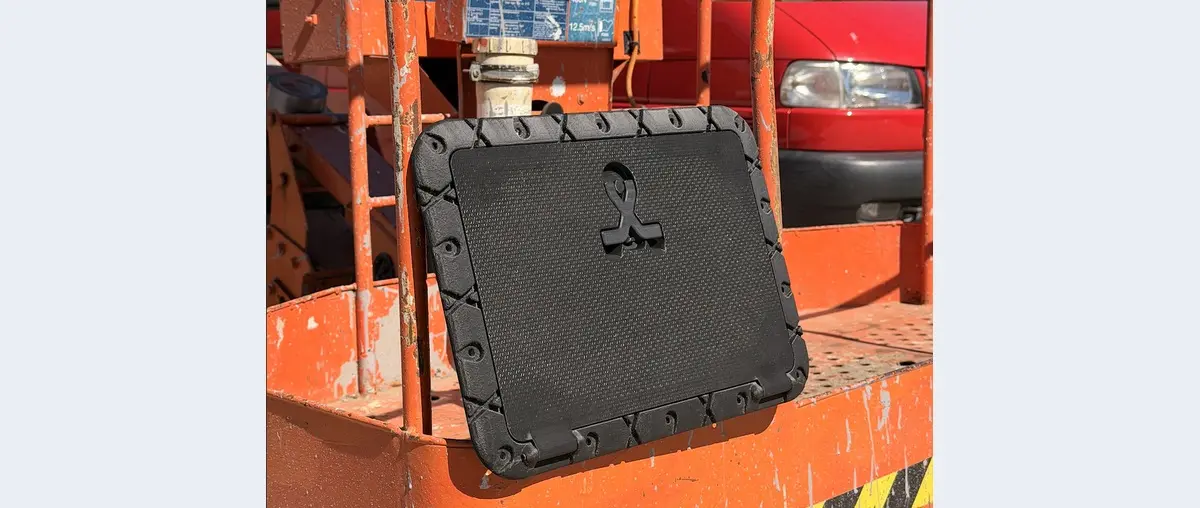
The accompanying first-party product photograph shows the physical STALEX 380 hatch displayed in an industrial setting; it does not depict the hatch already installed aboard a recreational vessel. It should not be interpreted as evidence that the product has a particular approval for use on a boat's foredeck or cockpit sole. The image documents the hardware's shape and visible locking arrangement. The accompanying specifications and performance language come from the maker's own product text. That separation is important because an industrial demonstration photo, a marketing durability claim and an actual marine certification are three different kinds of evidence.
Maintenance is the real long-term test
After installation, a deck hatch requires periodic inspection of the gasket, latch movement, hinges and fasteners. Dirt and salt on mating surfaces can interfere with closure, while damaged seals may cause leaks even when the lid looks intact. Owners should avoid aggressive cleaning chemicals or lubricants not recommended for the product's materials. Check the opening after heavy weather and after any incident involving impact to the deck. If deterioration appears, ask whether replacement gaskets and individual hardware parts are available. A good design should be serviceable during the boat's working life, not become an expensive entire-unit replacement because one small component has failed.
What buyers should request before ordering
The STALEX 380 is an example of practical marine hardware competing for attention in the 2026 equipment market. Its five-point locking, reinforced nylon construction, 316 stainless hinges, anti-slip surface and integrated gasket merit closer inspection on boats where storage and deck access are tightly constrained. Before purchasing, obtain exact dimensions, installation instructions, load data, warranty conditions and the relevant water-ingress test information. Then check the proposed location and structure with the boatbuilder or an experienced installer. A hatch's quality is ultimately proven by repeated correct closure and dry, accessible compartments, not by a catalogue's strongest adjectives.
Original industry sources and image credits
Lead image: STALEX Walkable Deck Hatch Brings Five-Point Locking to Small Boats — official manufacturer physical product photograph. © STALEX Marine. Original supplier image.