
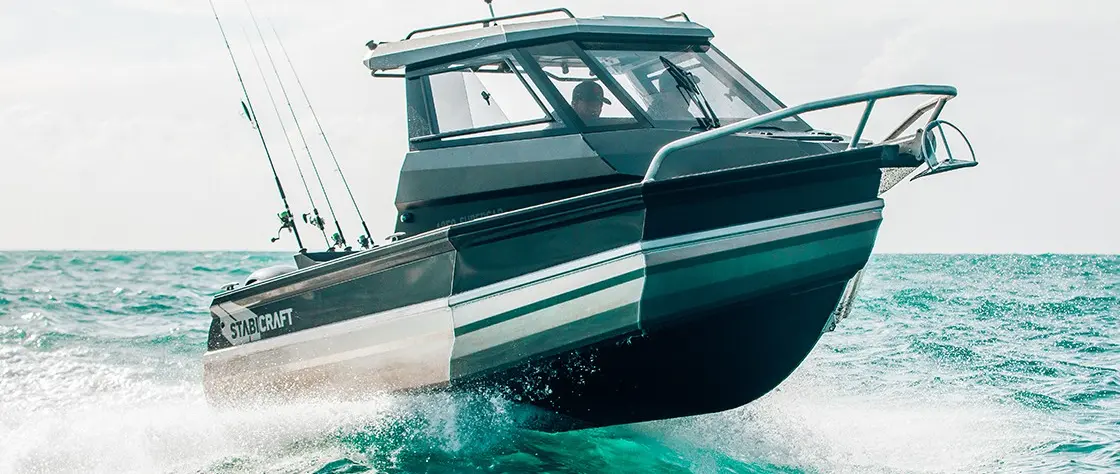
More space inside a manageable hull
The Stabicraft 1850 Supercab measures 5.70 metres in hull length and 2.30 metres in beam, with a stated dry hull weight of 931kg. Its practical appeal comes from providing a sheltered helm without demanding the berthing and running costs of a much larger offshore fishing boat. A six-person maximum rating gives the owner room for a small crew, although loaded trim remains an important consideration.
The updated model carries a revised shape and cabin designed to increase usable volume, according to the manufacturer. A more open feel at the helm is particularly valuable to anglers who regularly wear bulky weatherproof clothing. Owners should inspect sightlines when seated and standing rather than judging visibility from pictures alone.
Stabicraft's distinctive buoyancy-chamber approach aims to provide stability and reserve flotation through the hull structure. The company quotes total sealed chamber volume of 1,496 litres for this model. Such engineering is relevant to safety, but it does not replace personal flotation devices, weather judgement or sound operating procedures.
Cockpit designed around actual fishing
The 1850 includes generous coaming heights and a cockpit intended to be easy to work from while carrying rods, bait and equipment. A rethought transom allows owners to choose removable bait-board arrangements or a live-bait tank depending on the package. The right configuration will depend on whether fishing, diving or general cruising dominates weekend use.
Fold-down corner seats perform a double duty as places to sit and steps for boarding. That versatility matters in a compact cockpit, where fixed furniture can quickly make movement awkward. The optional walkthrough gate can improve access, but should be examined with the chosen motor and boarding routine.
At the bow, the builder has revised the platform and anchor arrangement, with an optional drum-winch setup in the Sportfish package. Placing anchor gear where it can be operated safely is especially valuable when the skipper is handling the boat with limited assistance. An inspection should include the actual chain locker drainage and the ease of retrieving an anchor in a chop.
Engine and electronics choices
Stabicraft recommends a minimum of 115hp and lists a maximum of 140hp for the 1850 Supercab. The 150-litre fuel capacity suits a day-focused fishing platform, although available range depends heavily on loading, hull condition and sea state. Owners should request fuel-flow information for the precise outboard fitted.
The redesigned dashboard can accommodate large navigation displays, and the higher equipment packages introduce items such as additional electronics, lighting and suspension seating. These additions can make long fishing days more comfortable, but they also add maintenance and electrical demands. It is worth separating genuinely useful equipment from accessories likely to remain unused.
Trailer specification, tow-vehicle limits and overall height are just as significant as engine horsepower for many owners. The builder publishes a boat height of 2.44 metres in the stated configuration, a figure that should be checked with antennas or other additions. Storage and access at home can have a greater effect on how often a boat gets used than a minor difference in top speed.
Who should consider it
The 1850 Supercab is well aligned with anglers who want hardtop protection and a working cockpit without moving into the size of a dedicated charter vessel. Its strength is the concentration of useful features within a compact footprint. It also offers a credible route into more ambitious coastal fishing for owners upgrading from open tiller boats.
Buyers should compare the Adventure, Sportfish and Profish packages on a complete as-delivered basis. A lower initial specification may suit those who want to select equipment gradually, while a fully fitted package can reduce the time spent on later installations. The official photographs and list of options are a starting point for that discussion.
Above all, this type of boat rewards honest planning about local conditions and typical crew size. A sea trial should include normal fishing gear, the actual outboard and enough time to assess helm comfort. The revised Supercab is an interesting example of practical design improvements that matter more than a flashy change of model name.