
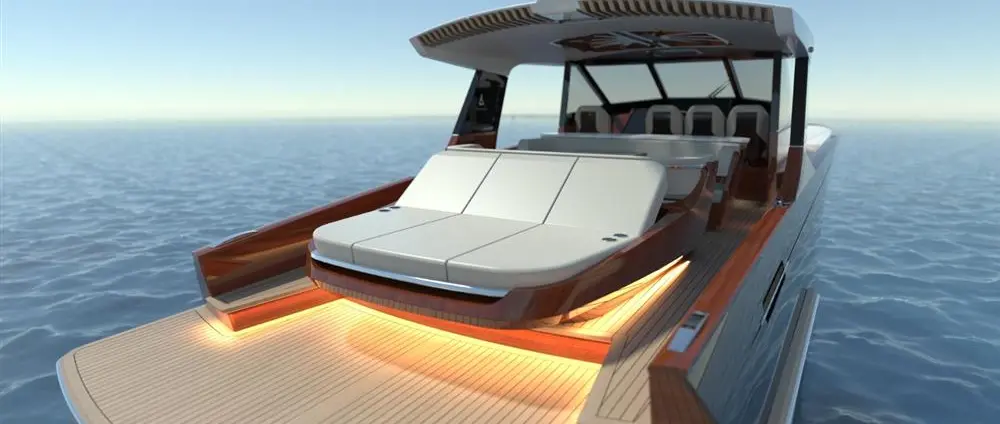
P50 Sport arrives at London's St Katharine Docks
Spirit Yachts has brought its new P50 Sport motor yacht into public view after completing summer sea trials and arranging an October launch at St Katharine Docks in London. The presentation on 2 and 3 October 2026 gave prospective owners an opportunity to see a real vessel, rather than another rendering of the British builder's powerboat ambitions. It extends the company's long association with carefully made modern-classic sailing yachts into fast, open-deck motor cruising.
Spirit revealed the broader P50 programme in 2025, identifying the Sport as the warmer-weather member of a two-model family. The September announcement described the first yacht as already undertaking sea trials, a meaningful advance from design approval to operation. Owners assessing the model now have a sound reason to ask for an on-water demonstration and measurements taken from the boat in front of them, rather than relying solely on early specification sheets.
A timber-based alternative to conventional motorboats
Much of the P50's identity comes from the combination of long, classic-inspired hull lines and contemporary engineering. Spirit says it applies its established wood-construction techniques to both P50 versions, supported by the same craftsmanship for which its sailing range is recognised. The Sport uses a purposeful hardtop and an unusually open guest deck, placing the contrast between traditional material and modern lifestyle at the centre of the design.
That positioning makes build details particularly relevant to anyone considering ownership. Buyers should see how timber surfaces are sealed, where service access is provided and what the yard recommends for routine finish care. The builder's original P50 announcement stated that the programme was designed to Recreational Craft Directive Category B. As ever, the conformity paperwork, equipment inventory and technical particulars for an individual hull matter more than a generic statement about the wider range.
The social cockpit sets the agenda
The P50 Sport is designed around a broad open-plan cockpit with an integrated bar and galley. A handcrafted Sipo mahogany table works with U-shaped seating to create a protected conversation and dining area, while bar stools keep guests connected to anyone preparing food or drinks. The arrangement places food, company and swimming alongside each other instead of dividing activities into separate, enclosed rooms.
In warm cruising areas, that can make the boat especially appealing for full days at anchor and easy passages between nearby bays. It also calls for a practical review of how passengers move when the boat is underway. The width of side passages, position of handholds, seating security and stowage for loose belongings deserve a demonstration with the number of guests an owner expects to carry.
Swimming, boarding and foredeck relaxation
Spirit has given the aft platform an important role. The builder describes swimming steps, a hydraulic passerelle and storage for watersports equipment, connecting the cockpit directly with the water. Those are useful features for an owner who spends considerable time anchored rather than tied to a marina. Prospective buyers should establish the permitted loading and mechanical operation of each system, particularly if paddleboards, diving equipment or other heavier toys are part of the brief.
Deep bulwarks guide movement forward to a bow equipped with two generous loungers. This adds a separate quiet area beyond the cockpit and gives the yacht a second social focus when conditions are suitable. Good-looking foredeck arrangements can still be awkward in a running sea, so prospective owners should examine the footing, access route, rail heights and how safely guests can return aft without depending on calm photographs.
Volvo IPS drives and the quoted 34-knot maximum
Twin Volvo Penta D6 IPS600 installations, each rated at 440 horsepower, give the P50 Sport its drive arrangement. Spirit quotes a 34-knot maximum and a 25-knot cruising speed, with joystick controls intended to simplify close-quarters handling. These are the builder's published figures and should not be mistaken for independently verified speeds under every payload and weather condition. A test with the actual stores and passenger load will be more informative for an owner.
The helm has been designed around visibility and accessible controls, and Spirit's announcement also mentions Seakeeper stabilisation and a custom Lewmar anchoring arrangement. Equipment specification may vary between commissioned boats, however, so buyers should confirm precisely what is standard. IPS pod servicing, anchoring capacity, fuel consumption at normal cruise and local technical support belong in a full ownership conversation alongside speed and performance.
A small but finished retreat below deck
Beneath the open deck is a double cabin complemented by an ensuite bathroom and a circular shower finished in wood by the yard's own craftsmen. Spirit also describes a sofa and galley area for time spent away from the cockpit. The combination suggests the Sport can support relaxed overnight stops while keeping its principal emphasis on daylight activities and entertaining outside.
Cabin comfort is best judged in person. Standing room, ease of reaching the berth, ventilation, air-conditioning, water capacity and luggage storage can all determine whether a couple enjoys a weekend on board. Spirit has indicated scope for owners to specify different decorative treatments, making an agreed finish schedule and detailed equipment inventory especially important for a semi-custom yacht.
How the P50 Coupé serves a different buyer
The P50 Coupé is the sister model, created with more protected cruising and cooler climates in mind. Whereas the Sport gives centre stage to an open cockpit, the Coupé favours an enclosed saloon and a stronger focus on sheltered interior living. The distinction means that buyers should choose the version based on a realistic cruising programme, not simply which set of publicity photographs is more attractive.
An owner who usually visits beach clubs and sheltered summer anchorages may gain more from the Sport's outdoor bar and direct swimming access. Someone operating through spring and autumn, carrying more overnight guests or planning longer coastal passages may prefer the Coupé's additional shelter. The two designs share a common identity but their different use of volume should produce notably different days on the water.
What prospective owners should establish
The P50 Sport occupies a distinctive position among approximately 50-foot motor yachts: individually finished timber craftsmanship allied with pod propulsion and a deck plan devoted to being outside. Its London unveiling confirms that the project has moved beyond the proposal stage, although owner-specific configuration and commissioning details remain essential to any order. A memorable presentation is a beginning, not a substitute for independent inspection.
Before committing, a buyer should obtain an up-to-date specification, verify available build slots, clarify warranty and maintenance arrangements, and spend time aboard during manoeuvres as well as at rest. It is worth checking marina access, future service facilities and insurance terms early. Those practical questions will show whether Spirit's unusual blend of classic style and modern fast cruising fits the way the boat will genuinely be used.