A sailing club changes the price of participation
Spinnaker Sailing Club in Hampshire has given the Royal Yachting Association a detailed account of how changing its membership structure helped it welcome new participants. In an article published on 11 November 2026, the club describes moving away from a single conventional joining pathway toward an arrangement that includes training access, monthly participation and annual membership. The RYA reports that the club's membership in 2026 is around 35 per cent higher than in 2019. That result is significant for the leisure-boating community because it addresses a basic problem: people may want to get on the water without immediately committing to full-year costs or boat ownership.
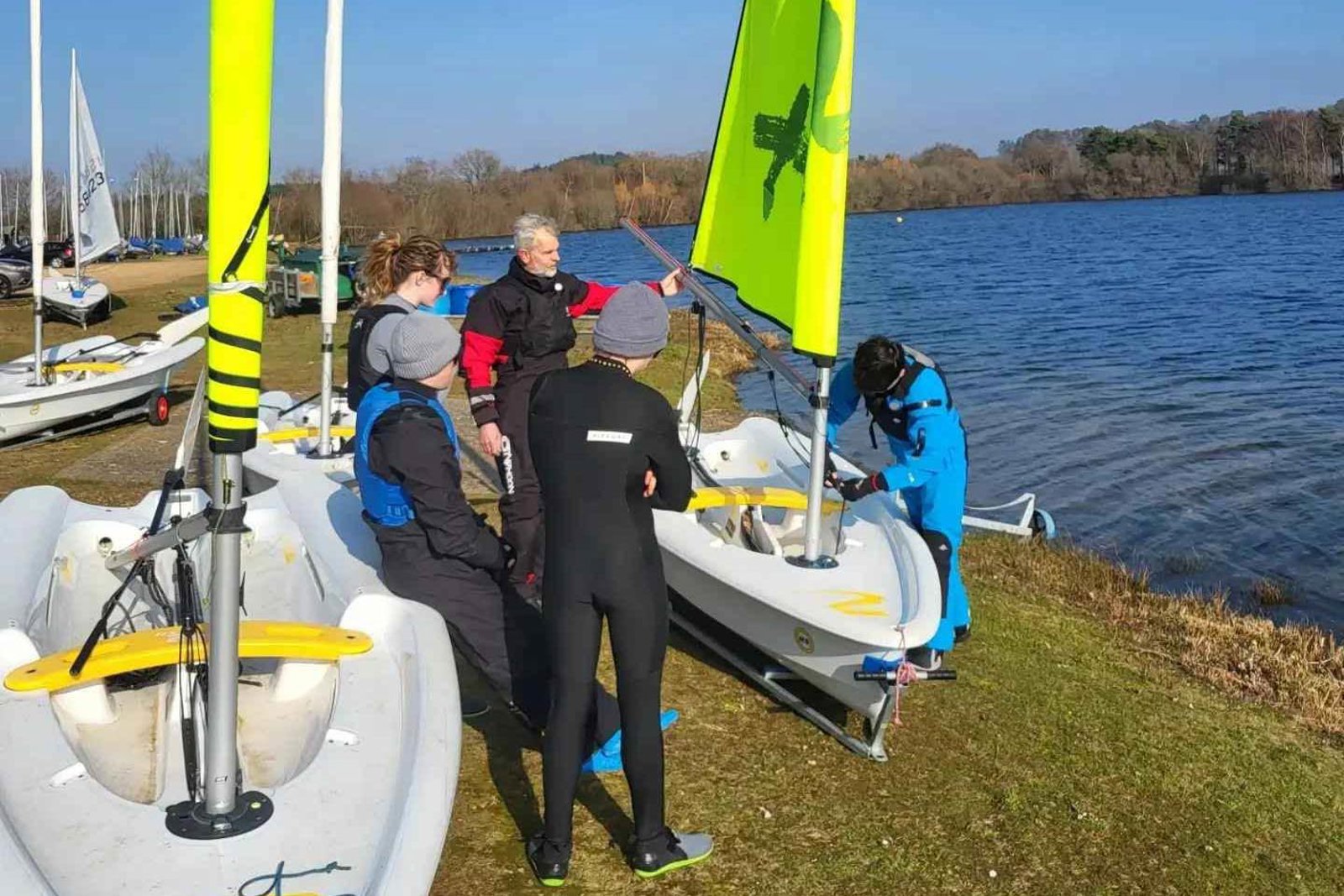
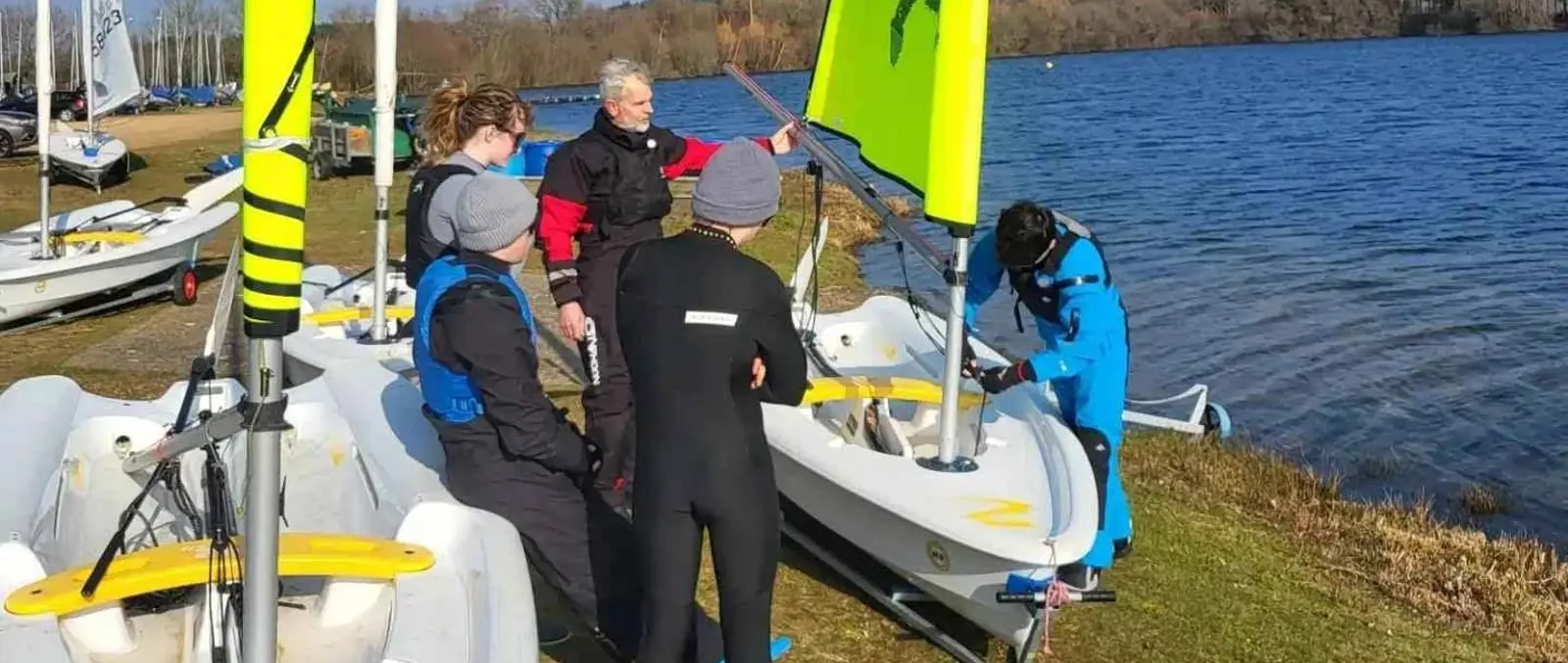
The venue is at Blashford Lake near Ringwood, on the edge of the New Forest, and is an RYA Recognised Training Centre. Its activities span dinghy and team racing, kayaking, paddleboarding and windsurfing. The mix matters because a club offering several kinds of water activity can serve people with different ambitions and levels of experience. Someone may initially come for a short introduction, return for occasional social sessions, then eventually become a committed member. Membership design can either support that journey or make the first step feel disproportionately expensive.
The problem identified in 2019
According to the club's account, Spinnaker was in a financially unsustainable position in 2019, with a membership that was both declining and ageing. That challenge will sound familiar to many voluntary sailing organisations. They must pay for facilities, insurance, equipment and ongoing operations while depending heavily on volunteers, yet a traditional annual subscription can appear risky to someone who has never tried the sport. The alternative of simply lowering every annual fee may not solve the problem if it leaves the club unable to fund what it provides.
The interruption caused by the Covid-19 pandemic also changed patterns of outdoor recreation. Spinnaker benefited from increased interest in its activities, but its leaders recognised that the sudden demand might not last indefinitely. The club's initial response was a three-month family taster membership priced at £75, with an option to continue through the remainder of the year for a pro-rata fee. The published account says 109 families took up that offer in six months. It provided an important test of whether people were willing to join when the financial and emotional commitment was smaller.
What the taster trial revealed
The taster approach increased activity, yet feedback uncovered a difficulty that the first design had not fully anticipated. Some people wanted to come back for the summer months rather than sign up for an entire year. The taster arrangement was deliberately limited to once every three years so that participants would not repeatedly use a short introductory rate. That condition made sense from the club's point of view, but it did not fit the way a casual sailor or paddler might wish to use a seasonal facility.
The club had therefore identified two separate needs. Beginners needed an inexpensive introduction to organised boating, while occasional participants needed a way to remain connected without paying for months when they were unlikely to attend. Neither group was necessarily unwilling to contribute; their preferred pattern of use was different from that assumed by a fixed annual arrangement. Recognising that distinction is one of the most useful aspects of the case study. Instead of treating everyone who declined full membership as a lost customer, the club reconsidered which form of participation it was offering.
Monthly membership becomes an option
In 2022 Spinnaker replaced the original taster format with a Pay As You Go monthly subscription. The arrangement, as described by the RYA, includes a minimum three-month commitment and permits people to leave and rejoin. It allows flexible participation and use of club boats, but does not include on-site storage for personally owned boats or equipment. This is an important boundary: a monthly fee gives access to an activity, not automatically every privilege associated with a full annual member.
Monthly payments also help align the cost with a casual participant's perception of value. A person who can attend for only a short season may find a manageable subscription more appealing than an annual invoice. That does not make monthly membership financially superior in every circumstance. The club deliberately set its pricing so that full annual membership becomes better value as participation increases. The resulting choice makes the higher commitment more attractive to people who are actually using the facilities regularly.
Protecting the voluntary club culture
Introducing flexible subscriptions can create concerns among established members. Spinnaker's report describes fears that the club might start to resemble a leisure centre, that income would fall if people only paid for part of the year, and that volunteering would suffer. Such questions should not be dismissed as resistance to change. Sailing clubs depend on social relationships, maintenance efforts, safety cover and administration that are not always visible in a price list. A membership model needs to make participation easier without eroding the people and finances on which the programme relies.
The club responded by emphasising the contribution members make and by retaining incentives for annual membership. Its monthly arrangement includes one month's notice before pausing participation, and the overall pricing structure favours people who remain through much of the year. The RYA says Spinnaker used Sailing Club Manager to administer direct debit payments and that both participation and finances remained stable through 2022 and 2023. Those outcomes offer encouragement, but another club should still build its own financial projections rather than assume the same balance will arise automatically.
Training access provides a third route
Spinnaker subsequently learned that some people wanted membership chiefly so they or their children could take part in training. In 2024 it introduced a Training Membership, with an annual price of £35 in the RYA's November 2026 account. That option provides a route into courses and specified instructor-led sessions, rather than unrestricted access to all facilities. It is distinct from Pay As You Go and full annual membership, and its conditions matter when comparing prices. A low-cost training membership does not mean every course itself is free.
This extra stage creates a progression that is easier to understand. Someone can begin with instructor-led activity and limited commitment, move to more flexible independent participation, and later choose an annual membership if regular use or private boat storage makes that attractive. There is no requirement that everyone follow the same sequence or ultimately buy a boat. For families, the most relevant feature may be access to suitable junior coaching. For an adult returning to the sport after many years, a structured refresher could be more important than unsupervised equipment hire.
Reported membership growth, properly interpreted
The RYA says membership at Spinnaker in 2026 is approximately 35 per cent higher than in 2019. It attributes much of the improvement to the Training and Pay As You Go choices, while also recording the disruption and temporary boom associated with the pandemic. The number should therefore not be presented as a simple one-year growth rate or proof that a specific subscription tier alone caused all of the increase. The club describes several adjustments over time, followed by renewed growth in recent years.
The account also notes an increase in membership income alongside member numbers. That is an important signal because a membership programme that attracts many people but undermines the club's ability to operate would be difficult to sustain. The RYA has not supplied a complete audited financial series in the published case study, so external readers cannot calculate a detailed return on the change. What can be stated is narrower but still useful: the club reports a substantially larger membership in 2026 than in 2019 and identifies flexibility as an important contributor.
Lessons for small-craft organisations
Other clubs can learn from Spinnaker without copying its prices. The first step is to ask potential participants what prevents them from joining. Answers may involve cost, lack of equipment, uncertainty about skills, restricted time or a sense that an established membership community is difficult to enter. Each barrier needs a different response. A family trial might introduce people who are unfamiliar with boating; a short seasonal subscription might retain those who already enjoy the activity; a training-only tier might help learners gain the confidence to participate more often.
Clear terms are essential. Clubs should explain whether fees include instruction, equipment hire, boat storage, racing, insurance or access outside organised sessions. They must also account for local costs, tax treatment, insurance conditions and the available volunteer workforce. Monthly direct debits can simplify payment collection but create administrative responsibilities relating to cancellations, records and communication. Flexibility should not mean ambiguity. An informed prospective member ought to understand what the fee covers and how to switch between membership levels as circumstances change.
The ownership decision moves further down the path
For Leisure Boat Guide readers, the case study has implications beyond club administration. A great deal of small-boat marketing assumes that the natural progression into the pastime is to purchase a craft. In practice, organised access can let people build skills, try different activities and discover how often they really want to go afloat before spending on a boat, trailer, storage and maintenance. Someone who initially enjoys occasional club dinghy sessions may later decide that personal ownership suits them. Another participant may remain happily involved without owning anything.
This is particularly relevant where launch access or secure storage is expensive. Clubs able to provide shared equipment and appropriate training can reduce the obstacles facing a newcomer. There are limits: access to a club fleet depends on local rules, available craft and competence requirements. Yet the general principle is compelling. Recreational boating can be offered as a service and a community experience, not solely as a product to be bought. A structured set of membership choices can recognise that distinction while giving regular users reasons to contribute more.
A case study in listening to customers and members
Spinnaker's Operations Manager James Oborne says the club's approach was shaped by asking people what would make them join. That is the central story in the RYA's November account. It involved more than a marketing campaign or temporary discount. Feedback led to a trial, the trial revealed a seasonal demand, and later feedback identified a separate training audience. The club then revised its offer again. The resulting model is not static; it is the product of repeated decisions made in response to the way people actually use the water.
For clubs confronting declining membership, the lesson is not that annual subscriptions are outdated. Annual membership remains Spinnaker's best-value option for committed users, including people who need boat or equipment storage. The innovation is providing credible steps toward that commitment, rather than forcing a choice between full membership and no membership at all. The reported increase since 2019 suggests that the strategy deserves attention, while the circumstances of each club should guide what happens next. Readers can review the original RYA account for the detailed chronology and current membership descriptions.
Sources and image attribution
Primary reported announcement: https://www.rya.org.uk/news/modernising-membership-options/.
Official photographic provenance: https://www.rya.org.uk/news/modernising-membership-options/. Image supplied by the originating organisation, credited in the photograph title; original copyright remains with the rights holder. Official image file. The photographs are documentary or clearly labelled archival illustrations, not evidence of events that have yet to happen.