
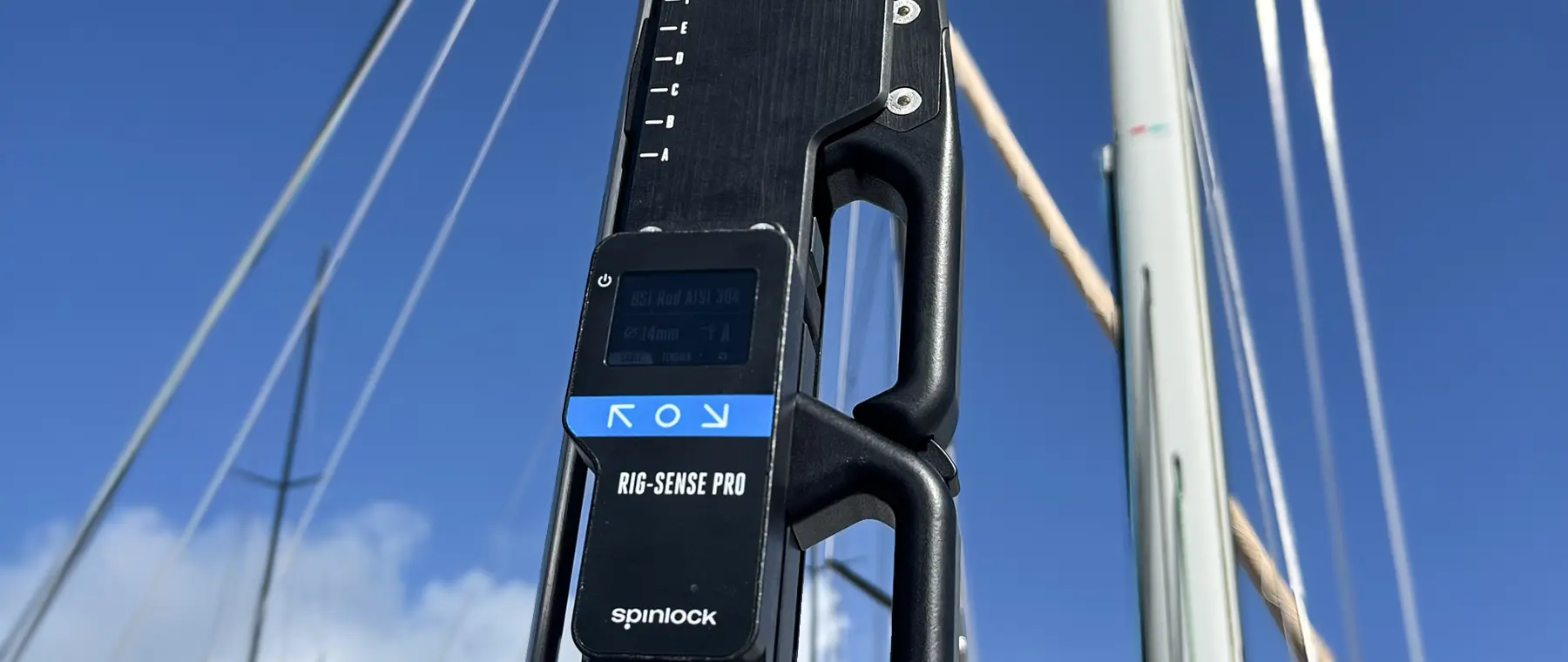
A sailing rig can look unchanged while its measured tension varies, making repeatable checks useful during commissioning and maintenance. Spinlock has developed Rig Sense Pro as an extension of its measurement range for professional riggers and more demanding mast setups.
The manufacturer specifies wire diameters of 5–20mm, rod of 5–16mm and a maximum measured load of 6,000kg. That broad capability does not mean every small-boat rig falls within the tool's appropriate range or needs the same settings.
A number rather than a guess
The purpose of a tension instrument is to record a baseline that can be revisited after adjustment or a period of sailing. That can help specialists explain a rig tune instead of relying only on feel or turnbuckle position.
Correct mast setup must still follow the rig designer's limits and tuning procedure. A reading cannot by itself establish that a fitting or stay is structurally sound.
Two materials, one device
Spinlock's specification covers wire and rod standing rigging, giving professional users a wider set of measurement options. A clear display is intended to support practical work at the mast.
The owner should record conditions, measurement location and configuration alongside readings so comparisons remain meaningful. Components may need individual inspection even when tension looks normal.
For professional and serious owners
A qualified rigger can decide whether this device is appropriate to a specific under-12-metre boat. It is not a substitute for inspection after grounding, dismasting or other unusual loads.
LBG reports Spinlock's official product information and imagery, focusing on measured maintenance. The headline 6,000kg is an instrument limit rather than a recommended rig tension.