A familiar launching job gets a different piece of equipment
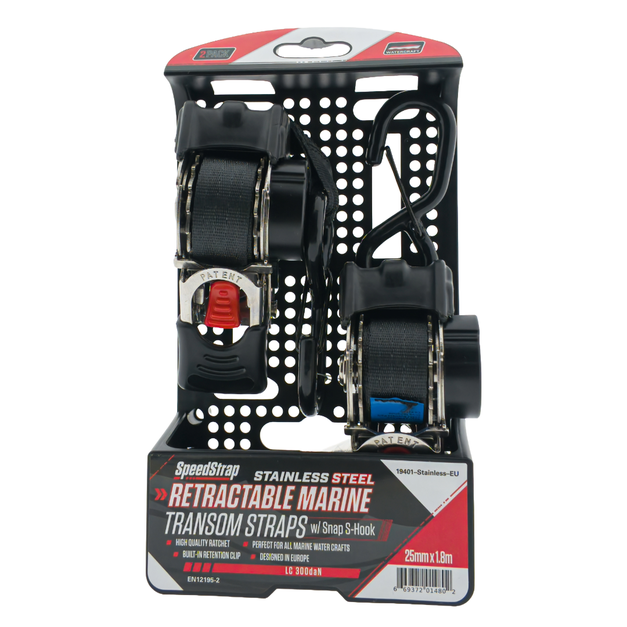
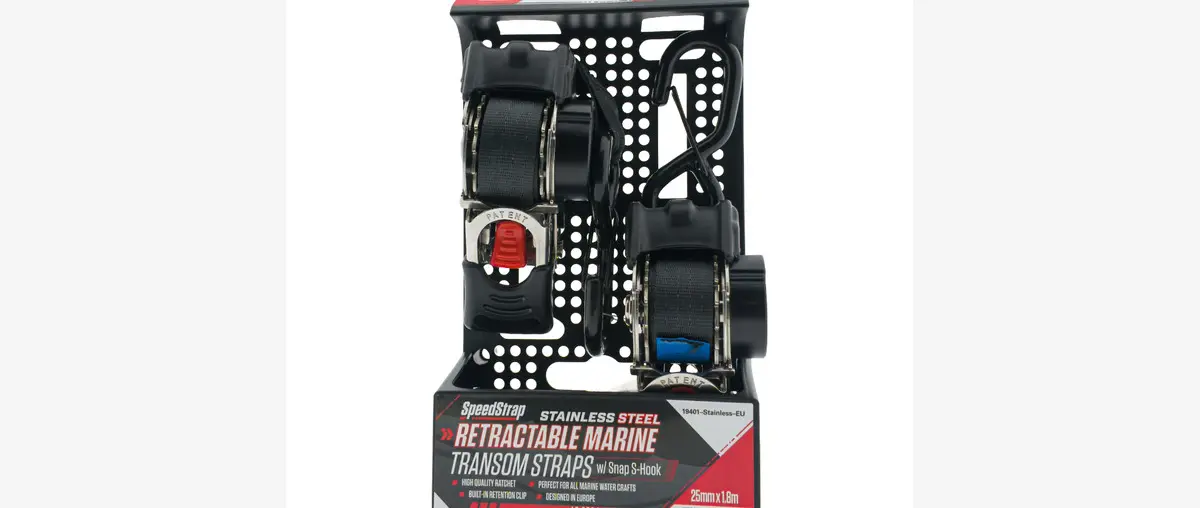
Allpa | Technautic is presenting the Speedstrap 1-inch by 6-foot retractable tie-down in the 2026 METSTRADE marine equipment catalogue, describing a strap that winds unused webbing back into its housing after the boat or personal watercraft has been secured to a trailer. The product listing is dated 1 September 2026 and identifies water-resistant, UV-treated polyester webbing and an EN12195-2 label. It is a small accessory rather than a new boat launch, yet its subject matters directly to owners of recreational craft below 12 metres. A substantial proportion of small boats travel on trailers, and every launch or recovery involves securing equipment that must survive rain, road vibration and repeated handling. The advertised convenience is straightforward: less loose strap to untangle and store. However, the short manufacturer description does not establish the system's safe working load or suitability for every hull and trailer combination, and neither factor should be assumed.
What the distributor's original product page confirms
The METSTRADE exhibitor listing names the product Speedstrap 1-inch by 6-foot Tie-down and describes an automatic retraction mechanism that collects surplus webbing. It says the strap is made from polyester, treated for UV exposure and intended to resist the wet conditions associated with boating. The page also refers to a blue EN12195-2 label. These are identifiable supplier statements, but the product listing does not show a complete load-rating table, approved anchor geometry or a universal mounting specification. An EN-labelled strap still needs to be read and selected for the particular job; a standard reference cannot be substituted for an actual capacity displayed on the product. Owners should inspect the complete label and consult the supplied instructions before using the system. The existence of a retraction housing does not change the forces involved when a boat must remain firmly secured during road travel.
Why loose webbing is a practical nuisance
A conventional tie-down may have more webbing than is needed for a particular trailer. The surplus has to be rolled, tucked or secured so it does not flap against the boat or become caught in moving parts. Repeated handling can leave straps twisted or tangled, especially when a crew is recovering a boat at a busy slipway after a long day afloat. Automatic retraction can make the routine tidier, but it should not encourage people to rush. The remaining strap must still run in an appropriate direction, with the hook seated securely and the tension applied according to the maker's instructions. A neat storage appearance tells an owner very little about whether the restraint is carrying the correct load. The important improvement would be a more convenient handling process that preserves proper inspection and securing practices.
Trailer restraints and the forces of travel
A boat resting on a trailer may appear stable, but road transport introduces braking, acceleration, cornering and vertical movement over uneven surfaces. Proper restraint must be designed to control those forces without damaging the hull, fittings or trailer. Tie-downs are commonly part of a wider arrangement that includes suitable bow support, stern restraint and the positioning of the boat on bunks or rollers. One small retractable strap is not necessarily a substitute for all the securing equipment a particular craft requires. The trailer and boat manufacturers should determine appropriate attachment points and the number and capacity of restraints. Owners should be cautious about attaching straps to cleats or rails not approved for transport loads. An attractive accessory does not correct an unsuitable tie-down plan, and the consequences of failure can extend well beyond cosmetic damage to a boat.
Choosing attachment points
The direction of a strap influences the forces transmitted to the boat and trailer. A tie-down pulling down at a suitable angle may behave differently from a strap stretched almost horizontally or one that crosses sharp edges. The trailer should provide sound fixing points, and the boat should have structures intended to withstand the loads involved. Decorative fittings, boarding handles and other hardware should not be treated as transport anchors without authorisation. The Speedstrap mechanism needs enough room for the housing, hook and webbing to move without catching on mudguards, lights or the boat's surface. A careful installation includes a trial with the boat fully loaded for travel. Before drilling into the trailer or relocating an attachment, the owner should check whether modifications could affect structural integrity or compliance with road rules.
Understanding the 1-inch by 6-foot specification
The model name describes a strap approximately one inch wide and six feet long. That can make it suitable for some compact trailer arrangements, but dimensions alone do not determine capacity. A wider strap is not automatically stronger without considering the webbing, stitching, tensioning components and manufacturer's rating. Similarly, a longer strap may be convenient for certain hull shapes but could create unnecessary excess on a smaller boat. The correct choice depends on the span between the mounting and attachment points after the boat is positioned on the trailer. An owner should measure this distance before ordering. The strap must reach its intended connection without being operated at the limits of the mechanism. If several tie-down locations are required, their geometry and ratings should be considered as a complete system.
Polyester in a marine setting
Polyester webbing is commonly used where strength and relatively controlled stretch are important, and the Speedstrap page identifies water resistance and UV treatment as product features. These do not mean the strap is immune to damage from sunlight, salt, grit or repeated tensioning. Wet webbing can carry abrasive particles into a retraction mechanism, while sharp edges may cut fibres that otherwise appear serviceable. Owners should rinse or clean the equipment according to the manufacturer's instructions and allow it to dry where required. A strap should be replaced if there are cuts, fraying, damaged stitching or signs of heat and chemical exposure. The exact replacement criteria belong to the official documentation. Convenience is a poor trade if the owner stops examining the webbing because it disappears neatly into a housing after every use.
The meaning of the EN12195-2 label
The product description calls attention to a blue EN12195-2 label, referencing the European standard associated with web lashing assemblies. That detail may help buyers identify relevant product information, but the label must still be legible and applicable to the exact assembly being used. Owners should read the marked lashing capacity and any other instructions rather than interpreting the presence of a label as proof of universal approval. Ratings may differ depending on how an assembly is used, and road-transport obligations can vary by jurisdiction. A trailer owner should also confirm that the entire trailer setup complies with the applicable requirements. An accessory specification is not a substitute for loading guidance from the trailer maker or regulations governing boat transport. The right question is whether the complete arrangement has been selected and used correctly.
Launch-ramp efficiency without shortcuts
At a public slipway, a small boat owner may have limited time and space while other users wait. A retractable strap can potentially reduce the need to coil loose webbing, especially after recovery when hands are wet and equipment is covered in spray. That is useful only when the owner has a consistent procedure for securing the boat. The engine should be appropriately positioned, the hull supported and the winch and tie-downs checked before driving away. Crew should avoid standing in positions where a strap or hook under tension could release toward them. After moving a short distance, it may be appropriate to stop in a safe place and inspect the rig, following the trailer manufacturer's guidance. Better equipment can support good habits, but it should not compress essential safety checks into an hurried last glance at the ramp.
Protecting the hull's finish
A tie-down routed across an unsuitable surface can rub against paint, gelcoat or inflatable tubes as the trailer moves. Repeated contact may leave marks even if the restraint remains structurally sound. The owner should examine how the webbing touches the boat and use only approved protection or alternative attachment geometry as needed. A retractable mechanism could reduce the amount of strap left flapping in the wind, but it does not remove the risk of chafe at the actual load-bearing point. Hardware should be positioned so that the housing cannot strike the hull or another fitting. A well-planned restraint setup protects both the boat and the equipment carrying it. The quickest way to secure a boat is not necessarily the most suitable if it places new pressure on a vulnerable part of the structure.
Maintenance of the retracting assembly
The Speedstrap design adds moving components that collect webbing when it is released. Those parts need appropriate cleaning and inspection, especially in a marine environment where sand and salt can enter mechanisms. The public catalogue does not specify a complete service interval, so the owner should obtain the maker's guidance and check for unusual resistance or unreliable retraction. A strap that fails to retract may still have other limitations, and it should not be repaired through improvised methods that affect its strength or locking action. The housing and fasteners should be checked for corrosion or damage. Replacement parts may be important if the mechanism is mounted permanently to a trailer. Owners should also make sure that retraction does not pull a hook into a place where it could scratch the boat or become difficult to inspect.
Selecting between conventional and retractable equipment
An ordinary webbing strap can be inexpensive and easy to replace, while a retractable assembly may offer better day-to-day handling at the cost of additional components. The right choice depends on how often the boat is transported, how the trailer is stored and whether the fastening system will be exposed to heavy salt spray. A boat moved only once a season may have different priorities from a fishing boat launched several times each week. It is also sensible to compare the rated capacities of complete systems rather than only their headline dimensions. A product demonstration should show how the strap is deployed, tensioned, released and stored, including what happens if the mechanism becomes dirty. A few minutes of practical inspection can reveal whether the convenience benefit fits the owner's routine.
What a buyer should verify
Before purchasing the Speedstrap, a small-boat owner should request the actual lashing capacity, permitted installation arrangement and maintenance instructions. The trailer's structure and boat's approved attachment points must be checked, together with the need for additional restraints. It may be useful to photograph the current rig and measure the required strap length so a supplier can assess the proposal. Owners should confirm availability of replacements and avoid assuming that an attractive housing is stronger than a conventional strap. If the equipment is mounted permanently, access for cleaning and replacement matters. The product's 2026 catalogue appearance makes it relevant to current trailer-equipment choices, but the original release date is September rather than a new announcement this November. A buyer should treat it as a specific product to evaluate, not a universal solution.
A practical convenience that still needs careful selection
Speedstrap's retractable tie-down addresses a small but repeated job in recreational boating: keeping trailer restraints orderly and quick to handle. The manufacturer's verified description supports automatic surplus-webbing retraction, polyester construction, UV treatment and a standard-related label. None of those characteristics alone establishes suitability for every boat below 12 metres. Real safety depends on the approved load rating, correct attachment geometry, appropriate tension and continued inspection. For owners who launch frequently, a properly matched retractable system may reduce clutter and make handling more consistent. The value is not in replacing thought with a mechanism, but in using a convenient tool within a deliberate transport routine that keeps the boat, trailer and other road users safe.
Original industry sources and image credits
Reporting based on Allpa | Technautic original manufacturer-distributor Speedstrap 1x6ft retractable tie-down product, METSTRADE catalogue entry dated 1 September 2026.
Lead image: Speedstrap Retractable Tie-Down Brings Tidier Trailer Securing to Small Boats — manufacturer original product photograph. © Speedstrap / Allpa Technautic. Original supplier image.