
A repair material intended for the sun
Solar Patch USA brought its ultraviolet-curing repair products to IBEX 2026, held in Tampa from 6 to 8 October, introducing dealers and boatbuilders to materials designed to harden after exposure to sunlight or a suitable UV source. The Nevada-based manufacturer describes a glass-fibre reinforced sheet that can be cut, placed over suitable damage and cured without mixing separate liquid resin components.
The idea is particularly relevant to smaller craft because an owner may discover wear or minor damage while preparing for a weekend trip. A packaged repair material that requires fewer separate tools could be convenient for certain non-critical jobs. That convenience should never be confused with permission to ignore structural damage or launch a vessel whose hull integrity has not been assessed.
The marine range covers different needs
The company lists Marine Patches for use on suitably prepared surfaces, alongside Bow Protect and Keel Protect products aimed at areas that regularly encounter abrasion or contact. Those applications are not identical. A protective strip fitted to a sound keel serves a different purpose from a patch placed over damaged laminate or metal.
Owners should identify exactly what problem they intend to address and verify the manufacturer's technical data for the substrate. Fibreglass, aluminium and polyethylene can behave differently when loads or temperatures change. Some cracks may signal deeper structural movement that a surface patch alone will not resolve. A competent marine specialist should evaluate any damage affecting seaworthiness.
How ultraviolet curing works
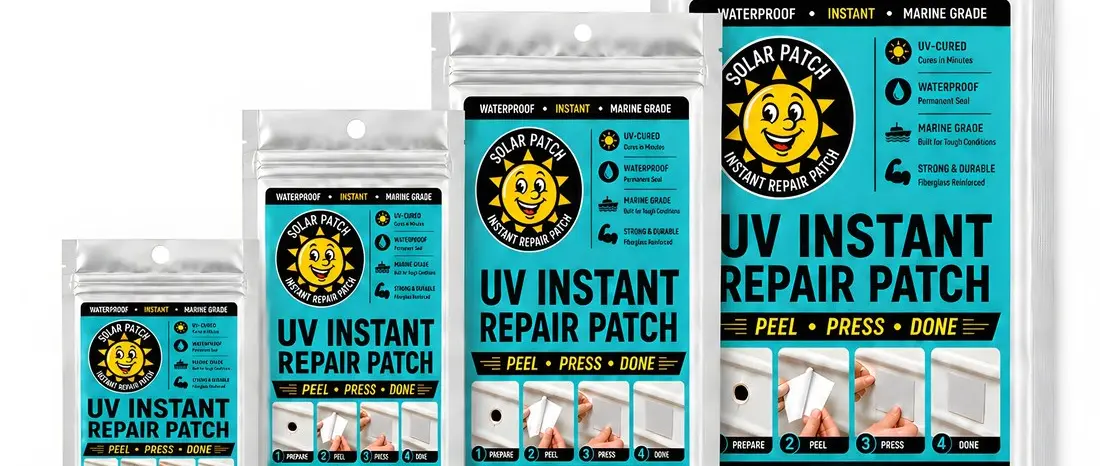
Solar Patch's published instructions describe cleaning and preparing the surface, cutting the material to size, peeling the backing and pressing it into position before curing. The manufacturer says direct sunlight or an appropriate ultraviolet lamp can harden the repair in a matter of minutes under suitable conditions. That sequence reduces the need to measure and mix separate components at the point of application.
However, the quality of the bond still depends on preparation, environmental conditions and the nature of the repair. Moisture, contamination, insufficient ultraviolet exposure or a poorly matched substrate can affect the result. Owners should follow the complete instructions and wait for the specified curing and inspection steps rather than equate a firm-feeling surface with a verified structural repair.
A compact product for small-boat dealers
Standard product sizes listed by Solar Patch range from small pieces of approximately two by three inches to larger patches around nine by twelve inches. The company also describes larger custom sizes for specialised users. That variety may appeal to chandleries and repair businesses that serve everything from fishing kayaks to modest trailerable motorboats.
Stocking several sizes can reduce waste when a small repair is appropriate, but a shop should explain the product's limitations rather than sell the largest patch as a universal solution. An owner may need material guidance, surface preparation tools and an understanding of the required finish. Marine suppliers play an important role in separating routine protection from work that requires a professional repair.
Testing data and the limits of claims
The manufacturer publishes technical information including tensile, flexural and impact test results, together with details of curing and resistance to certain environmental exposures. Such data can help engineers compare products, but figures obtained in controlled testing do not demonstrate suitability for every hull construction or operating condition.
Actual loading, temperature, movement and exposure to chemicals can change the behaviour of any repair system. Boat owners should obtain current specifications and ask the supplier how the material is intended to be applied below or above the waterline. Where a repair affects an essential hull or deck component, an independent professional assessment remains appropriate.
Safety instructions still apply
The convenience of a peel-and-apply material should not hide the fact that uncured resins and associated compounds may have important handling hazards. Solar Patch publishes a safety data sheet that should be read before work begins. Users may need protective gloves, adequate ventilation and the other measures stated in the manufacturer's guidance.
A repair undertaken on shore should also account for where the boat is supported and whether machinery or fuel is nearby. Handling ultraviolet lamps correctly matters because direct exposure can harm eyes or skin. The safest repair is one carried out in appropriate conditions by a person who understands both the material and the structural role of the surface.
What the IBEX appearance means
The 2026 IBEX exhibitor release identifies Solar Patch's presentation of UV-cured repair materials to the North American marine trade. This is a showcase of an existing product approach rather than proof that the technology has been approved for all vessel types or every hull material. The company's product imagery shows the actual packaged patch range, giving readers a correct visual reference.
IBEX brings equipment suppliers before builders, dealers and service companies able to assess a product in practical marine settings. Real-world trials, clear instructions and consistent material availability will determine the value of the concept. A short demonstration is useful but should be accompanied by the technical limitations and proper training.
A place in ordinary boat maintenance
For owners of small leisure craft, the most attractive aspect of a simplified repair product is the potential to address suitable minor damage without a large collection of specialist consumables. Correctly chosen protection on exposed areas may also reduce avoidable wear during beaching or handling. Neither benefit eliminates the need for good seamanship and regular inspection.
Solar Patch's official marine literature is the appropriate starting point for understanding the product family, current specifications and intended uses. Boat owners should choose methods according to the actual damage, material and consequences of failure. A repair that makes a vessel look sound is not necessarily evidence that it is safe to operate.