
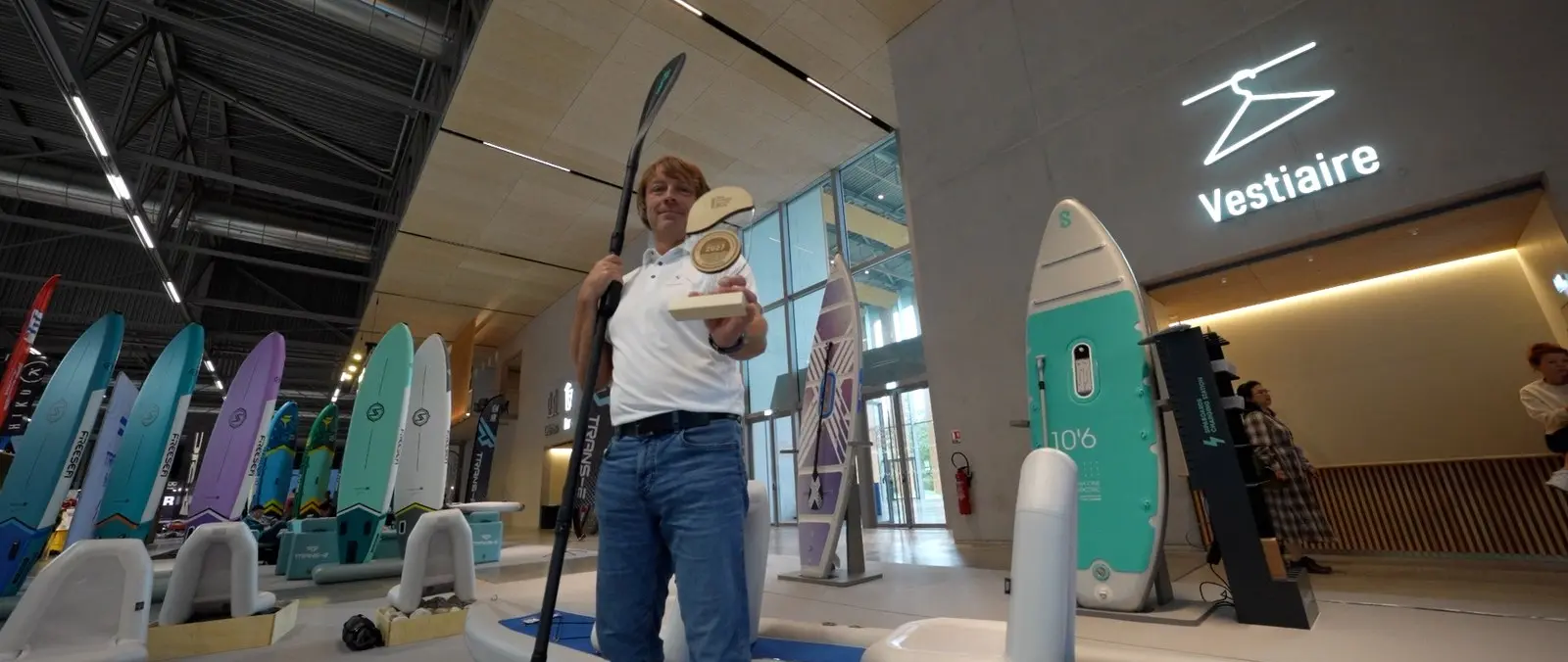
An electric paddlecraft takes the Strasbourg prize
SIPABOARDS has won the 2027 E-Paddling award at the Paddle Sports Show in Strasbourg for its E-Cruiser, a craft combining a self-inflating hull, sit-down paddling position and integrated electric waterjet. The product occupies a growing space between traditional stand-up paddleboards and compact recreational kayaks. It is intended to offer another way to enjoy sheltered waters rather than replace every type of human-powered small craft.
The show organiser describes the E-Cruiser as combining the portability associated with inflatable SUPs, the stability of a recreational kayak and electric assistance for range. Those are intended benefits, not evidence that the boat will handle strong winds or tidal currents as effectively as a larger powered vessel. Real capability depends on the finished specifications and conditions.
Self-inflation changes the setup experience
Inflatable paddling equipment can be awkward for a first-time owner to prepare, particularly when it requires substantial manual pumping at a busy launch. A self-inflating design may remove part of that routine, making it easier to get on the water regularly. Buyers should find out exactly how the E-Cruiser's inflation system operates, where its energy comes from and what procedures are required if the automatic system is unavailable.
The practical questions include packed size, total weight, inflation time and the availability of replacement parts. Portable does not always mean easy to lift for everyone. A complete package with propulsion and a battery can weigh more than an unpowered inflatable board, and it may need a trolley or a vehicle with enough storage space for the equipment.
An integrated waterjet provides assistance
The E-Cruiser uses a built-in electric waterjet rather than relying only on a paddle or a separate external propeller. A waterjet produces thrust by drawing in water and expelling it, though its operating characteristics will depend on speed, intake condition and the exact system design. Owners should still be cautious around swimmers and keep hands and loose objects away from any propulsion intake.
The motor adds potential utility when moving against a light breeze or returning from a longer outing, but energy storage is finite. Battery range claims need to be considered alongside rider weight, wind, speed and water conditions. Even with assistance, the user should be capable of paddling the craft to safety if power runs out.
The rules for powered boards are not universal
Some waterways apply different rules to motorised craft and ordinary kayaks or paddleboards. An electric waterjet may place the E-Cruiser in a different regulatory category, particularly on lakes where engines are restricted. Before launching, an owner should check the local authority's rules regarding registration, permitted propulsion, speed and insurance.
Training should also address stopping distances and control response. A small battery-powered craft can move more quickly than expected near beaches or bathing areas, where people do not anticipate powered equipment. The skipper remains responsible for keeping a safe distance and making predictable manoeuvres.
A wider shift in accessible recreational boating
The show award recognises a product that blends features from established categories rather than remaining within a conventional definition of a paddleboard. Such innovation may appeal to people who prefer seated paddling or want additional assistance on gentle-water journeys. It may also interest boaters who lack space for a trailerable hull but still want an independent way to explore a lake.
The manufacturer and its dealers remain the reference for availability, charging details, price and the precise battery specification. The award gives the E-Cruiser useful visibility, but a careful buyer should see a demonstration and evaluate its stability and handling in conditions comparable to those of their intended outings.