
A different approach to checking tank levels
Simarine is offering the STR2, a compact radar-based sender intended to report liquid levels without putting a float or probe into the tank. The Slovenian manufacturer's current product information says the STR2 supports NMEA 2000 data output and Bluetooth setup. That makes it relevant to smaller recreational cruisers whose owners want tank readings on a compatible multifunction display. The product is not a new boat launch, and the company does not identify a single named hull equipped with the sensor in this announcement. The development is an equipment option with specific technical limits to check.
Tank gauges are easy to overlook until a reading proves unreliable. A water tank that appears full may be nearly empty, while a fuel reading that sticks can undermine passage planning. Traditional senders can require an opening in the tank or a component that contacts the liquid. Radar measurement offers a different path, but success depends on tank construction, mounting and calibration. A brochure claim of universal convenience is not a substitute for checking the actual installation in the particular boat.
What the STR2 is designed to measure
Simarine specifies tank heights from 150 to 2,000 millimetres and says the radar can measure fuel, fresh water, grey water and waste without contacting the liquid in a suitable installation. For plastic tanks, its suggested arrangement mounts externally on the lid, with radar looking through the material. Metal tanks need a separate adaptor rather than being treated like transparent plastic. Those distinctions matter because recreational boats have numerous tank shapes, materials and access constraints. A sender that works on one tank may not fit another without alteration.
The company's specifications mention approximately two per cent accuracy and a small measurement dead zone, but owners should understand the conditions under which those figures apply. Irregular shapes make translating liquid height into useful volume a separate problem. A long shallow tank does not empty at the same volume-per-centimetre rate as a vertical rectangular tank. Simarine describes calibration methods in its app, yet accurate volume display still requires correct tank geometry or a properly created calibration curve. A sensor cannot infer every boat's tank capacity merely from its presence.
NMEA 2000 changes where readings can appear
The STR2 uses NMEA 2000 and is designed to transmit the standard fluid-level information packet, identified by Simarine as PGN 127505. That can allow compatible displays elsewhere on the network to show tank information rather than requiring a dedicated analogue gauge at the sender. Compatibility is still a system question: a display must support the relevant data and the installation must have a properly powered and terminated backbone. An NMEA connector alone does not guarantee that every chartplotter will present the information in the way an owner expects.
The manufacturer's page labels formal NMEA 2000 certification as pending. That deserves explicit mention even though it also describes native protocol support. A product can communicate using a published data format while a certification process is unfinished. Prospective buyers should check the current certification status and the compatibility list for their specific electronics, including software versions and tank-count limits. A technician should also confirm that a new sender does not conflict with an existing device using the same tank instance or displaying a differently calibrated value.
The analogue STR1 is not identical
Simarine offers a related STR1 alongside the STR2, and it is important not to conflate their outputs. The STR1 is intended for analogue gauges with specified resistance and voltage options, while the STR2 is the native NMEA 2000 version. Both use non-contact radar measurement, but a boat with an old mechanical or resistive gauge may need a different configuration from one with a modern digital network. The product choice should follow the display already fitted and the type of data the owner actually needs.
Replacing a conventional sender can also involve dealing with old wiring and tank fittings. Simarine's material suggests an external mount and a different connection path rather than simply attaching two wires where the previous float sender was located. Owners should inspect tank access, confirm cable protection and identify whether any obsolete opening must remain safely sealed. A digital upgrade is not complete until the old system is either correctly integrated or isolated. A false sense of accuracy from a new screen can be worse than a visibly unreliable old gauge.
Bluetooth setup and firmware support
The Simarine Connect app is used for configuration, calibration and firmware updates. That may simplify some adjustments after installation and avoid opening a gauge housing for every change. The manufacturer says the senders can detect tank height automatically, although the exact procedure and liquid level conditions must be followed. Owners should keep a note of the calibration and tank assignment rather than depending on memory. A software update should be treated as a maintenance action, with the boat in a safe state and the update procedure completed fully.
Phone-based setup introduces its own questions. Who can change calibration settings, how is the unit identified among several tanks and what happens if the phone is replaced? Documentation matters for a second owner or a service technician who did not fit the equipment. The routine level display should not rely on a mobile phone if the owner expects readings at the helm through NMEA 2000. Before purchase, check whether all necessary adaptors, cables and mounting materials are included and whether the app is supported on the intended device.
Installations on compact boats
Space is precious on a trailer boat or seven-metre cruiser. Fuel tanks may be hidden beneath seats or built under decks, where a new sender is not easy to inspect. A non-contact design may reduce the need for a probe through the tank, but it still needs a suitable surface and safe access. The installer must consider nearby structures, wiring runs and the manufacturer's stated clearances. Fuel systems require particular care, and owners must not drill, cut or modify tanks on the assumption that any electronics accessory is intrinsically safe.
Simarine gives the STR units an IP67 housing rating and a three-year warranty, but those are not blanket guarantees against every type of corrosion, impact or installation fault. Cable joints, connectors and mounting conditions still affect durability. A tank may flex, expand or accumulate condensation under deck, and a product should be installed according to documented instructions. If the tank is metal, the appropriate approved adaptor and sealing arrangement require confirmation. A small craft should not sacrifice fuel-system integrity for a convenient display upgrade.
A level reading is not a range calculation
Knowing how much fuel is present helps an owner plan, but it does not directly measure consumption, speed or safe remaining range. A tank sensor reports an estimate of contents. Range depends on engine use, current, weather, loading and an adequate reserve. A skipper should cross-check the reading with refuelling records and expected fuel burn rather than treating a screen as an infallible promise of distance. The same applies to fresh-water endurance: the sensor may indicate volume, but it does not account for individual usage habits.
Faults can arise from wiring, configuration, a damaged tank or the sensor itself. A sudden change in display should be investigated calmly rather than assumed to be a real rapid loss of contents. The installation should retain useful manual checks where practical. Digital monitoring can improve awareness, especially when several tanks serve one boat, but the skipper remains responsible for prudent reserve planning. Simarine's system is a measurement aid, not a substitute for operating judgment or the maintenance of the underlying tanks.
Pricing and certification need current checks
At the time of review, Simarine's consumer page lists the STR2 as available to order and gives a euro price, while also marking certification as pending. Prices, tax treatment, stock and technical status can change, so the site listing should not be treated as a permanent buying guarantee. Importing the equipment, adding an adaptor or paying for installation may cost more than the unit itself. An owner with a simple reliable gauge may not obtain enough benefit to justify the conversion, while a boat with several poorly monitored tanks may have a stronger case.
The company also sells the analogue STR1 and refers to adaptors for metal tanks. An accurate comparison needs the entire bill of materials rather than only the price of the digital sender. The installer should confirm the tank material, depth, network connections and display support in writing before work begins. Warranty wording and return terms matter if a compatibility assumption proves wrong. Equipment should be judged by measured accuracy on the actual boat, not solely by an attractive interface in a product demonstration.
Why the technology deserves attention
For small boats with inboard tanks, monitoring can be frustrating when traditional float senders stick or resistive gauges drift. A radar device capable of reading through suitable tank material offers a logical alternative with fewer moving components in contact with the liquid. Simarine's approach is therefore worth discussing in a compact-leisure-boating publication. That is not an independent endorsement of every performance claim, nor proof that all tank shapes will produce accurate readings without calibration. The manufacturer's technical specifications should guide a cautious trial.
The notable development is the combination of external measurement, phone-based setup and standard digital network output in a product marketed for recreational vessels. It could let owners view level data at the helm, provided compatibility and installation are sound. The next useful evidence will be field testing on different tank shapes and materials, documentation of measurement accuracy over time and clear certification updates. Those are the facts that would establish whether the convenience promised by non-contact radar translates into better day-to-day ownership.
Questions to ask before buying
The practical checklist is straightforward. Is the tank plastic or metal? Is there access to a suitable flat mounting surface, and does the depth fall within the manufacturer's range? What display will show the reading, and is its NMEA 2000 setup compatible? Who will calibrate tank volume and document the result? Are any fittings needed to maintain the integrity of the fuel or water system? The answers help prevent an enthusiastically purchased gadget from becoming an expensive installation problem.
For Leisure Boat Guide readers, the STR2 is a concrete example of marine electronics moving beyond navigation and into onboard systems monitoring. Its significance lies in practical reliability rather than novelty. A correct installation can make essential information easier to see; an incorrect one can add confusion or risk. Simarine's published specifications provide a basis for enquiry, but the final decision must be made against the boat's real tanks, network, safety requirements and service support.
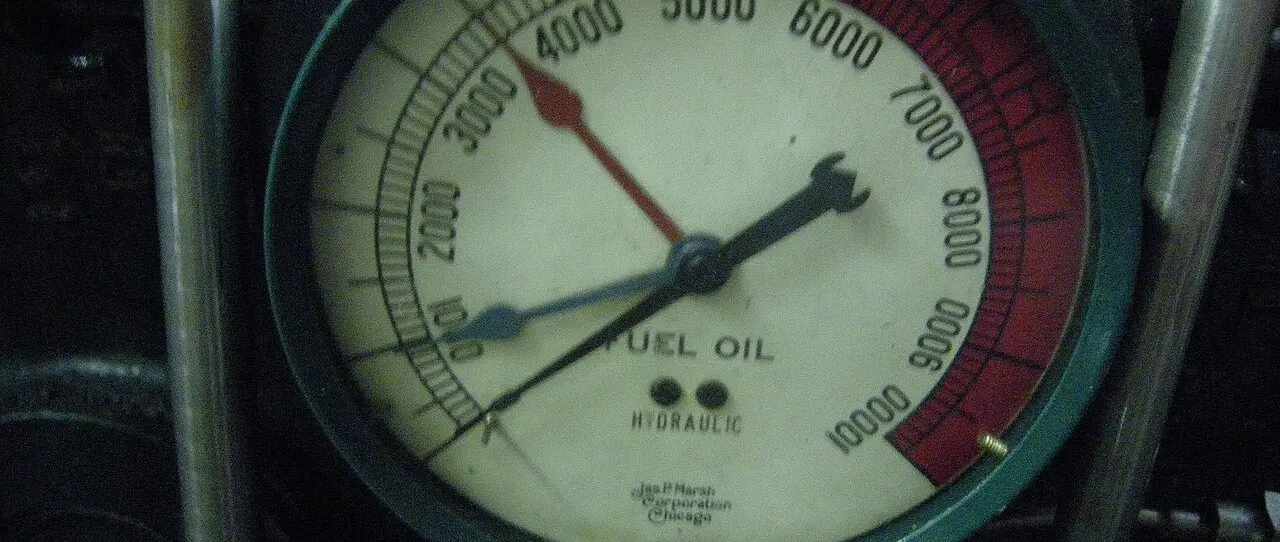
Source: Simarine STR1 and STR2 product information, current November 2026; supporting material: official information. Photograph: MV Westward - fuel gauge.jpg by Joe Mabel, Wikimedia Commons, CC BY-SA 3.0. An archival photograph of a conventional fuel gauge aboard MV Westward; it is not the Simarine STR2 product or a demonstration of its readings. Resized for web presentation.
