
A fresh demonstration brief from an established inflatable innovator
Shapewave Industries used its 5 November 2026 exhibitor notice to outline two applications it intended to bring to METSTRADE's Foiling Technology Pavilion: a luff-filling profile for a headsail and an inflatable sun awning. The Dutch company's speciality is manufacturing shaped inflatable structures rather than making conventional dinghies or ordinary stitched canvas covers. The announcement is significant because it directs that capability towards features ordinary sailors and small-boat owners understand immediately: cleaner sail profiles and practical shelter. It is not, however, a verified production launch, a published performance trial or evidence that either demonstration has entered retail distribution. Leisure Boat Guide is examining the two proposals in the context of boats under 12 metres, where storage space and crew effort are often more important than adding another complicated piece of equipment.
What a luff-filling profile is intended to address
A headsail's leading edge, or luff, interacts with the wind and contributes to how the sail develops driving force. Designers have long experimented with ways to shape this part of the sail while retaining a useful range of trim adjustments. Shapewave's notice describes a proposed inflatable luff-filling profile, but does not publish aerodynamic results, dimensions or an approved installation manual. The meaningful idea is that a shaped, flexible structure may provide a different way to manage the transition between sail and forestay. For sailors of small sportsboats or trailer-sailers, the appeal would depend on whether the resulting assembly remains simple to rig, adjust and stow. Claims of improved speed or pointing ability would require comparative tests on the same boat with controlled sail designs and wind conditions. A demonstration model by itself cannot establish that performance advantage.
The manufacturing method behind the concept
Shapewave describes technology for creating complex inflatable shapes by joining membranes with internal webbing rather than relying exclusively on standard, relatively uniform inflatable forms. Its official exhibitor profile identifies software-guided design and a wavemaker machine equipped for manufacturing free-form structures. These processes may enable a shape to be tailored to an unusual deck or sail geometry. That is an engineering possibility, not a promise of a specific pressure rating or service life for the new sail profile. Builders and sailmakers will want to know the available materials, seam strength, construction tolerances and how the shape behaves when repeatedly inflated, deflated and folded. For a recreational sailor, the key question is whether the new component can survive normal handling by a small crew, not whether its manufacturing process sounds particularly advanced. Repeatability and practical repair options are essential if it is to become a real boating product.
Inflatable shade as a separate small-boat proposition
The same exhibitor statement mentions an inflatable sun awning, a concept with broader appeal than racing sail development. On a small dayboat, a familiar rigid bimini can take valuable space and create awkward projections during towing or storage. A conventional soft awning may require poles, tensioned straps and time to assemble. An inflatable structure could conceivably offer a shaped shelter that packs down into a smaller package, provided the supporting fittings and inflation requirements are well designed. Shapewave has not publicly supplied a complete performance specification for its planned demonstration, so assumptions about deployment speed, wind limits or total packed weight would be premature. Buyers would need to establish those figures for the actual product. The idea deserves attention because shade is a real safety and comfort need on exposed boats, especially for children and guests during long summer days.
Wind loading is the first serious design test
A light awning is still a sail when wind catches it. Any inflatable shelter must manage lateral forces on its supports, attachments and the boat itself. The seemingly attractive ability to inflate a canopy quickly does not make the structure suitable for use underway or in a gusty anchorage. A manufacturer must specify permissible wind conditions, how to secure the canopy and how it can be released or deflated safely if the weather changes. Small boats are particularly sensitive to improperly placed loads, and a canopy that can shift suddenly may compromise visibility or passenger movement. Buyers should resist treating a demonstrator as equipment ready for every trip. The relevant documentation includes anchoring arrangements, tests for fabric and seam strength, UV resistance and practical advice about rainwater drainage. A credible commercial version would also explain whether it can be used while the boat is moving.
Stowage could matter more than spectacle
Many leisure boats under twelve metres have little unused storage. Inflatable tenders, paddles, personal flotation devices, mooring lines and safety equipment already compete for lockers. A shade or luff accessory that folds into a compact bag could provide a tangible improvement, but the effective space saving needs to include pumps, fittings, protective covers and drying arrangements. A product that seems small in an advertisement may be awkward when packed wet or when sharp deck hardware is nearby. Boat owners should ask for measurements of the actual folded system, not just an empty fabric shell. They should also ask how long inflation takes and what happens if a valve is damaged. For a trailer-sailer, the product should fit the rhythm of launching at a slipway and packing away in changing weather. For a moored dinghy, resistance to prolonged sun exposure may matter more than the absolute smallest packed dimensions.
Sail handling and the pressure question
If an inflatable component is added to the luff of a headsail, its effect will depend on maintaining the intended shape through a range of wind strengths and sail settings. Internal pressure is likely to influence stiffness, while temperature can change pressure in a sealed chamber. Those are standard engineering issues for inflatable equipment, and the manufacturer's eventual documentation should address them rather than expecting users to improvise. Sailmakers will need to consider how the part interacts with furling, halyard tension, mast bend and the sail's existing construction. Equipment that delivers an attractive shape on a demonstration table may behave differently as a sail luffs, flogs or is lowered onto a wet foredeck. A small crew must be able to recover the system without exposing people to unnecessary risk near the bow. These operational considerations will determine the usefulness of the concept more than the novelty of the internal fabrication technique.
Repairs must be available outside a specialist factory
Leisure sailors are often comfortable repairing conventional fabric, lashings and minor sailing hardware. A three-dimensional welded inflatable structure may require different patches, adhesives or professional repair methods. Before such equipment becomes part of a cruising inventory, owners should know whether a puncture can be repaired aboard, whether a damaged internal web can be accessed and whether spare valves and fittings are available. It would be unwise to infer the answer from ordinary inflatable dinghy repair practices. Different polymers and joining techniques can have different requirements. Shapewave's manufacturing method promises design freedom, but long-term ownership also requires repairability, documented materials and a plan for disposal or replacement. If a component must be sent back to a specialist workshop for every minor failure, the convenience advantage may narrow. The business case is stronger if routine servicing can be carried out by a competent local marine technician.
Installation on existing small boats
Retrofit potential will be an important question because most recreational boats in use are not newly built. A luff-profile concept may need careful tailoring to a sail's dimensions, forestay type or furling arrangement, while an awning must be adapted to handrails, deck cleats, bimini mounts or other structures. An owner should not assume an inflatable shape developed for one demonstration platform can be transferred directly to another boat. Boatbuilders may be able to specify secure attachment points during construction, but retrofit work requires a survey of the existing deck layout and safe passenger routes. Removable gear also needs a procedure for avoiding damage to paint, gelcoat and rigging. The practical test is whether an ordinary owner can install and remove the system according to clear instructions, without relying on a special tool kit or a permanent modification that affects the boat's warranty.
Pricing and the likely early market
The company has not published pricing for the specific planned headsail profile and shade demonstrators in its 5 November notice. It is therefore impossible to compare their value directly with standard sails, luff accessories or canvas awnings. Early adopters may include performance-oriented sailors and designers seeking unusual shapes, but broader demand will depend on durability, repeatability and a defensible cost relative to familiar alternatives. For a family with a modest trailer-sailer, a complex custom accessory may be less attractive than a robust, inexpensive solution with accessible spares. The reverse can be true if it significantly reduces rigging time or makes a favourite open cockpit usable during hot weather. Buyers should wait for actual quotation, specification and warranty terms instead of relying on speculative claims about the cost savings of advanced manufacturing. A good product should justify itself in ordinary use.
The relationship to larger marine design developments
The Foiling Technology Pavilion attracts interest from technically demanding racing projects, but useful innovations often move from specialist applications into mainstream boating over time. Lightweight structural techniques, improved fabrics and more efficient manufacturing may eventually inform equipment for training fleets, club dinghies and small cruisers. That migration is not automatic. A component designed for a racing team may be costly and require maintenance beyond the tolerance of an occasional sailor. Shapewave's stated intention to demonstrate both a sail-related profile and an everyday awning suggests an interest in multiple market levels. The result will be easier to judge when a standardised product, rather than a one-off display, is available. Designers should assess the trade-offs in mass, complexity and lifespan as carefully as they assess any aerodynamic advantage.
What is actually confirmed
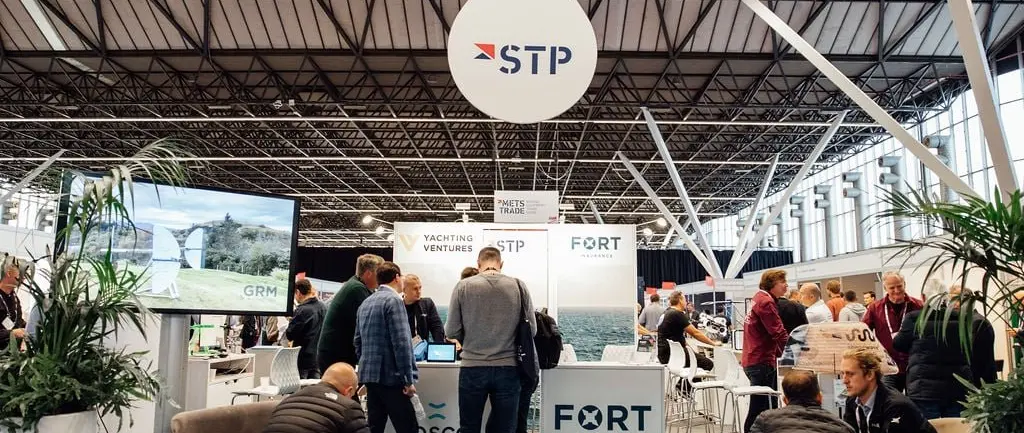
The original company-authored exhibitor post, dated 5 November 2026, names Shapewave, the METSTRADE 2026 Foiling Technology Pavilion and two planned demonstration pieces: a luff-filling profile for a headsail and an inflatable sun awning. The exhibitor profile confirms the company's work with complex inflatable structures and its presence at the Amsterdam event. Those statements support a news article about development and intended demonstrations. They do not establish certification, accepted production orders, competitive racing performance or confirmed use on a particular retail boat model. The contextual image used here is an older, clearly identified organiser photograph, not evidence of a finished 2026 accessory. That distinction matters because the line between a promising experimental idea and a purchasable boat part is substantial.
What small-boat owners should watch next
A useful next step would be a documented demonstration showing repeated inflation, deployment, exposure to gusts and practical pack-down procedures. For the headsail profile, buyers should look for comparative sail-testing evidence and feedback from sailmakers accustomed to the class of boat involved. For the awning, dimensions, attachment details, fabric protection and actual wind limits are the critical facts. Owners should also want clear instructions for repairs and winter storage. If those details are eventually supplied, shaped inflatables could add a flexible tool to the small-boat equipment market. Until then, the Shapewave announcement is best understood as a credible line of development rather than a proven upgrade that every sailor should install immediately. The value of the technology will be measured not by the intricacy of the manufacturing process but by whether a crew can use it safely, simply and repeatedly on the water.
Primary reporting and image credit
Primary manufacturer and organiser source(s): https://www.metstrade.com/exhibitors/shapewave-industries-b-v/news/it-s-all-in-our-newsletters-for-now. © METSTRADE / original event photographer. General Startup Pavilion 2023 archive photograph, not a photograph of the proposed 2026 Shapewave prototypes. Image is used only for correctly attributed factual editorial coverage and never represented as open-licence stock photography.