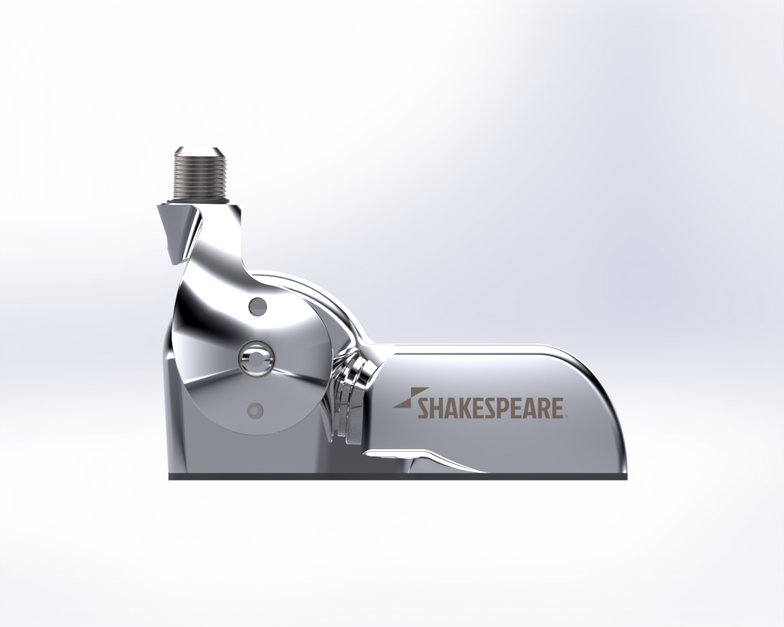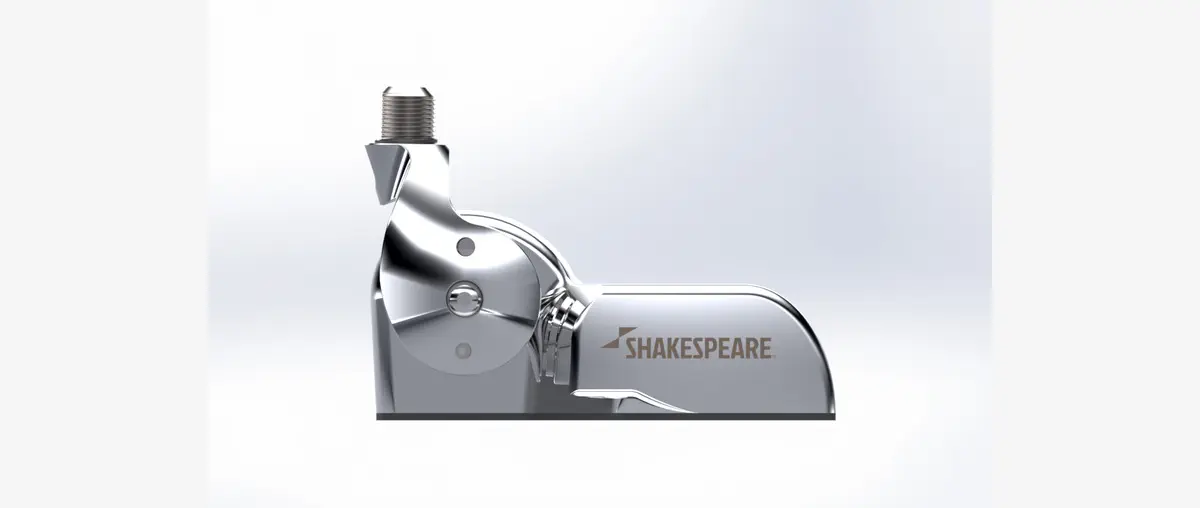
A different way to lower and raise an antenna
Shakespeare Electronic Products Group is listing the 9187-MM motorised antenna mount in the 2026 METSTRADE marine equipment catalogue, describing a powered mechanism that can tilt an antenna without requiring a crew member to reach the mounting point directly. The manufacturer's entry, dated 1 September 2026, emphasises marine-grade materials, sealing against weather and the ability to raise or lower an antenna when required. For recreational boats under twelve metres, this is relevant because antenna placement often involves compromises between reliable radio reception, access, low bridge clearance and the movement of crew around the cockpit. A motorised mount could make it more convenient to lower an aerial before a bridge or during storage, but a convenient mechanism does not automatically create better radio performance or remove the need to inspect the equipment. The public listing provides a product concept rather than a complete set of electrical, mechanical or radio-frequency specifications.
What the official manufacturer listing confirms
The first-party exhibition page identifies the Shakespeare 9187-MM specifically as a motorised antenna mount, not an antenna, radio or complete communication system. It describes a motorised tilt arrangement intended to reduce manual handling and an enclosure designed for demanding marine conditions. It does not publish the full mounting dimensions, compatible antenna weight, exact control interface or operating voltage in the short catalogue text. Those details are necessary before a buyer can decide whether it suits an existing VHF aerial, television antenna or another item. The phrase all-weather performance is a manufacturer's general claim rather than an independent guarantee against every possible exposure. Owners should request current documentation and confirm the intended application with the supplier. A marine-grade finish may improve suitability, but its performance depends on the complete installed assembly, including fasteners, cabling and the antenna carried above it.
The problem of low bridges and storage height
A small motorboat may spend time on inland waterways or be kept in a trailer storage area with limited clearance. Even a modest antenna can extend above the windscreen or hardtop enough to affect whether the boat fits beneath a low structure. Some owners lower their aerial by hand before passing under a bridge, a task that can be awkward or dangerous if the fitting is hard to reach. A powered tilt mechanism may allow adjustment from a more convenient control location. Nevertheless, bridge clearance must be calculated from the highest point of the boat in the actual configuration. The antenna may not fold completely horizontal, and the mount may have moving parts or a minimum height that still needs to be considered. The skipper should never approach an obstruction relying only on a general claim that a powered mount can lower an aerial.
Radio reception is determined by more than the mount
The performance of a VHF radio depends on the antenna, coaxial cable, connector quality, radio equipment, installation height and surrounding structure. A motorised mount can position an antenna, but it does not itself amplify the radio signal or ensure that communications will be reliable at sea. The skipper should understand whether the aerial is intended to be used only in its fully raised position and whether the supplier imposes restrictions on transmitting while it is tilted. A changed antenna orientation may affect coverage, depending on the design. The 9187-MM catalogue description does not establish a universal effect on radio performance, so owners should refer to the relevant antenna instructions. A professional installer can examine how the powered mount integrates with the rest of the communication system. Reliable emergency and routine communications must not depend on assumptions about a new mechanical accessory.
Why manual reach can become a safety issue
A boat with a fixed hardtop or a high radar arch may place antenna hardware in an area that crew cannot reach easily. Leaning outside the cockpit, climbing onto a wet surface or attempting to release a stiff fitting while the boat is moving can create a serious hazard. Reducing the need for manual handling may therefore be an advantage, particularly for single-handed operators or smaller crews. However, remote operation introduces its own safety questions. A moving antenna could strike another fitting or trap a hand if someone is working near it. The control should be positioned so its operator can understand what is moving, and the installation should respect any manufacturer-required clearances. A safe system is not one that simply moves on command; it is one whose movement is predictable and does not create a different danger during ordinary use.
Weather sealing and marine materials
An external antenna mount may face direct spray, rain, ultraviolet radiation and wide temperature changes. Shakespeare describes the 9187-MM as using marine-grade materials and sealing intended to support all-weather performance. These are sensible features for outdoor equipment, but the public listing does not state the exact ingress-protection classification or a universal corrosion-resistance test. That information should be checked before installation in a highly exposed location. The fasteners and electrical connections must also be appropriate to the supporting structure and environment. Water can enter through a poorly sealed cable penetration even when the visible motor housing remains intact. A boat owner should regard the whole assembly as an exposed electrical installation that needs suitable design and maintenance, not as a household actuator that happens to be installed on a vessel.
Supporting the antenna mechanically
A small VHF aerial may be relatively light, while a longer or heavier antenna can impose significantly greater loads during movement. Wind pressure, vibration and boat acceleration can amplify the forces carried by the mounting hardware. A motorised base must therefore be matched to the actual aerial's dimensions, mass and permitted configuration. The source does not identify a universally approved antenna size, so a supplier should confirm the compatible range. The deck, hardtop or arch supporting the mount also needs adequate reinforcement. A unit fixed through thin unsupported material may become loose even when the mechanism itself is functioning normally. Owners considering a retrofit should inspect the existing mounting point for cracking, corrosion or water damage before installing additional hardware. The correct structural arrangement protects both the antenna and the boat.
Electrical supply and controls
A powered tilt system introduces electrical wiring to equipment that may previously have been adjusted with a manual hinge. The installer must establish the correct operating voltage, current draw and protective device, together with the manufacturer's recommended control switch or interface. An owner should not connect the mount to an arbitrary accessory circuit on the assumption that any small DC supply is suitable. Wiring may pass through a deck or roof where it must be protected from abrasion and sealed against moisture. The operator should know which control raises or lowers the aerial and whether the system indicates its position. Accidental activation could create a problem near a bridge, trailer cover or another antenna. Controls should be clearly labelled and used only under suitable conditions.
Power failure and a manual fallback
Mechanical equipment can become unavailable because of a battery fault, damaged wiring or a failed motor. Before buying a motorised antenna mount, an owner should ask whether the exact 9187-MM offers an approved manual override and what to do if it stops while lowered or raised. The exhibition listing does not specify this, so a fallback should not be invented. A boat passing through low bridges needs an arrangement that is safe even when an accessory fails unexpectedly. It may also be important to know whether the system remains locked in position without electrical power or requires a separate securing method. Owners should not try to force the mechanism through resistance without guidance. A practical installation plan includes failure procedures, not only instructions for routine push-button operation.
Maintenance around moving parts
Salt, dirt and prolonged exposure can affect joints and moving mechanisms, even when a product is made for the marine environment. The owner should request the manufacturer's cleaning and inspection schedule, including any recommended lubricant or restrictions on high-pressure washing. Cable entries and mounting fasteners need periodic attention, especially where the mount is repeatedly raised and lowered. A mechanism that begins moving slowly or making unusual noises should be inspected before it fails in a critical position. Crew members should keep hands clear of moving parts and avoid placing ropes or loose equipment where they could become trapped. Spare-part availability also matters for owners cruising away from a main dealer. A product intended to reduce manual handling remains useful only when the owner can maintain it and obtain appropriate service.
Planning an installation on a fishing boat
A small fishing boat may carry multiple aerials, rod holders, a canopy and other equipment on a compact frame. Adding a motorised antenna mount requires careful consideration of the path swept by the aerial when it folds. It should not collide with fishing rods, lights or a radar unit. The skipper also needs to check whether people are normally seated or standing within that area. A clear view of the mount from the control location can help the operator see when the antenna is moving, though the manufacturer's precise control requirements must take priority. A boat may benefit from moving the aerial to a better location rather than simply automating an awkward existing one. The most useful design decision emerges from examining the complete deck layout.
Trailerable boats have another set of limits
Owners who transport their boats on road trailers may need to lower antennas before departure, both to meet height restrictions and to protect the equipment from wind and vibration. A powered tilt mount could simplify preparation if the hardware is approved for that use. However, the skipper should confirm that the lowered antenna is secured against movement during road travel. A motorised hinge may not be a substitute for a separate transport restraint. The owner also needs to check whether the antenna projects beyond permitted dimensions or can strike another object while the boat is manoeuvred into storage. Road transport introduces loads and rules different from ordinary use afloat. The manufacturer's instructions, trailer requirements and applicable regulations should determine the final procedure.
Comparing powered and manual mounts
Manual antenna mounts are often inexpensive and simple, while powered hardware may be valuable when an aerial is difficult to reach or must be moved frequently. The correct choice depends on access, the boat's electrical capacity and how often clearance is a problem. An owner who lowers an antenna only once each season may obtain little benefit from a motor, while someone regularly navigating beneath low bridges might appreciate the convenience. The cost comparison should include installation, electrical protection and future maintenance. A simple manual system can have advantages in reliability and serviceability, but it may expose crew to awkward handling if poorly positioned. The presence of a powered alternative gives boatbuilders another choice rather than establishing that all manual mounts are outdated.
Current catalogue status and practical value
The 9187-MM is an identified Shakespeare marine product with a motorised tilt function and a stated design emphasis on weather resistance. Its original METSTRADE product release was September 2026, not a fresh unveiling on 23 November. For Leisure Boat Guide readers operating craft below twelve metres, the main appeal is convenience when an antenna needs to be repositioned for access or storage. The decision should be based on approved antenna compatibility, mounting strength, electrical details and a clear failure procedure. It is also vital to retain reliable radio communications through an appropriately installed antenna and to verify actual clearance before passing under a bridge. A carefully selected powered mount may make boating easier without distracting from those fundamentals, while a poor installation can introduce new hazards despite the attraction of push-button operation.
Original industry sources and image credits
Reporting based on Shakespeare Electronic Products Group first-party 9187-MM Motorized Antenna Mount, original METSTRADE product entry dated 1 September 2026.
Lead image: Shakespeare 9187-MM Motorised Antenna Mount Adds Push-Button Adjustment to Small Boats — original manufacturer product photograph. © Shakespeare Electronic Products Group. Original supplier image.