Swedish marine rigging manufacturer Seldén Mast has introduced the S19, a compact self-tailing winch intended for keelboats and smaller sailing yachts. Announced on 11 November 2026, the S19 extends the company's existing S-series range below the S30, bringing its asymmetric drum technology to sailors who need an appropriately sized winch for lighter loads and tighter deck layouts. Seldén set a recommended retail price of €565 excluding VAT, with deliveries expected to begin in December 2026. The winch was also part of the company's display at METSTRADE in Amsterdam from 17 to 19 November. For the under-12-metre leisure-boat market, this is a product announcement about everyday sail handling, rather than a claim that larger electric equipment is necessary for a small yacht.
Why the size of a winch matters
A winch must handle the loads placed on a sheet or control line while remaining practical for the crew to use. Choosing one simply because it looks powerful can create unnecessary weight and expense, while a winch that is too small may make handling difficult or exceed the intended working limits. Smaller keelboats also offer limited deck space. The position of a winch affects how a sailor reaches the sheet, whether a handle can rotate freely and how the line runs around other fittings. A compact unit may be useful when those constraints are properly assessed. The S19 was designed to meet a segment below Seldén's existing larger winches, but its announcement is not a universal sizing guide for every boat of a particular length.
The S19 and Seldén's existing range
The manufacturer says its previous S-series span included sizes S30 to S66. The new S19 is positioned as a smaller self-tailing model, aimed at compact keelboat installations and smaller yachts that benefit from a suitably proportioned winch. The number in the product name is a model designation and should not be treated as a boat-length rating. Choosing deck hardware requires the actual sheet loads, line diameter, deck reinforcement and crew arrangements to be considered. The manufacturer has not published, in this announcement, a complete universal list of boats or sail plans that are automatically compatible. Owners planning a replacement should check the current S19 technical documentation and obtain fitting advice where structural or load questions arise.
A distinctive drum design
One central feature is Seldén's patented ART, or Asymmetric Rib Technology, applied to the aluminium drum. The manufacturer says the rib arrangement is intended to improve grip while limiting line wear and providing a smoother controlled release. The issue is familiar to people who trim a jib: a rope needs sufficient friction to be controlled under load, but its movement around a drum should not create unnecessary chafe or unpredictable snatching. Drum surface geometry is one influence among several, including line material, condition, diameter and the number of turns used. Seldén's description is an attributed product claim. No independent comparative wear test or measured efficiency improvement is included in the original launch announcement, so the benefits should not be expressed as certified percentages.
How the self-tailer is intended to work
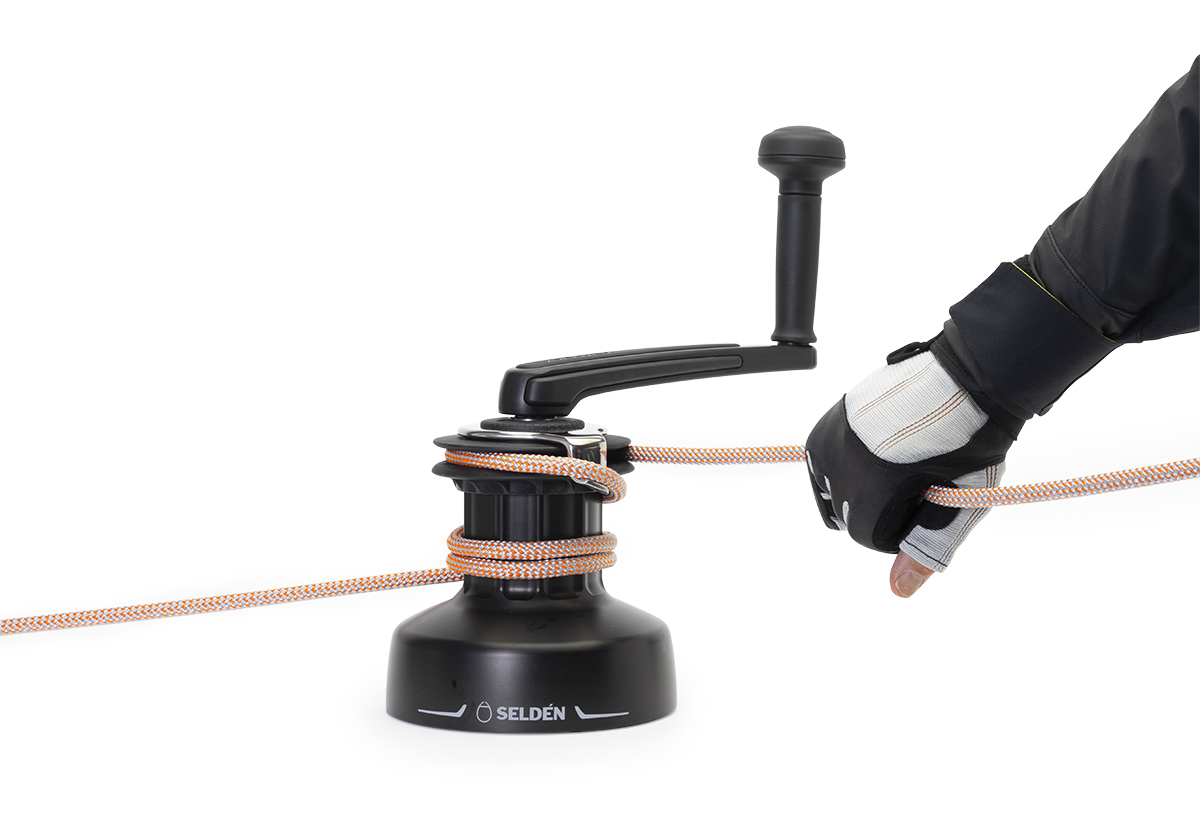
Seldén describes an operating sequence aimed at making tacking more straightforward. The sailor takes the windward sheet around the drum two or three times, feeds it through the self-tailer and places the winch handle into the socket. As the boat passes through the wind, slack can be taken up before final trimming with the already positioned handle. This is the manufacturer's practical explanation rather than a substitute for learning proper sheet handling aboard the particular vessel. The number of turns, line compatibility and loads still depend on the installation. A self-tailing mechanism is not a reason to leave loaded running rigging unattended, and a sailor must remain conscious of fingers, clothing and loose lines near moving equipment.
Implications for a small cockpit
On a compact cruising or racing keelboat, a crew may need to move between the helm, sheets and other controls within a small area. Winch placement can improve or impair that movement. A smaller component can leave more clear deck, but a poorly positioned winch may still create awkward lead angles or make it difficult to reach the handle. The S19's compact dimensions are therefore useful only in context. An owner considering a refit should examine the load path from sail to block to winch and ensure that the mounting structure can support the forces involved. The official release does not state that the new unit is a drop-in replacement for every older Seldén or competitor product. Hole patterns, deck thickness and required backing arrangements need to be verified.
Line wear and day-to-day ownership
Sheets are consumable parts, and their condition affects both comfort and safety when sailing. A sailor may notice flattening, glazing or local abrasion where rope repeatedly passes over hardware. The S19's rib design is intended to combine useful friction with gentler release, but owners still need to inspect ropes and hardware for damage and contamination. Salt, grit and poor lead angles can contribute to wear regardless of the design of the drum. Similarly, a winch should be maintained according to the maker's servicing instructions, particularly when used in salt water or left exposed between outings. The product announcement does not specify that the S19 can operate without inspection or regular care, and buyers should not infer any extended maintenance interval from the marketing description.
Manual sailing remains central
The S19 is a manual winch, not a newly released electric system. That distinction may make it appealing to owners who prefer straightforward equipment and want to avoid additional electrical installation or battery demand. However, manual operation still requires appropriate physical effort and correct technique. A small boat may be sailed by a couple or a short-handed crew, and the winch must be matched to their ability and sail plan. The launch material emphasises a simple tacking process and the practical benefits of the self-tailer. It does not establish a guaranteed reduction in the force a particular sailor will need to apply. Sailing conditions and the actual loads on the sheet remain central to handling decisions.
Price and the December delivery plan
Seldén's recommended price for the S19 was €565 excluding VAT, with deliveries announced to commence in December 2026. A recommended retail figure is not the same as a final installed price. Local taxes, dealer charges, mounting accessories and professional labour can change the total, and delivery plans may be revised after an initial announcement. Prospective buyers should confirm current availability with an authorised supplier before arranging a refit around a specific date. It is also important to distinguish the date of the product announcement from the time a customer can obtain the hardware. The winch was shown at METSTRADE in November, while the manufacturer indicated commercial deliveries would follow in the next month.
What to ask before ordering
A useful buyer checklist begins with the vessel rather than the new catalogue page. What control line will the winch handle? What is its diameter and construction? How much load is expected, and where will the lead enter the drum? Does the deck have adequate reinforcement, and can a sailor rotate the handle without an obstruction? Can the self-tailer be reached comfortably and used without placing hands near other loaded lines? Those questions should be addressed through manufacturer's documentation and qualified installation guidance, particularly when replacing an existing winch whose loads have not been independently assessed. The S19 release provides an introduction to a new model, but it cannot answer every technical question about an individual boat.
Why sail-handling details deserve attention
For many owners of small sailing yachts, the difference between an enjoyable outing and a difficult one is often found in routine tasks. A fair-weather tack should be smooth, but gusts, tired crew or an awkwardly led line can make a simple manoeuvre demanding. A reliable winch contributes to a well-organised cockpit alongside blocks, cleats, furling gear and clear communication. The S19 adds another hardware option for builders and owners to consider. Its significance should not be exaggerated into a promise of safer sailing under all circumstances. Competence, suitable sail area, good maintenance and responsible weather decisions remain essential. A piece of deck equipment helps a trained crew perform a task; it does not replace the crew's judgment.
Official photograph and product context
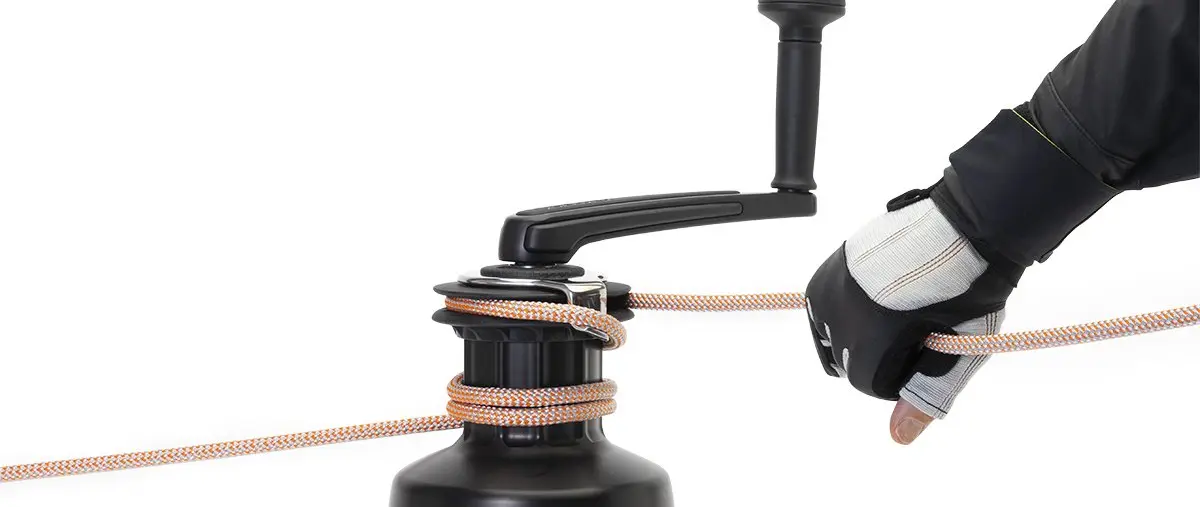
The accompanying image is a genuine Seldén Mast photograph showing an operator handling a self-tailing winch and its sheet. It comes from the manufacturer's official winch range page and illustrates the function of this type of deck hardware; it is not presented as a photograph of the new S19 model. Product identity, recommended price, December delivery plan, patented drum description and the METSTRADE display are drawn from the same official release. No independent performance tests are presented by this report, and none should be inferred from the official photograph. The relevant ongoing questions are when dealers can supply the new model, which lines and installations it supports and what technical fitting requirements owners must follow.
What the launch establishes
The confirmed news is a new small self-tailing winch joining Seldén's existing S-series, with patented ART drum geometry, an operating approach intended to simplify the tacking routine, a recommended €565 pre-tax price and a December 2026 delivery expectation. Those are concrete details of a product launch whose stated market is compact keelboats and smaller sailing yachts. Future testing may illuminate how the S19 performs in different boats and weather conditions, but those results are not contained in the initial statement. Owners considering the hardware can use the announcement to start a practical technical discussion with a supplier, not to bypass the checks needed for a safe and appropriate installation.
Sources and image attribution
Primary reported announcement: https://www.seldenmast.com/newspost/s19-winch/.
Official photographic provenance: https://www.seldenmast.com/products/winches/. Image supplied by the originating organisation, credited in the photograph title; original copyright remains with the rights holder. Official image file. The photographs are documentary or clearly labelled archival illustrations, not evidence of events that have yet to happen.