
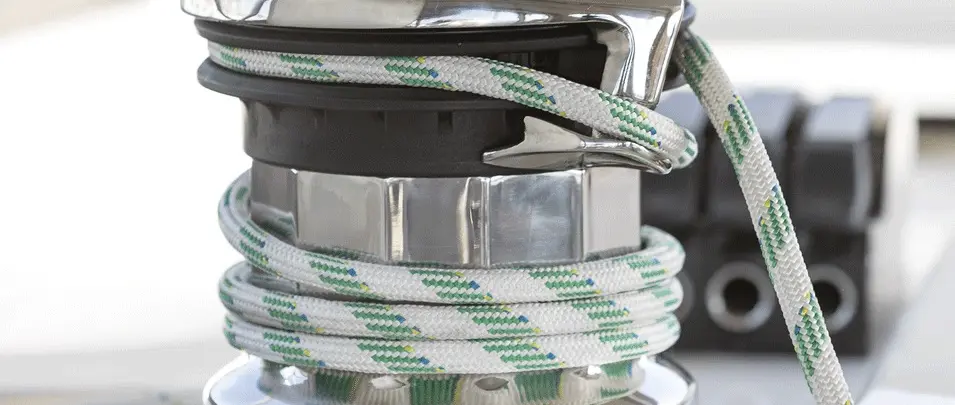
Seldén Mast's reversible electric sailing winches have received a Special Mention in the Deck Equipment category of the 2026 DAME Design Awards, recognising an arrangement that can both pull in and ease a loaded sail-control line under powered command. Unlike an ordinary powered winch that primarily assists trimming, the Seldén system is designed to reverse in a controlled manner while the rope remains in its self-tailing grip. The award was announced at METSTRADE on 17 November and is relevant to owners of smaller sailing boats who operate with one or two people aboard. The idea is appealing, but sailors still need to understand the winch's load limits, line behaviour and what happens when the electrical supply fails.
What the 2026 DAME jury recognised
The event's official award announcement lists Seldén Reversible Electric Winches as a Special Mention, not as a category winner or one of the three overall winning products. That distinction matters because award categories carry different recognition and do not all indicate the same result. The reversible design itself was presented earlier in 2026, including the E40rev model, so November's news is its DAME acknowledgment rather than an entirely new product launch. The contribution under review is the handling method: a way to ease a loaded line through an electric winch without first taking it out of the self-tailer. The concept is about reducing tasks under load rather than removing the need for skilled sailing practice.
How the normal electric winch workflow differs
A conventional electric winch makes it easier to haul in a sheet or halyard, but easing a line may still require the crew to take control of the rope manually, release it from a self-tailing jaw or transfer load to another arrangement. Those actions can place hands close to moving equipment and require careful coordination when wind pressure is strong. Seldén describes its reversible range as allowing a controlled easing movement at the push of a button, so the rope can remain engaged. Whether this reduces workload on a particular boat depends on how its sheets, clutches and control lines are led. A good winch cannot compensate for an unsuitable deck layout or incorrectly sized rope.
Two speeds and bidirectional operation
The manufacturer's METSTRADE description says the winches provide two speeds and genuine operation in both directions. Forward movement is used for trimming; reverse movement eases a loaded sheet or other suitable line. That sounds simple, but the dynamics of a loaded line are not always benign. Sail pressure can vary suddenly during a gust or turn, and a rope can behave differently when it is wet, worn or not compatible with the gripping surface. A sailor should confirm the maker's approved rope diameter range and maximum safe working loads before specifying the equipment. Control of the winch is only one element of safely controlling the sail.
What easing directly from the self-tailer means
The self-tailing mechanism normally helps hold the working end of a line while the winch pulls it under load. Seldén's design aims to make the reverse function possible without manually opening or clearing that grip. For a short-handed crew, eliminating one operation could be significant when several things need attention at once. However, it does not mean a loose line can be left anywhere on deck or that the rope will always run perfectly through nearby blocks and clutches. Every line path still needs a clear lead and a place for rope to collect safely. The manufacturer should demonstrate exactly which configurations are approved and how to respond if a line jams.
A possible advantage for short-handed sailing
On a compact sailing boat, the helmsperson may be responsible for steering, navigation and sail trim during a short passage. Another crew member may be occupied with lookout or line handling, leaving little capacity for repositioning around the cockpit. An appropriately installed reversible winch may allow a loaded sheet to be eased without someone moving to the winch. The company's material describes a remote command from the helm as a useful application. That convenience should be weighed against the need to observe the sail and verify that the rope is actually moving as intended. A button cannot tell the whole story of the sail's load or the position of the boom.
Easing a sheet in a gust
A gust can increase sheet load rapidly, making it important to reduce sail force safely when conditions require. A powered reverse feature may provide an additional means of easing an appropriate line, but it must not be assumed to replace sound heavy-weather procedures or manual emergency options. The boat's sail plan, winch sizing and control placement influence what can be done under load. Sailors should understand whether the equipment has speed or load limits in reverse and how the mechanism behaves when it reaches those limits. Demonstrations should include controlled, moderate loads before the crew relies on the system in more challenging conditions.
Remote operation still needs clear command authority
A control button installed near the helm can make operation more convenient, but it can also make it easier to issue a command while another crew member is close to moving rope. Good installation practice therefore requires controls located where the operator can see the working winch and the relevant sail area, or a safe procedure for confirming that the line is clear. An unexpected winch movement can injure hands even when the product has safety-oriented features. Crew should know which button trims and which eases, how to stop movement immediately and whether any additional protections are part of the system. The decision should be made as a team procedure, not only a hardware choice.
Manual operation and loss of power
The manufacturer has described the E40rev as a powered winch design that may also be operated manually under the appropriate conditions. Owners considering a specific model should confirm precisely how that operation works and what happens when power is interrupted or a controller fails. A loss of electrical supply should not leave the crew uncertain about how to handle a loaded sail-control line. The final installation manual, rather than general press coverage, must govern emergency procedures and permitted manual equipment. It is also sensible to identify whether the reverse feature can still be used in any limited mode when the drive system is not working as expected.
Electrical load on a smaller sailing boat
Powered deck equipment places demands on a boat's batteries, cables and protection devices. A small sailboat may have limited charging capacity, especially during passages when its engine is not running. Owners should request the winch motor's peak and typical electrical requirements and ask how the duty cycle affects the battery system. A voltage drop during heavy loading can reduce equipment performance, so suitable cable sizes, protection and sound connections are important. An installer must also consider exposure to spray and the routing of wiring to the cockpit or winch base. A convenient winch arrangement should not create electrical vulnerabilities in an otherwise reliable boat.
Mechanical installation and backing
Winches can transmit substantial forces into a cockpit coaming or deck. Fitting a motorised system may require more space beneath the deck than an existing manual winch occupies, as well as sound structural support and access for service. Before ordering, a boatyard should assess the mounting surface and how the winch's loads will be distributed through backing plates or other reinforcement. A vessel's existing winch location may not be suitable for the new motor assembly or its cable routing. Owners also need to retain access to clutches and associated running rigging. A good design adapts the complete arrangement rather than simply substituting an electric unit in the original holes.
Sail-control lines need correct specification
An electric winch can handle the load only if the rope is appropriate for the drum, self-tailer and intended duty. Line diameter, construction, condition and surface wear all affect gripping and movement, particularly when a loaded rope is eased rather than hauled in. The manufacturer should specify compatible line ranges and any restrictions involving high-modulus fibres or particular cover materials. An owner should also inspect blocks and leads, because friction elsewhere can make sail response unpredictable even when the winch operates correctly. A demonstration using the actual line is more valuable than one using a new rope that happens to be ideal for a showroom display.
Comparing retrofit costs and advantages
The convenience of controlled powered easing has to be considered alongside purchase price, installation, maintenance, repairability and power consumption. A crew that sails mainly in light conditions with a straightforward rig may find its existing manual or ordinary electric winches satisfactory. A short-handed crew that frequently handles large overlapping headsails might value the reduction in work more highly. There may also be intermediate solutions such as revising line leads or adding control aids without replacing multiple winches. A detailed quote should include electrical work and commissioning so that the owner can compare the complete change, not just the cost of the winch hardware.
The E40rev and broader product family
Seldén's earlier 2026 announcement introduced the E40rev as the first example of its reversing concept, with plans for larger models later in the year. The METSTRADE listing uses the plural term Reversible Electric Winches, indicating that the concept is intended to extend across more than a single configuration. But the precise range and availability should be confirmed directly with the supplier before specifying an installation. A model number or a catalogue photograph does not establish safe working load or fit for every boat. Owners should request the current data sheet for the exact variant quoted and avoid assuming that larger winch sizes share every detail of the first model.
Training should precede reliance
A major change to sail handling deserves an organised familiarisation period. Crew should practise trimming, reversing, stopping and returning to manual methods in calm conditions while checking that the rope remains correctly led. It is particularly important to agree what will happen if someone accidentally activates the wrong direction or if a line does not respond. The skipper should retain a procedure for controlling the sail without depending entirely on electronics. These steps are not a criticism of the Seldén design; they are the proper way to integrate any new powerful deck device into ordinary sailing. Benefits are greatest when the crew understands both function and limitation.
DAME recognition highlights practical innovation
The winches received their DAME Special Mention for a feature that addresses a tangible handling problem, rather than merely adding more automation to an existing product. The possibility of easing a sheet under power without removing it from the self-tailer could reduce time and awkward hand movements at a busy cockpit. Its actual value will vary with sail size, crew experience and the vessel's installation. For sailboats under twelve metres, a carefully specified reversible winch may help a short-handed team, but the award is a reason to examine the equipment and its safe operating procedures rather than an assurance that every sail-handling task will become risk-free.
Official source: https://www.metstrade.com/exhibitors/selden-mast-ab/products/selden-reversible-electric-winches