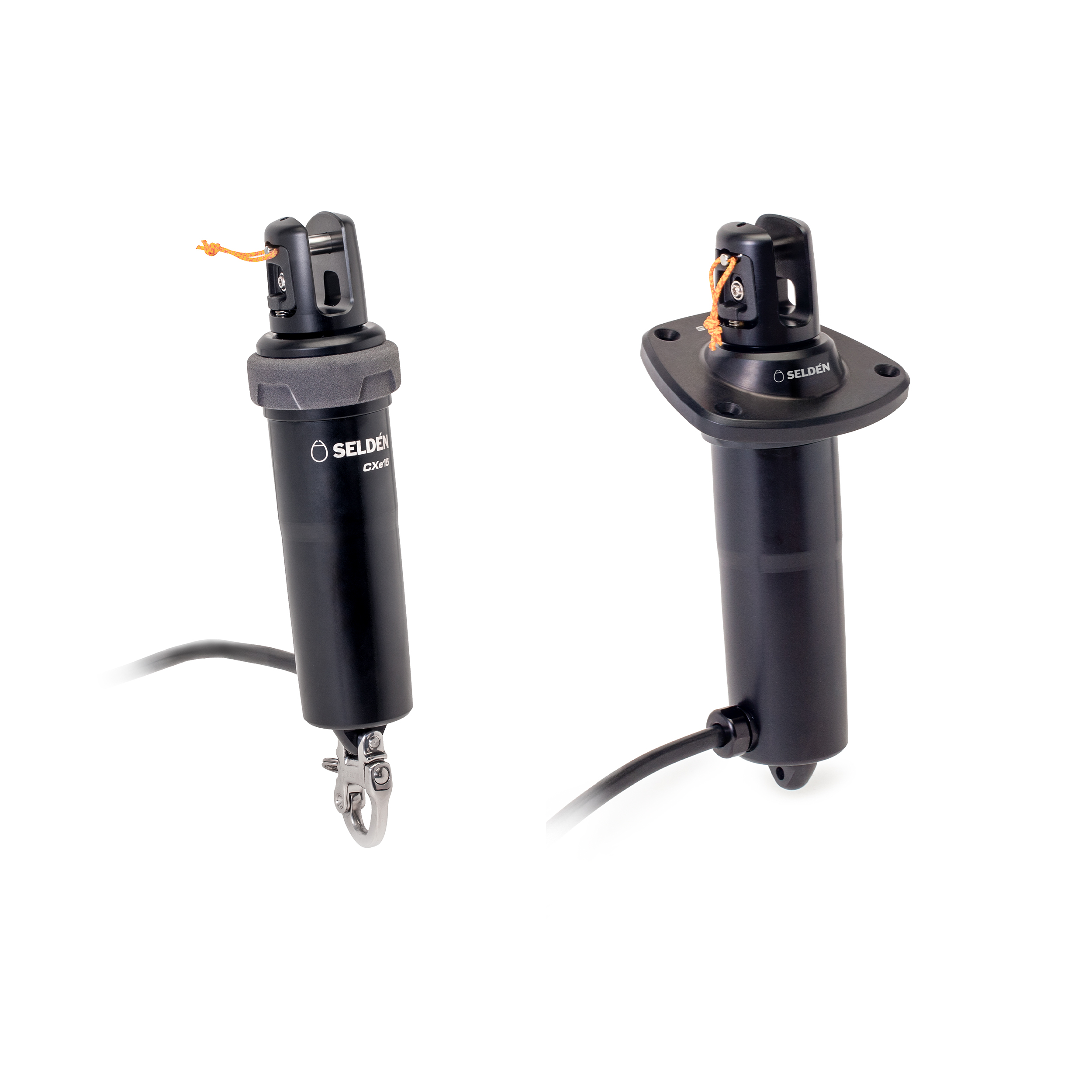
Seldén Mast has expanded its electric downwind-sail equipment with the CXe15, a 12-volt furling system aimed at yachts up to approximately 37 feet. The Swedish rigging manufacturer announced the product in November 2026 and expects deliveries to begin in February 2027, with a recommended price starting at €1,900 excluding VAT. Designed for Code 0 sails and gennakers, it uses cockpit push-button controls and is intended to connect to a boat's existing 12-volt electrical supply. Unlike some of the company's larger electric furlers, the CXe15 does not require the separate 42-volt SEL-Bus architecture described for those systems. Its stated dimensions place it within the small-yacht market, making the launch directly relevant to owners seeking to reduce the amount of manual work involved in handling light-air and off-wind sails.
The sail-handling challenge
Code 0 sails and gennakers can expand the range of conditions in which a cruising yacht can make useful progress, but setting, trimming and recovering them require attention to the wind and the boat's movement. A sail that is straightforward in gentle conditions can become difficult to control as the wind increases or direction changes. A furling system is intended to help the crew prepare or reduce sail without handling a large expanse of cloth directly on deck. Such equipment does not remove the need to choose appropriate conditions, prepare the lines correctly or monitor loads. The CXe15 is a new option aimed at making one part of this work more manageable on smaller yachts, not an automatic sail-management system that replaces the skipper's decisions.
Where the CXe15 fits in Seldén's range
The manufacturer already offers larger CXe25 and CXe45 electric furling products. Those systems use a 42-volt arrangement and Seldén's SEL-Bus control technology. The new CXe15 is described as a simpler 12-volt solution for boats up to roughly 37 feet, broadening the range to smaller installations. The length reference is an approximate design audience rather than an unconditional equipment certification for every boat within that dimension. Sail area, luff loads, fittings and the structure carrying the system all need to be assessed before installation. Owners should not assume that a device suited to an 11-metre cruising yacht will necessarily work with every possible sail carried by that yacht. The manufacturer and qualified sailmakers can provide the relevant specifications.
Electric operation from the cockpit
The CXe15 is controlled by push buttons, allowing the crew to operate the furler without manually turning a mechanical unit at the bow. That feature can be particularly appealing when a small cruising crew needs to coordinate steering, sheet control and sail reduction in a short period. It may also offer convenience for sailors who find repeated handling of a manual furler physically demanding. The official statement does not quantify the time saved or establish a universal reduction in effort in different sea conditions. Electrical operation still creates its own responsibilities, including secure wiring, suitable protection, reliable connectors and understanding what happens if electrical power is unavailable. A careful installation should address these matters in the manufacturer's current instructions.
A practical 12-volt approach
The distinction between a system connected directly to an existing 12-volt supply and one requiring a higher-voltage control architecture is important for many small yachts. Space, battery capacity and cable routing can be limited, and each additional component creates installation work. Seldén says the simpler CXe15 arrangement is intended to make electric furling accessible to a broader market. That should be read as a statement about the new system's design, not a claim that every boat can accept it without modification. Cable sizing, load demand, fuse protection and the actual health of the electrical system must be checked. A poorly designed circuit can introduce new failure modes regardless of the apparent convenience of electric controls.
Through-deck or on-deck installations
The manufacturer offers two versions. The through-deck CXe15 TD is designed for a permanently mounted installation integrated with a bowsprit. The on-deck CXe15 OD is a more flexible option that can be attached to a bowsprit or bow arrangement as needed. According to Seldén, the on-deck version includes a waterproof connector rated IP68. These choices are more than aesthetic differences. A fixed installation can have distinct structural and service implications, while a removable arrangement needs secure connection and sensible stowage. Neither configuration should be selected only by comparing photographs. The intended sail, attachment points, access for maintenance and safe line leads need to be reviewed with the manufacturer's guidance and a suitable rigger.
The meaning of an IP68 connector
The IP68 reference indicates a particular ingress-protection classification for the connector specified with the on-deck version. It does not mean that an entire installed system can be neglected, left unprotected indefinitely or subjected to arbitrary use underwater. Protection ratings apply under stated test conditions and must be understood in the context of the product's actual construction and installation instructions. On a small yacht, deck connectors are exposed to spray, movement and sometimes mechanical strain. Proper routing, connection and inspection matter even when a component has a high ingress-protection rating. Owners should consult the maker's documentation and avoid treating an abbreviated product feature as a complete statement about electrical safety.
Price and planned availability
Seldén quotes a recommended retail price from €1,900 excluding VAT, with the first deliveries expected in February 2027. The starting price may vary with the version and required installation components, and does not establish the total cost of fitting an electric furler to a particular yacht. A new bowsprit arrangement, suitable mounting structure or wiring changes could add to an owner's project. The manufacturer does not specify a universal final installed price. Readers considering a purchase should check current quotations and confirm which components are included, particularly because the two installation types are different. The stated delivery date is a plan made at launch, so actual availability should be verified with a supplier rather than assumed before work is booked.
What changes for a short-handed crew
On many boats below 12 metres, one or two people handle all the tasks involved in a sail change. The helmsman may need to maintain course while another crew member eases or gathers a sheet and monitors the furling process. Easier operation can make some manoeuvres less complicated, but it does not remove the need for coordination. A powered furler may wind a sail incorrectly if the associated lines are mismanaged, and excessive wind can still create a hazardous load. The CXe15 is a piece of sail-handling equipment that should be integrated into an established routine. Crews need training and practice in suitable conditions before relying on it during a difficult passage.
Correct sail selection remains crucial
The terms Code 0 and gennaker describe different sail designs and uses, and not every sail of either general type can be furled with the same equipment and technique. Sail construction, luff arrangement, tack fittings and the method of furling all influence compatibility. Seldén positions the CXe15 for these categories, but an owner must establish whether a specific sail is suitable. A sailmaker can advise on the sail and its attachment, while the furler manufacturer provides mechanical specifications. Readers should avoid assuming that the CXe15 turns any loose-luffed sail into a safe electric furling system. The relationship between sail design and control equipment is fundamental, especially when a boat is operating close to the upper end of the intended wind range for its sails.
What the manufacturer has and has not demonstrated
The announcement explains the intended function, mounting options, operating voltage, approximate yacht size and starting price. It does not provide an independently measured percentage improvement in cruising speed, a universal furling time or a claim that all manual furling risks are eliminated. Neither does it announce a new yacht model or a change to rules for navigation or sailing qualifications. The product may make practical sense for a particular owner, but suitability must be determined through engineering and sailing context. Clear distinctions between a manufacturer's launch description and independent evidence help buyers avoid treating an appealing operating feature as an unqualified guarantee.
Official product photography
The lead image is a crop of an actual CXe15 component photograph included in the manufacturer's original November 2026 product image. The original Seldén asset showed more than one view of the product; the published crop isolates one genuine photographed component and is not an AI rendering. Its primary purpose is to identify the announced hardware. Original copyright remains with the manufacturer and photographer. The source for the technical specifications is Seldén Mast's own launch statement, including its description of the 12-volt design and the two mounting options. Further details about safe installation should come from the official current technical and operating documentation.
A smaller-scale electric equipment launch
The CXe15 adds an electric furling option to the hardware available for smaller cruising yachts, at a time when manufacturers are bringing powered functions into installations previously associated primarily with larger boats. Its significance is the attempt to combine push-button operation with the ordinary 12-volt electrical systems common on small craft. The practical value will depend on the specific sail, rigging and crew. The confirmed milestones are the November 2026 announcement, the stated starting price and an expected February 2027 delivery schedule. Owners can examine the system as part of an integrated sail-handling plan, without assuming that adding electricity alone makes a difficult sail or demanding weather condition safe.
Sources and image attribution
Primary reported announcement: https://www.seldenmast.com/newspost/cxe15/.
Official photographic provenance: https://www.seldenmast.com/newspost/cxe15/. Image supplied by the originating organisation, credited in the photograph title; original copyright remains with the rights holder. Official image file. The photographs are documentary or clearly labelled archival illustrations, not evidence of events that have yet to happen.