
Battery cooling attracts attention at IBEX
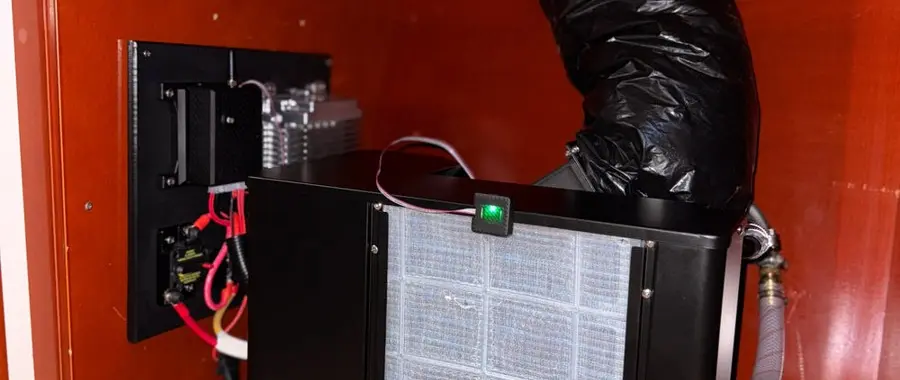
SeaAir has presented its 12V marine air-conditioning and reverse-cycle heating system at IBEX 2026 in Tampa, demonstrating operation directly from a battery bank without a generator. The company attended the marine equipment exhibition from 6 to 8 October and used its display to explain how onboard comfort can be managed around the energy actually available. That is particularly relevant to owners of small cabin cruisers who value quiet evenings at anchor.
An air-conditioning unit is only one part of an electrical system. A boat must also carry sufficient battery capacity, appropriate cables, charging equipment and installation space. SeaAir's announcement introduces a possible approach rather than proof that every small boat can support prolonged cooling without additional energy storage.
Power Budgeting aims to protect the house bank
The company's patented Power Budgeting software allows the operator to establish how much energy the climate system may draw from the battery bank. SeaAir says its controls then manage output within that budget, preserving power for other onboard uses. A defined limit can help an owner think about refrigeration, lighting and navigation equipment as part of a single energy plan.
A budget is not a guarantee of a particular cabin temperature or number of hours of operation. Cooling demand will rise with hotter weather, direct sun, poor insulation and frequent opening of doors or hatches. Anyone comparing systems should ask for realistic power-use estimates under conditions similar to those in which their own boat will operate.
An overnight mode targets quieter anchorages
SeaAir promotes an Overnight mode intended to provide quiet, efficient cooling while people sleep at anchor. Avoiding routine generator use may reduce noise and the local exhaust associated with running a separate engine. It can also simplify a short overnight outing where carrying a generator is undesirable or impractical.
However, owners must still verify battery reserve, ventilation and installation requirements. Climate control should not consume the energy needed to start an engine, operate essential pumps or communicate in an emergency. A suitable battery-monitoring system and conservative settings are more important than an ambition to run the cabin as cold as possible through the night.
Cloud monitoring offers a service connection
The company's platform supports telemetry, alerts, diagnostics and remote assistance, allowing some equipment information to be reviewed beyond the physical boat. That could be helpful when a technician needs to understand a system's operating history before attending a service call. The value depends on accurate data, clear alerts and reasonable support arrangements.
A connected device also raises practical questions about network coverage and data access. A small boat may spend time beyond reliable mobile service, so basic climate operation should remain possible without a cloud connection. Owners should ask how permissions, software updates and account transfers are handled when the vessel changes hands.
The next systems are larger, not yet identical options
SeaAir has indicated plans for larger 16,000 BTU systems involving 48V and 120V configurations. These are announced future additions, not a basis for assuming that every version is already available for immediate installation. A higher cooling rating can bring higher power demand and a different electrical architecture, requiring builders to consider the whole system.
The IBEX demonstration places SeaAir among suppliers exploring how electrification can improve the experience aboard modest leisure craft. The manufacturer offers specifications and installation advice through its own channels, which prospective buyers should review alongside independent marine electrical guidance. Comfortable nights afloat depend on balancing cooling with safe power reserves rather than treating a single appliance as a complete solution.