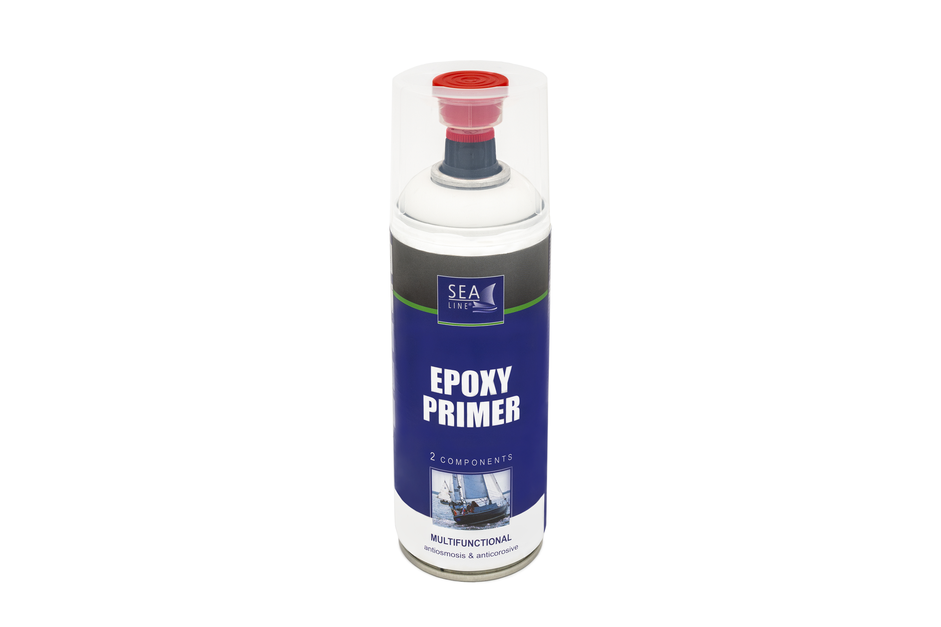
Sea-Line Paints is presenting its multifunctional two-component epoxy spray in the METSTRADE 2026 supplier catalogue, offering small-boat owners and repair professionals an alternative format for preparing limited areas of a hull or metal fitting. The product packages a chemically curing epoxy primer in an aerosol rather than requiring conventional mixing and spray equipment. It is not a newly launched formulation in November 2026: the maker's catalogue entry gives an original release date in February 2019. Its presence in the current marine-equipment marketplace is an opportunity to examine when an established repair product makes practical sense, and when a full conventional coating system remains the better choice.
A long-standing product in a current equipment catalogue
A new industry report should distinguish an existing item that is being marketed at a show from a genuinely new product. Sea-Line's multifunctional epoxy aerosol belongs to the first group. The supplier's published description promotes it as a way to use two-component epoxy chemistry without measuring separate liquid components and adjusting a spray gun. That can make the concept appealing to boat owners tackling small repairs over a weekend. However, the convenience of the package does not by itself guarantee the correct surface preparation, coating thickness, chemical resistance or long-term protection. Those outcomes depend on the substrate, the application procedure and the coating system selected.
Why a two-component system differs from ordinary paint
Two-component epoxy coatings typically rely on a resin and hardener reacting chemically after activation. That is different from a basic paint that dries primarily as solvent evaporates. The resulting film can offer useful adhesion and barrier properties where the manufacturer specifies it for the application, but its performance depends on correct mixing, timing and environmental conditions. An aerosol package may automate part of the proportioning and simplify delivery, yet the chemistry still has working-life limits once activated. Owners must follow the actual can's instructions for activation, shaking, application intervals and disposal. It should never be treated as ordinary reusable spray paint after the hardener has been triggered.
The practical attraction is a small repair area
Preparing and cleaning a conventional spray gun takes time and solvent, particularly when the area to be primed is small. A pressurised container may reduce that setup burden for limited work, provided the surface and surrounding boat can be protected from overspray. The distinction between small-area repair and a complete hull coating is important. A compact aerosol should not be assumed an efficient or approved way to prime an entire underwater hull. For extensive work, the manufacturer may specify other equipment, coat thicknesses or materials. A practical owner should assess the repair's size, location and coating-system compatibility before choosing the convenience of a spray package.
The manufacturer describes multiple primer functions
Sea-Line's METSTRADE entry connects the multifunctional 2K spray with the benefits of its Lightprimer and anticorrosion primer ranges. It specifically mentions the ability to provide antiosmosis and anticorrosion protection in suitable uses. Those are manufacturer claims and need to be read with the detailed product data sheet. Protection against osmosis on a fibreglass hull and prevention of corrosion on metal are different engineering problems. A single convenient aerosol cannot resolve hidden moisture damage, an unstable laminate or active galvanic corrosion merely by covering the visible surface. Proper diagnosis and removal of underlying defects are essential before priming.
Fibreglass preparation begins before the spray
A small repair to a glass-reinforced plastic hull may require removal of old loose coatings, feathering of the surrounding area and thorough cleaning. Surface moisture is particularly important where barrier performance is intended. The precise abrasive grade, cleaning product and drying procedure should be taken from the coating manufacturer's instructions, not guessed from a generic online tutorial. Owners should distinguish a superficial gelcoat blemish from structural laminate damage. A primer can be a step in a repair system, but it is not an adhesive substitute for properly repairing damaged laminate or a cure for water trapped beneath an existing coating.
Metal work brings different hazards
Aluminium and steel fittings require substrate-specific preparation, and Sea-Line's anticorrosion claims should be checked against the actual metal and operating environment. In marine service, corrosion may originate from trapped water, dissimilar-metal contact, inadequate drainage or electrical faults. Applying primer over contamination may hide the problem temporarily rather than solve it. A stainless fitting with crevice corrosion, for example, needs a different assessment from a steel locker lid with surface rust. Owners should establish whether the chosen product is approved for the particular alloy and whether additional pretreatment or a topcoat is required. Not every epoxy primer is suitable for every marine metal.
Chemical activation imposes a working window
Once the two components in a packaged 2K product are activated, the chemical reaction begins and the usable life can be limited. The specific duration varies by product and temperature. Buyers should read the label before activating the can, ensure the entire work area is ready and avoid starting a repair that will be interrupted for a long period. It can be wasteful to activate a whole container for a single tiny scratch. Conversely, trying to use a product after its specified working life may compromise atomisation or curing. A practical repair plan should cover how many coats are required and when each must be applied.
Surface temperature affects coating performance
Boat maintenance frequently takes place outdoors, where air temperature, substrate temperature, wind and humidity change throughout the day. A hull that looks dry can still be near its dew point, and an epoxy coating applied under unsuitable conditions may not develop the intended adhesion. The manufacturer's technical sheet should specify the permitted environmental conditions and recoat intervals. An aerosol mist is also vulnerable to wind, creating uneven coverage and unintended overspray. Before starting, protect neighbouring fittings and verify that local boatyard rules permit spraying. An attractive finish in a test patch is not proof that the full coating system has cured correctly.
Safety equipment is not optional for aerosols
Two-component marine coatings can contain hazardous substances, and spray application creates airborne droplets that require appropriate control. Working in a confined cabin or an unventilated shed can be dangerous. Owners should consult the current safety data sheet and use the specified respiratory protection, gloves, eye protection and ventilation. Aerosol containers are pressurised and must be kept away from heat or ignition sources according to their label. Masking a boat does not prevent exposure to vapours. A do-it-yourself user who lacks suitable protective equipment or a permitted work area should consider a professional repair instead of assuming a smaller can is automatically safer.
Overspray can be expensive on a finished boat
An aerosol may be easy to aim, but fine droplets can travel beyond the repair zone and contaminate gelcoat, glazing, upholstery or nearby boats. Boat owners should discuss spraying with the yard, use appropriate screening and cover surfaces that must remain clean. Wind conditions matter as much as nozzle choice. A primer intended as a hidden intermediate coat can be particularly difficult to remove from a finished surface once cured. Careful masking and controlled short passes may reduce waste, but operators should follow the maker's guidance rather than improvising a technique. Small-boat maintenance often happens in shared spaces where overspray affects neighbours.
Film thickness and recoating need verification
Barrier performance is associated with adequate and consistent coating thickness, but aerosol delivery does not guarantee a specified film build. Several controlled coats may be necessary, and each has a recommended drying and recoating interval. Owners should check whether the product is intended for direct application beneath the selected antifouling or finish coat, or whether an intermediate step is required. Mixing brands without documented compatibility can lead to adhesion or curing problems. A complete marine coating system should be planned from bare substrate to final finish, not assembled ad hoc from whatever remains in the locker.
A small repair can become a wider inspection
A rust spot near a deck fitting, a blister on the hull or a damaged edge of a keel may indicate a problem extending beyond the visible area. Before priming, look for moisture paths, loose fasteners, failed sealant or structural damage. On a metal fitting, check whether it can be removed for proper treatment. On a fibreglass hull, persistent blistering deserves professional diagnosis. An aerosol coating is useful only when the underlying problem is appropriate for a surface repair. Covering a defect without understanding it can delay the more substantial work required and make later inspection harder.
The cost comparison must include preparation
The convenience of a ready-packaged two-component spray can justify its purchase for some small tasks, but price per can is not the full cost of a repair. Masking, cleaning, abrasives, protective clothing, disposal and topcoats all contribute. A larger repair may be cheaper with a conventional mixed primer applied using the approved equipment. Owners should also avoid buying more aerosol product than can be used before its shelf life expires. The best format depends on the number of repairs, the available workspace and the skill of the operator. A professional may choose traditional application methods even when a convenient aerosol is available.
The official product photograph shows the actual container
The first-party image from Sea-Line's METSTRADE listing depicts the branded 2K epoxy primer aerosol container, rather than an illustrative hull or an unrelated boat. It documents the physical format of the product, but it does not show a completed repair or provide independent evidence of performance. The catalogue's original 2019 release date is retained in this article to avoid inventing a 2026 launch. The value of the current listing lies in comparing the product with other maintenance options available to boatbuilders, marine service firms and private owners during the 2026 equipment exhibition season.
Choosing whether the aerosol belongs in a repair plan
A suitable use starts with a diagnosed, limited-area problem and the current Sea-Line technical documents for the exact product. The owner should confirm substrate compatibility, environmental conditions, chemical activation, pot life, required dry-film thickness and topcoat compatibility before buying. Safety arrangements and yard permission must be in place before opening the container. If the defect affects structure or covers a significant underwater area, professional advice may be a better investment. Sea-Line's 2K aerosol is a useful example of established marine coatings adapted for simpler application, but good results still depend on the same disciplined preparation expected from any quality boat-refit project.
Original industry sources and image credits
Lead image: Sea-Line 2K Aerosol Primer Offers a Compact Boat-Refit Option — genuine first-party manufacturer product or boating photograph. © Sea-Line Paints. Original supplier image.