
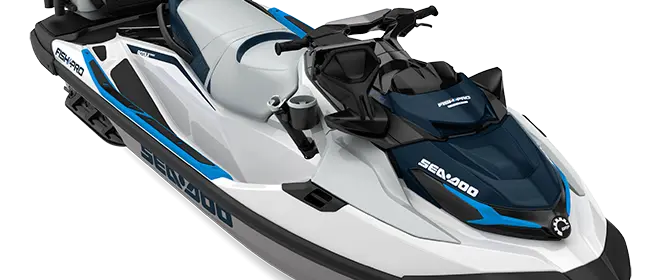
Sea-Doo's 2027 FishPro Sport continues the idea of a personal watercraft configured specifically for angling rather than general recreation. The model uses a 170hp Rotax engine and the larger ST3 hull to provide more stability when fishing from a seated or standing position.
The factory package combines navigation electronics, fishing storage and rod management so owners do not need to assemble the core setup from separate accessories. That makes the FishPro Sport a distinct product from a standard PWC fitted with a cooler and aftermarket rod holders.
Five rod holders and Garmin electronics
Sea-Doo equips the model with five rod holders, a Garmin GPS and fishfinder, trolling mode and a LinQ fishing cooler. Angled footrests are intended to provide additional support when an angler is fighting a fish or moving around the rear section.
The rear platform also provides useful working space around the cooler and fishing equipment. Owners should still distribute weight carefully because tackle, catch, fuel and passengers can alter trim on a relatively compact craft.
170hp balances range and performance
The 1630 ACE 170 engine provides enough power for coastal and inland travel without moving into Sea-Doo's highest-output performance category. The manufacturer lists a 70-litre fuel tank and total storage of roughly 154 litres when the fishing cooler is included.
Real-world range will depend on speed, sea state and load, especially when travelling offshore or between fishing areas. Owners should keep a conservative fuel reserve rather than planning around ideal-condition maximums.
A specialised alternative to a small fishing boat
At 3.73m long, the FishPro Sport can reach shallow or confined areas that would be awkward for many conventional fishing boats. Its trade-off is reduced deck space, weather protection and passenger comfort compared with a larger open boat.
For anglers who normally fish alone or with one companion, the compact format can make storage and launching easier. Buyers should compare local PWC restrictions with conventional boat rules because access and operating limits can differ by waterway.