
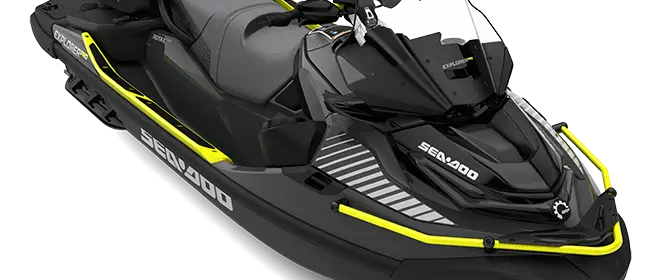
Sea-Doo's 2027 Explorer Pro remains the brand's most adventure-focused touring personal watercraft, with equipment aimed at longer days away from the launch ramp. Buyers can choose between 170hp and 230hp Rotax engine options depending on the required balance of range and performance.
The model uses Sea-Doo's stable ST3 hull and can carry up to three people. Its touring specification adds storage and ergonomic features intended to make extended riding more practical than on a conventional recreational PWC.
Storage is central to the Explorer Pro
Sea-Doo gives the Explorer Pro a large rear platform with LinQ mounting points and additional storage aimed at carrying touring equipment. The current range provides close to 199 litres of total storage depending on the chosen configuration.
That capacity can accommodate spare clothing, safety gear and supplies, but payload still has limits. Owners should consider passenger weight and the mass of additional fuel or equipment when preparing for a longer trip.
Two engine choices broaden the use case
The 170hp version prioritises a more moderate balance of fuel consumption and performance, while the 230hp option provides stronger acceleration and speed. Both use the same general adventure platform rather than separate hull designs.
Long-distance PWC travel demands more conservative planning than a short recreational ride. Weather, wind, sea state, fuel availability and safe havens all matter because the rider has less shelter and reserve capacity than aboard a larger boat.
Technology supports navigation and comfort
The 2027 Explorer Pro offers Sea-Doo's 10.25-inch touchscreen on the current specification, alongside touring-focused seating and deck features. Navigation and connected functions can make route planning easier, but they should be backed by appropriate seamanship and independent emergency planning.
For Leisure Boat Guide, the model is notable because it pushes the PWC format toward genuine touring rather than short-duration riding. It remains a small craft, but the ownership questions increasingly resemble those faced by small-boat cruisers.