
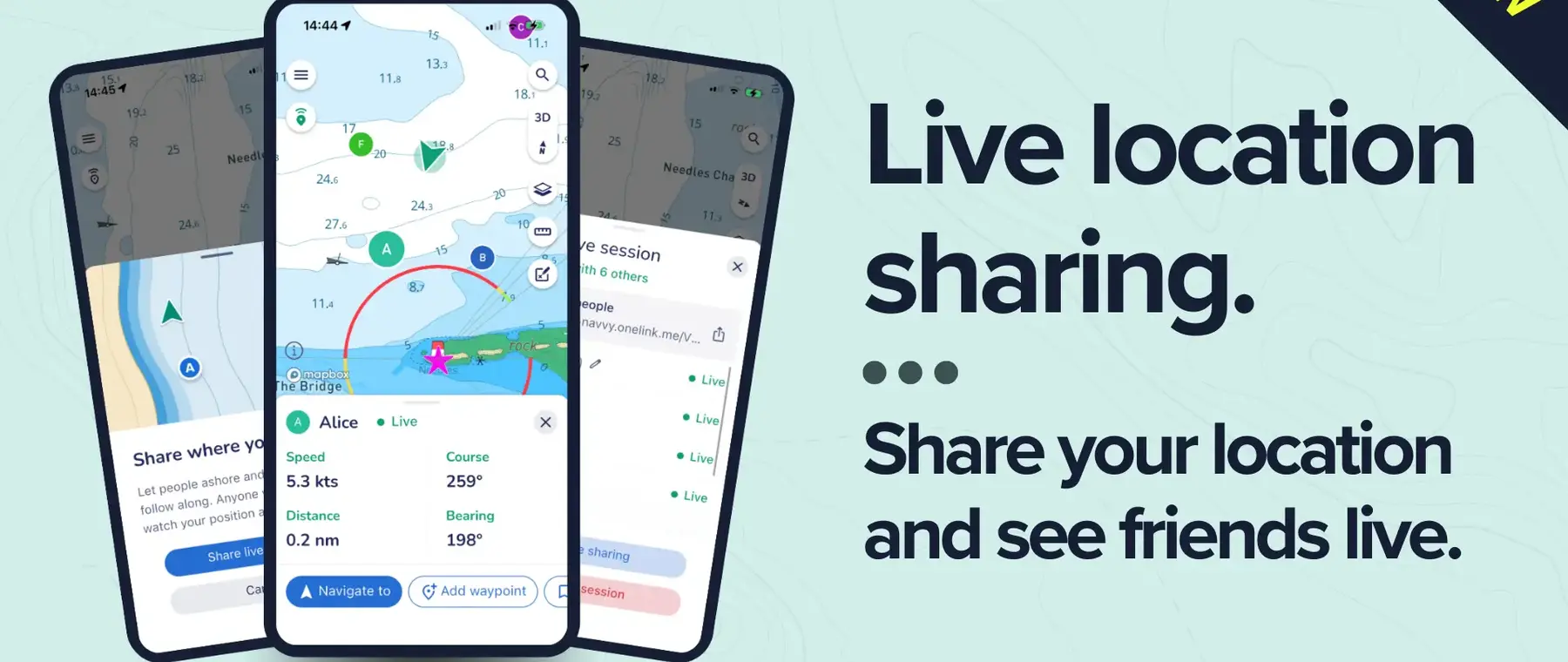
Positions update on the navigation chart
Users create a sharing session and send a link to the people they want to include. Once participants join, their positions can appear on the same nautical chart and update every two seconds while a connection is available.
That is more useful on the water than a position shared through a normal road-mapping service because depths, hazards, anchorages and other marine context remain visible. It can reduce the need for repeated text messages when several small boats are trying to meet.
The feature suits flotillas and club outings
Savvy Navvy highlights group passages, boat-club outings and charter fleets as obvious uses. A lead boat can see who is ahead or falling behind, while participants can alter speed or meeting points with a clearer picture of the whole group.
The tool should complement rather than replace VHF communication and agreed passage plans. Mobile data can fail, batteries can run down and a location marker cannot explain why another boat has stopped or changed course.
Anglers and paddlers can use the same system
The company also points to anglers, kayakers, paddleboarders and personal-watercraft riders who may spread across a larger area while still wanting to know where the rest of the group is. The feature is available across Savvy Navvy plans, including the free tier.
That makes it relevant beyond conventional cruising boats. LBG readers often use several types of small craft, and a shared chart can help a mixed group keep track of one another without fitting every craft with dedicated AIS equipment.
A last-seen time appears when signal is lost
If a participant loses mobile coverage, the displayed position stops updating and is marked with a last-seen timestamp. Once connectivity returns, the live position resumes automatically without the user having to create a new session.
That behaviour is important because a frozen marker must not be mistaken for a current location. Users should agree in advance how they will communicate if someone disappears from the live display, particularly on exposed coasts or longer passages.
Official sources: www.savvy-navvy.com.