
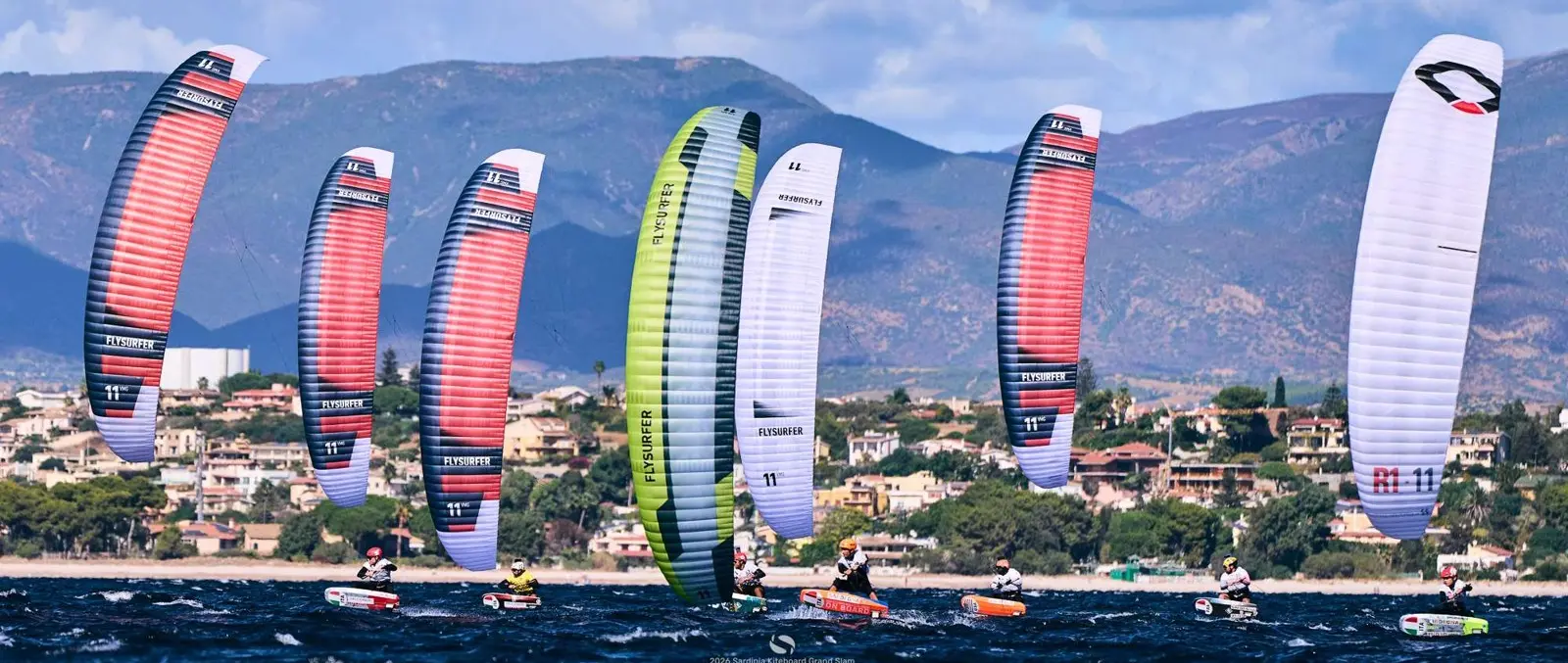
A decisive day in the Bay of Angels
France's Lauriane Nolot and Italy's Riccardo Pianosi have secured direct places in the four-rider finals of the 2026 Sardinia Kiteboard Grand Slam after strong qualifying performances off Quartu Sant'Elena. The competition is taking place in the Bay of Angels near Cagliari, with the final series scheduled for Sunday 11 October. Both athletes lead their respective Formula Kite fleets but have not yet been confirmed as overall winners.
The event is the final major international Formula Kite contest of 2026, giving competitors a chance to test their speed and technique before the next world championship in Brazil in January. The lightweight hydrofoiling craft can reach striking speeds, but the sailors still face the familiar challenges of wind shifts, poor starts and tactical decisions under pressure.
Nolot responds to a difficult opening
Nolot, a Paris 2024 Olympic silver medallist, began one of Saturday's races in difficulty after choosing a 15-square-metre kite in unusually forceful gusts. Switzerland's Elena Lengwiler made a stronger start and led the fleet. The French rider recovered ground during the race, eventually passing Britain's Lily Young at the final turning mark after a tighter gybe.
She followed that recovery with wins in the next two races, securing the top qualifying position and a direct route into the medal final. It was a clear demonstration that an early mistake need not determine the outcome of an entire race or series. The recovery depended on maintaining control at speed while selecting opportunities to pass rather than attempting an unnecessarily risky manoeuvre.
Women's finalists face a qualification hurdle
Nolot's training partner Lysa Caval took the other automatic place in the four-rider women's final. Lengwiler moved up to third in the standings after improving her results, but still faced the semi-final pathway to reach the title race. That distinction is important because the event uses a medal-series structure rather than awarding the title solely according to the qualifying leaderboard.
The semi-final stage can reward a rider who finds better form late in the competition, while a front-runner who has qualified directly still has to deliver when the medals are decided. Equipment choices and the ability to handle gusts are especially important in such a format. A kite that is effective during lighter weather can become difficult to manage when the wind increases or becomes turbulent.
Pianosi combines pace with tactical awareness
Riccardo Pianosi, racing on home waters in Sardinia, also won two of Saturday's three men's races. His only second-place finish of the session came behind Austria's Valentin Bontus, the reigning Olympic champion. Pianosi's performance left him at the head of the qualification standings and secured a direct passage into Sunday's four-rider final.
The Italian was particularly fast when accelerating from the windward mark, with the event's media report recording a peak speed of 40.2 knots during Race 13. A figure like that illustrates the capabilities of modern kitefoiling equipment, but it is a momentary performance measurement rather than a sustainable average across a racecourse. Tactical positioning and the ability to complete clean manoeuvres remain decisive.
Bontus shows flashes of Olympic form
Bontus finally recorded his first race win of the week during Saturday's racing, suggesting that he had regained some pace after a difficult series. But a crash during a gybe in the final race dropped him to thirteenth in that heat and weakened his overall position. He remained fourth in the standings, behind Britain's Sam Dickinson in third.
The contrast between one race victory and another costly result shows how unforgiving hydrofoil racing can be. A rider who is moving rapidly above the surface may lose many places after a single fall, even without any equipment damage. Bontus will need a strong medal-series performance if he is to convert his Olympic experience into another major event result.
Koska secures a place alongside the home favourite
Czech rider Vojtech Koska occupied the other automatic position in the men's final, setting up the possibility of a direct contest with Pianosi for the overall title. Dickinson and Bontus remained among the leading competitors seeking to advance through the additional qualification stages. The structure means that consistency through the preceding races earns an advantage, but does not eliminate the final-day uncertainty.
That format can appeal to spectators because the decisive races are shorter and carry substantial consequences. For the sailors, however, it places pressure on every start and rounding. A competitor may have demonstrated excellent pace all week, yet still be vulnerable to an equipment problem or a tactical mistake during the medal series.
An American rider makes an encouraging impression
American Noah Runciman also produced a strong race on Saturday, choosing the right-hand side of the course early and leading around the first top mark. He maintained an advantage for much of the opening downwind leg before Pianosi closed the gap and went ahead. Although Runciman could not hold the lead, the performance provided another indication that the United States' emerging riders are capable of challenging established international names.
Interest in American kitefoiling is likely to continue as athletes prepare for the Los Angeles 2028 Olympic Games. Progress at a Grand Slam is not a guarantee of future selection or Olympic success, but experience of starts, wind patterns and close-quarters racing helps build a competitive foundation. Runciman's approach also demonstrated that following a different side of the course can create a legitimate tactical opportunity.
Why wind direction matters in Formula Kite
Much of Saturday's racing took place in winds around twenty knots, with the left-hand side of the course generally producing the stronger tactical option. The breeze was not uniform, however, and Runciman's temporary advantage on the right demonstrated the danger of assuming one side will always work. Riders must continually compare wind pressure, angle and potential obstructions while managing equipment that reacts very quickly.
Formula Kite combines the basic principles of sailing with the additional challenges of balance on a hydrofoil board. Competitors control a kite overhead while maintaining enough speed to keep the foil lifting the board above the chop. Rapid changes of direction can be spectacular but also carry a risk of falls or collisions, making safety zones and competent event supervision essential.
The final medals are still to be decided
At the end of Saturday, Nolot and Pianosi were in the strongest positions, while Caval and Koska had also earned their places directly in the finals. The other contenders faced semi-final competition to join them. This is the confirmed situation from the 10 October qualifier report; the results of Sunday's finals should not be inferred from the preceding rankings.
For leisure boaters, the Grand Slam provides a striking demonstration of the speed and skill involved in modern wind-powered sport. It also shows how a coastal venue such as Quartu Sant'Elena can host highly technical international competition. The eventual champions will be determined on the water, where gusts, manoeuvres and tactical decisions can still alter the apparent order.