
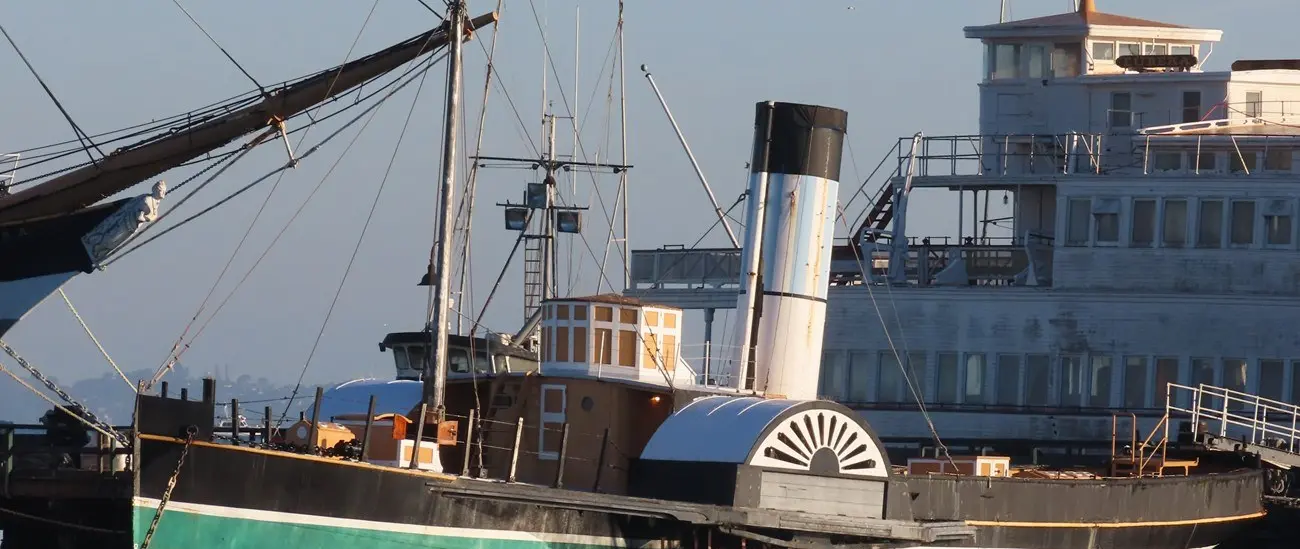
Historic fleet away from the waterfront
San Francisco Maritime National Historical Park's major historic vessels remain at Mare Island in Vallejo while the National Park Service prepares a long-term replacement of Hyde Street Pier. The move changes what visitors can see at the familiar Fisherman's Wharf waterfront and where conservation work will take place. As of late October 2026, Hyde Street Pier remains closed and the vessels have not returned to their traditional berths.
The National Park Service identifies Balclutha, Eureka, C.A. Thayer, Hercules and Eppleton Hall among the ships relocated by August 2025. Their temporary berths are at the Mare Island Coal Sheds, 860 Nimitz Avenue in Vallejo. The change is much more than a tourist diversion: the park is using the move to protect a collection of working maritime heritage while the old pier's condition is addressed.
The park explains that Hyde Street Pier is more than sixty years old and can no longer safely support the fleet and the volume of visitors. A long-term replacement project is being planned, but the National Park Service says no demolition or construction contracts had been awarded when it published its current project information. A date for the vessels' return therefore remains uncertain.
Different restoration needs across the collection
The historic fleet contains vessels representing very different parts of maritime history. Eureka, the former ferryboat, is expected to require substantial rehabilitation of her hull, decks, electrical systems and safety arrangements. This work is more intensive than simply preparing a vessel for display and explains why the park needs suitable shipyard facilities rather than a temporary berth on a busy public pier.
The sailing ship C.A. Thayer and the tug Hercules are scheduled for routine maintenance and restoration. Balclutha and the paddle tug Eppleton Hall are expected to require comparatively minor work. The exact sequence will depend on technical assessments, contractors and the practical requirements of each vessel, and it would be misleading to claim that all ships are undergoing the same level of rebuilding.
Eppleton Hall is especially distinctive because her two side-lever engines can drive the paddlewheels independently. Built on England's River Tyne in 1914 for towing colliers, she illustrates a technology and pattern of harbour work very different from modern tugboats. Her preservation alongside sail and ferry vessels gives the park's collection broader educational value than any single ship could provide.
Funding and the new visitor arrangements
The National Park Service says the Hyde Street Pier replacement and Eureka restoration are supported by a combined allocation of $102 million through the Great American Outdoors Act's Legacy Restoration Fund. The investment reflects the challenge of protecting large historic vessels that remain exposed to weather, corrosion and structural stresses even when they are no longer in regular commercial service.
At Mare Island, the park says one or more vessels may be opened at weekends between noon and 4pm, depending on staff availability. Its separate fees page currently advises that visitors cannot board the vessels, though they may view them from shore. Because these statements differ in detail, travellers should obtain direct confirmation of any actual boarding programme rather than relying on a generic weekend opening notice.
Those travelling to Vallejo should use the Mare Island Coal Sheds address, not head automatically to Hyde Street Pier expecting ship tours. The San Francisco Maritime Visitor Center and museum remain distinct operations with their own opening hours. A visit to the historic collection now requires attention to the difference between the temporary ship location and the remaining public spaces in San Francisco.
What the project means for maritime heritage
The relocation highlights the considerable infrastructure required to preserve large historic ships for future generations. Even a well-maintained vessel can face deterioration if its berth is exposed, inaccessible or structurally unsound. Mare Island offers the working waterfront and specialist support needed for different levels of restoration, while the planned pier project seeks a safer long-term home for the fleet.
For maritime enthusiasts, the hiatus at Hyde Street is disappointing, but it also opens a chance to understand the less visible work of conservation. The strongest result will not simply be a new visitor platform; it will be a collection capable of telling the story of Pacific maritime trade, ferry travel and tug operations for many more years. That makes the engineering programme as important as the visitor-facing exhibits.
Anyone planning a 2026 visit should check the National Park Service's current operational notices immediately before departure. Ship locations, temporary viewing access and restoration schedules may change. Until the new Hyde Street Pier is complete, Mare Island is the important location for the relocated historic vessels, with the exact conditions of public access subject to official confirmation.