
A live regatta, not a completed championship
Sail Melbourne’s official scoring service places New Zealand sailor George Gautrey at the top of the ILCA 7 standings after four recorded races, with Great Britain’s Elliot Hanson close behind. The event is continuing at Royal Brighton Yacht Club, so the rankings are a snapshot of racing available on 27 November rather than final championship results.
The provisional figures give the first substantial indication of the competition after earlier publicity focused on entries and participating nations. A developing leaderboard is particularly interesting in a one-design dinghy class: equipment differences are tightly constrained, leaving starting decisions, positioning and boat handling to account for much of the separation between competitors.
What the ILCA 7 table shows
The official Sail Melbourne 2026 results display Gautrey on 20 total points, followed by Hanson on 22 and Michael Beckett, also of Great Britain, on 23. Australian sailor Zac Littlewood is fourth with 24, while Olympic champion Matt Wearn appears fifth on 25. Those are the listed points following four races, not an independent calculation of a later discard.
The small gaps matter more than the order alone. Five sailors are separated by just five points in the snapshot, and a subsequent day's racing can alter the table quickly. Rather than presenting a race-day lead as a trophy or forecasting the eventual champion, owners and club sailors can read the results as an example of how closely matched an experienced ILCA fleet can be.
Four races offer a more useful picture than one
Gautrey's four listed finishes are tenth, second, third and fifth. Hanson records second, fifth, seventh and eighth; Beckett has a race win, then eighth, second and twelfth. The sequence indicates different pathways to a similar points position, with steady front-half finishing for the leader and a wider spread for some rivals.
No single race position explains the overall ranking. One sailor can win a heat and still trail a competitor whose consistent scores keep the total down. Equally, if event scoring later permits a discard, a poor result may become less consequential. The correct interpretation must follow the published notice of race and current scoring rules rather than assumptions based on another event.
Australia remains firmly in contention
Littlewood's provisional fourth place and Wearn's fifth ensure a notable home presence at the leading end of the ILCA 7 table. Littlewood's four finishes are third, fourth, eighth and ninth, while Wearn's include a first place in the third race alongside results of fifth, sixth and thirteenth. The two sequences underline the changing order from heat to heat.
It would be premature to call the event a contest exclusively between those two Australian sailors and the British entrants. The table also lists Ireland's Finn Lynch close behind on 26, followed by Italy's Lorenzo Brando Chiavarini on 28. These are elite competitors in a shifting international fleet, and further racing rather than nationality will determine the final classification.
Why one-design racing attracts scrutiny
The ILCA 7 dinghy's appeal lies in the challenge of making a single-handed boat move efficiently without a large crew or extensive onboard systems. Small errors in a start or a mark rounding can cost positions that take the remainder of a short race to recover. That makes even a simple list of finish places informative.
Visitors accustomed to larger cruising craft should not assume the same tactics apply directly to family sailing. Yet the principles of looking ahead, maintaining a safe position relative to others and reading changing wind remain transferable. Watching serious dinghy competition can reinforce why preparation and attention are often worth more than raw equipment specifications.
A separate 49er leaderboard develops
The same authorised results service shows Australia's Harry Price and Max Paul leading the 49er class after five recorded races. Their net score is seven points after the currently displayed discard, with Daniel Links and Keizo Tomoshima immediately behind on eight. Kurt Hansen and Charles Zeeman are third on ten net points.
Those figures must be distinguished from the ILCA 7 scores because the fleets differ in boat type, crew arrangement and race count. The 49er is a high-performance two-person skiff whose demands are very different from a single-handed ILCA. Comparing the numerical scores across the two classes would not establish which team sailed better.
Consistency across a tightly packed skiff fleet
Price and Paul's listed 49er results are fourth, first, first, second and third. The display places their fourth in parentheses as the discarded score, leaving a seven-point net. Links and Tomoshima show second, second, second, third and second, with the third discarded and eight points net. Both approaches leave them within one point on the published table.
A repeated second-place finish can be remarkably effective in a fleet where competitors exchange race wins. Two victories help Price and Paul, but the narrow lead demonstrates why clean execution across the series matters. A single difficult race can change a podium order quickly, especially when leaders begin with such a close margin.
How sailors should understand provisional standings
A public results page is best treated as a dated record of scoring, not a promise that the numbers will remain unchanged. Notices, protests, corrected sail numbers, retirements, penalties and completed races can all affect a standings table. Official event administration is responsible for those adjustments, and the website may update during the competition.
This report records the published ILCA 7 and 49er standings checked on 27 November. It does not claim that either class has finished the regatta, that individual positions are final or that all competitors have completed the same schedule. The distinction helps readers follow a genuine developing sporting event without receiving a misleading winner announcement.
Royal Brighton Yacht Club as the host
The event organiser identifies Royal Brighton Yacht Club as the host on Port Phillip Bay, running Sail Melbourne from 26 to 29 November 2026 on behalf of Australian Sailing. The club's role includes providing a home base for competitors and the shore-side structures needed to support several types of racing craft.
Different fleets depend on different launch, storage and coaching needs, so coordinating a mixed-class regatta requires more than a start line. Visitors should use the official event arrangements rather than assume ordinary public access to competition docks or restricted sailing areas. The spectacle is part of an organised sporting programme with competitor safety responsibilities.
The role of invited and Olympic classes
Sail Melbourne encompasses Olympic and invited classes, giving sailors of varying experience an opportunity to compete within a major regional event. Its published programme includes small dinghies and performance skiffs rather than focusing on expensive ocean-going yachts. That mix supports skills development within sailing's smaller-boat foundation.
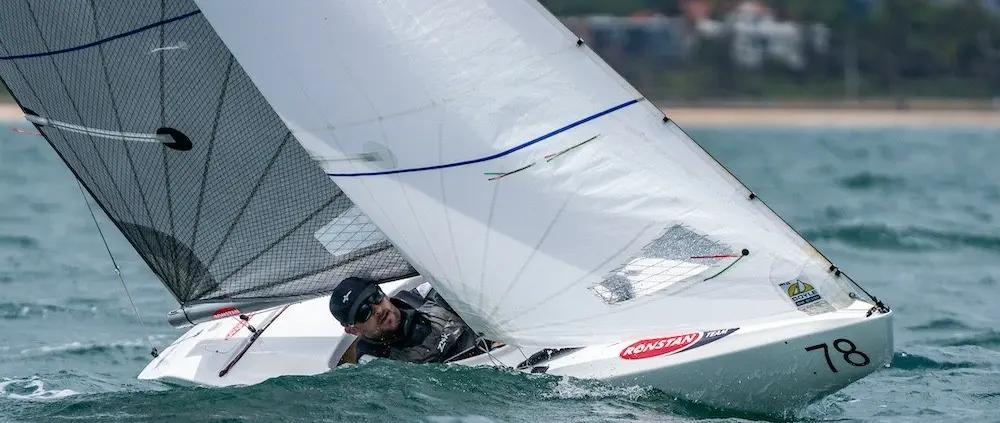
The 2026 edition also incorporates an Australian Para Sailing Championship division for the 2.4mR, scheduled over the final weekend. As of the reporting date, those later races should not be described as completed. Their presence is nevertheless relevant to the event's breadth, providing a competition setting for sailors whose needs and equipment choices differ from the ILCA and 49er fleets.
What club sailors can learn from results
A club member looking at Gautrey's fourth-race fifth place or the Price-Paul pair's two consecutive wins can ask useful tactical questions without pretending to know what occurred on the water. Where did consistency help? How heavily did a poor result influence the totals? How might a discard change the risk a leading boat takes in later starts?
The tables cannot answer whether a particular tack, wind shift or protest caused a change. Such details require on-water observation or independently verified competitor accounts. What official results do show is a pattern of finishing positions that can prompt thoughtful analysis, provided readers keep statistical inference separate from an eyewitness description.
Weather deserves more care than speculation
Port Phillip Bay can offer challenging sailing, but the results sheet itself does not document a full hour-by-hour account of wind and waves on each course. It would therefore be unreliable to attach a specific gust, squall or manoeuvre to one competitor's finishing place without an official supporting report.
Sailors attending a regatta have access to event briefings and official safety communications intended for current conditions. Recreational boaters watching from outside a competition area must follow local navigation rules and avoid interfering with racing. A news article can explain a standings trend while leaving tactical and weather claims to evidence collected at the venue.
The difference between entry publicity and race reporting
Before racing began, Australian Sailing and the event organiser promoted international participation and the range of classes expected at Brighton. Such previews are valuable for potential competitors and spectators, but they cannot reveal performance. The 27 November posted results supply a different category of information: actual recorded race finishes.
This distinction also helps avoid duplicate reporting. An article about a fleet assembling before the regatta should not be recast as fresh news merely by changing its headline. Here the new information is the provisional ILCA 7 and 49er scoring, complete with race-by-race positions recorded by the event's official service, not simply an updated list of entrants.
What the remaining programme could change
With competition scheduled through 29 November, there is time for the first standings to evolve. Gautrey's two-point ILCA 7 margin and Price and Paul's one-point 49er net lead are narrow enough to justify attention, but they cannot support a prediction of final medals. Further results will be subject to the competition's official rules and decisions.
For readers following the regatta remotely, the responsible approach is to return to the organiser and the official scoring service after each day. The latest table may differ from the figures preserved in this report, and that is a normal feature of an event in progress. Subsequent coverage should clearly explain any changes rather than silently overwriting the original date-specific account.
A clear picture of 27 November
At this stage of Sail Melbourne 2026, the verified takeaway is straightforward: Gautrey leads the ILCA 7 on 20 points after four races; Hanson and Beckett are second and third on 22 and 23; and Price and Paul narrowly head the 49er standings on seven net points after five races. Those facts come from the event scoring records.
They capture real progress without inventing a finish. The more lasting story is that a fleet of accomplished sailors is trading places across small one-design craft, with several days left to run. For those interested in the technique, accessibility and competitive strength of smaller sailing boats, that developing contest is worth following on its own terms.
Verified original news sources and image credits
Original independent news reporting based on the original responsible organisation or boatbuilder announcement, the corroborating official or independent record, the corroborating official or independent record. Original first-party boat photographs used to illustrate the same verified craft are credited © Australian Sailing / Sail Melbourne and the original photographers. Earlier manufacturer photos are not represented as 27 November 2026 event-day photos. No first-hand sea trial, price, sales availability or unreported result is claimed.