
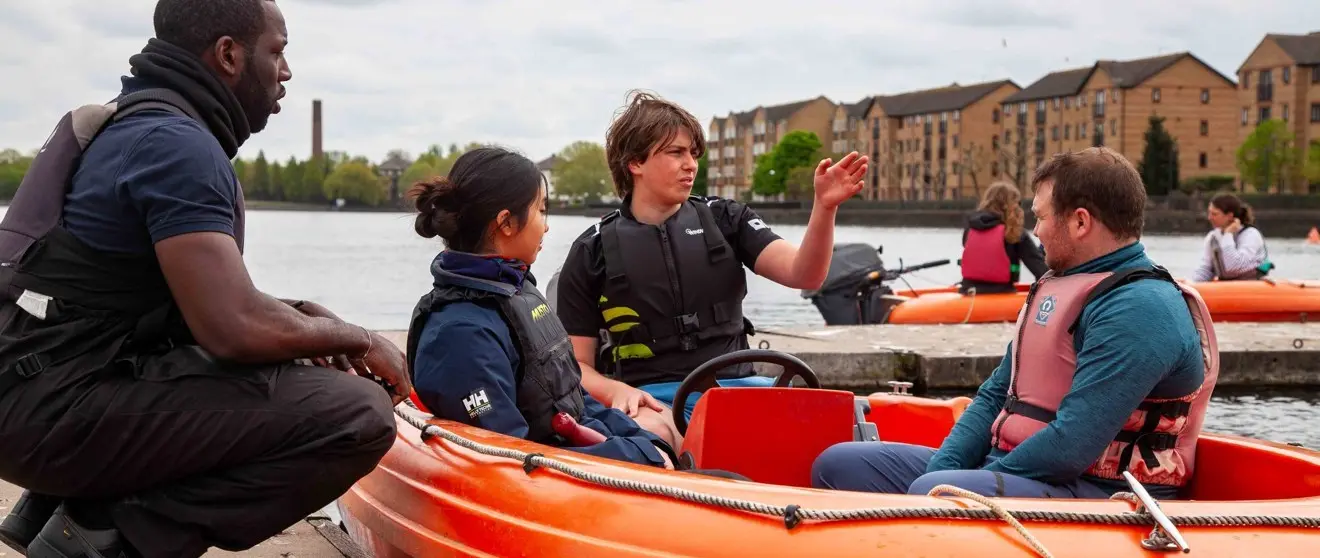
The Royal Yachting Association has published a refreshed explanation of its long-term Together on Water strategy, setting out how clubs, training centres and volunteers can help more people take part in sailing, powerboating and other watersports. In its 11 November 2026 update, the UK governing body identified a ten-year ambition to double active participation and enable ten million people to form meaningful connections with blue spaces. The statement also emphasised improved access for different communities, care for places where water activities take place and stronger support systems for the people delivering training. For the small-boat sector, these goals are relevant to the future of local clubs, beginner courses, affordable boating and the pathway from a first outing to regular participation.
A ten-year vision, not an immediate rule change
The RYA describes Together on Water as a long-term direction for the organisation and its partners. Its latest explanation builds on a strategy first launched in 2023 and further refreshed during 2026. The distinction is important: the November announcement does not impose new licence requirements on owners of dinghies or powerboats, nor does it introduce an immediate set of mandatory changes for every training centre. It provides priorities intended to guide planning and investment over time. Local organisations may respond through different projects as further details are developed, and progress should be assessed through evidence rather than assuming the stated ambition has already been achieved.
Doubling active participation
One of the most prominent RYA ambitions is to double active participation in water-based activities over the coming decade. This is an aspirational target, not a verified forecast that participation will necessarily double. The challenge is substantial because access to water varies across the country, as do personal budgets, travel arrangements, family commitments and available equipment. A sailing club on an inland lake may have different constraints from a coastal powerboating centre. Successful growth will therefore depend on practical actions that reflect the needs of different places, not simply a national publicity campaign. For the leisure-boat industry, more regular participation could support healthier local communities if that growth proves sustainable.
Ten million connections with blue spaces
The plan also aims to help ten million people experience a meaningful connection to blue spaces. That phrase is broader than boat ownership or holding a formal training certificate. Someone may develop an interest through a one-day taster session, an accessible sailing experience, volunteering or activity around a local lake. The measure needs a clear definition if it is to be evaluated accurately. Numbers alone cannot describe whether an experience was safe, enjoyable or sufficient to encourage a return visit. The RYA's emphasis on connections recognises that people may engage with boating in many ways, even before deciding whether to purchase a vessel or join a club.
Four priorities organise the strategy
The RYA identifies four cross-cutting priorities: More People, More Often; More Backgrounds; Better Blue Spaces; and Brilliant Basics. The first focuses on regular participation, while the second concerns welcoming environments and access. Better Blue Spaces addresses the waters and environments that support activity. Brilliant Basics is about the systems, people and practical foundations on which delivery depends. These categories are connected. A well-maintained sailing venue can offer an excellent introduction, but that experience may not lead to lasting participation if courses are difficult to find, volunteers are overstretched or the facilities cannot accommodate different needs. The value of the plan will lie in how the priorities translate into action.
Training centres are a central part of delivery
RYA-recognised training centres introduce people to a broad range of water activities and help develop skills through structured instruction. The November statement places those centres at the heart of the strategy without suggesting that their daily requirements have all changed immediately. RYA Director of Training Richard Falk explains that the update is intended to provide long-term direction, while also supporting instructors and volunteers. For a prospective small-boat owner, the important point is that an established training network can create a progression from introductory handling to more demanding activities. Confidence and competence should be built step by step rather than assumed after a single successful trip.
Digital systems are among the proposed foundations
The RYA says it intends to modernise digital technology and strengthen systems supporting training delivery. This may sound less exciting than a new sailing class or racing event, but administrative processes can make a real difference to participation. Clear course information, accessible registration and dependable communication reduce barriers for new entrants. Better systems can also help instructors and centres manage their work. The announcement does not provide a detailed list of future software products, budgets or implementation dates, so those should not be invented. The relevant commitment is a direction of investment designed to support an existing training network and help it respond to future demand.
Why the barriers matter
The strategy draws on the RYA's Reflections on Water Survey and National Watersports Participation Survey, which explored motivations and obstacles. The organisation identifies the attraction of spending time on the water, the importance of strong communities and the need to reduce barriers. Those findings are consistent with a familiar challenge in recreational boating: a person may enjoy a first lesson but struggle to find an affordable and convenient way to keep going. Equipment costs, travel, weather and access to local clubs can all matter. The RYA's plan acknowledges these issues, but it remains to be seen which local interventions will make the greatest measurable difference.
Opportunities for newcomers without boats
A person does not need to own a boat to begin learning. Many clubs and centres offer courses, taster days, hire arrangements or crewing opportunities, although availability differs from place to place. A strategy that seeks broader participation needs to make those entry points visible. Ownership can be rewarding, but it is not the only model for enjoying recreational boating. For some newcomers, regular use of shared equipment may be more realistic and environmentally efficient than purchasing a vessel immediately. The announcement does not promise a specific national boat-sharing programme. It provides a rationale for exploring ways to make first experiences and continued involvement more accessible.
Inclusion requires practical design
The RYA's More Backgrounds priority calls for communities in which people feel they belong. Inclusion is not achieved by a statement alone. Clubs may need to consider accessibility of facilities, communication, training methods, costs and the needs of people who are unfamiliar with boating culture. Different participants will face different obstacles, and a single scheme cannot be expected to solve all of them. Listening to members and potential participants is therefore important. It is also useful to recognise volunteers and instructors who make newcomers feel comfortable and safe. A welcoming environment can determine whether someone returns after a first session.
Volunteers are essential to local boating
Small-boat clubs often depend on volunteers who maintain facilities, supervise activities, organise racing and offer informal support. A national strategy that aims for rapid participation growth must consider what that means for those already giving their time. Adding more participants without additional support could create pressure on the same small group of organisers. The RYA acknowledges the importance of instructors and volunteers within its training network. Local organisations may need to strengthen recruitment, succession planning and recognition to maintain a healthy club culture. That is an editorial implication of the strategy rather than a claim that a particular new funding package has been confirmed.
Better blue spaces benefit the wider public
The Better Blue Spaces priority recognises that sailing and boating depend on the condition and accessibility of rivers, lakes, coastal waters and launching areas. Environmental pressures can affect the pleasure and safety of activity afloat. Users have an interest in clean water, functioning habitats and responsible access, alongside the broader public's interest in healthy waterways. Individual clubs may contribute through education, local partnerships and practical care for their facilities. However, the November release does not announce a particular environmental regulation or conservation project at every site. Its significance is the positioning of blue-space protection as one of the organisation's principal ambitions.
A stronger pathway to regular boating
One of the challenges for clubs is retaining people after an introductory course. A newcomer may need encouragement to try a different boat, join a crew or develop skills before sailing independently. The RYA's More People, More Often priority highlights continuity rather than counting only first experiences. Different routes will suit different interests: dinghy racing, family sailing, local cruising, powerboating, windsurfing and volunteering can all provide meaningful involvement. A flexible system should help participants choose an appropriate pathway without implying that competitive sailing is the only measure of progress. Recreational enjoyment is a legitimate outcome in its own right.
Building skills beyond the first certificate
A training certificate is useful evidence that a person has completed a course, but real-world capability also develops through experience and practice. The RYA's long-term emphasis on the quality and relevance of training supports that wider understanding. A new skipper may benefit from continuing to practise basic boat handling, navigation and safety procedures in conditions suited to their experience. A good club can provide an environment where learning continues after a formal qualification. The November statement does not alter the legal meaning of certificates, nor does it guarantee that a particular qualification will be accepted in every jurisdiction. Those matters require separate, current verification.
Local differences need local responses
The United Kingdom includes coastal harbours, tidal estuaries, canals, reservoirs and inland lakes. The equipment, facilities and activities that suit one area may not work well in another. This is especially relevant for the small-boat community, where a trailer ramp, a changing room or storage for an open dinghy can determine whether participation is practical. The refreshed strategy is national in scale, but successful projects will need to understand local conditions. Organisations may learn from each other's approaches without assuming that one model is universally suitable. The RYA has indicated that more detailed plans for different focus areas will be developed and shared over the coming months.
The role of feedback and measurement
The RYA says the new direction has been informed by consultation and survey evidence. That is a useful starting point, but further measurement will be needed to judge progress. Counting registrations or event attendances may not reveal whether new participants remain involved, enjoy their experience or find a club accessible. The ten-year ambitions create an opportunity to develop meaningful indicators. Local centres may be particularly well placed to understand why people stop attending or struggle to progress. The aim should be improvement grounded in actual experience rather than merely producing larger participation figures for publicity.
Implications for boats below 12 metres
The Leisure Boat Guide audience includes small motorboat owners, dinghy sailors, beginners, trailer-boat users and people considering their first vessel. These groups are directly relevant to the RYA's stated focus on access and regular participation. Stronger entry routes could support safer, more confident boating and make local clubs more sustainable. The strategy does not recommend one particular hull, engine or boating style, and its benefits cannot be assessed solely through equipment sales. The important question is whether more people can find appropriate, affordable and supportive ways to take part. That concern is central to the small-craft sector.
Next steps for the RYA and its network
The 11 November 2026 announcement establishes a ten-year ambition, four strategic priorities and a commitment to developing further plans. It says training centres will hear more during the RYA Training Conference in the new year, with details to follow. The present development is therefore a framework for future work rather than evidence that all of the goals have been achieved. For small-boat users and local organisations, the story is a reminder that the future of recreational boating depends on people as much as on equipment. Accessible venues, well-supported volunteers, effective training and healthy waters can make a lasting difference to how often people enjoy life afloat.
Official source: Royal Yachting Association, *Together on Water – the RYA's Next Chapter*, 11 November 2026, https://www.rya.org.uk/news/together-on-water-the-rya-next-chapter/. Photograph: Original RYA editorial image of participants in buoyancy aids beside a powerboat, reproduced with source attribution. Independent analysis by Leisure Boat Guide.