
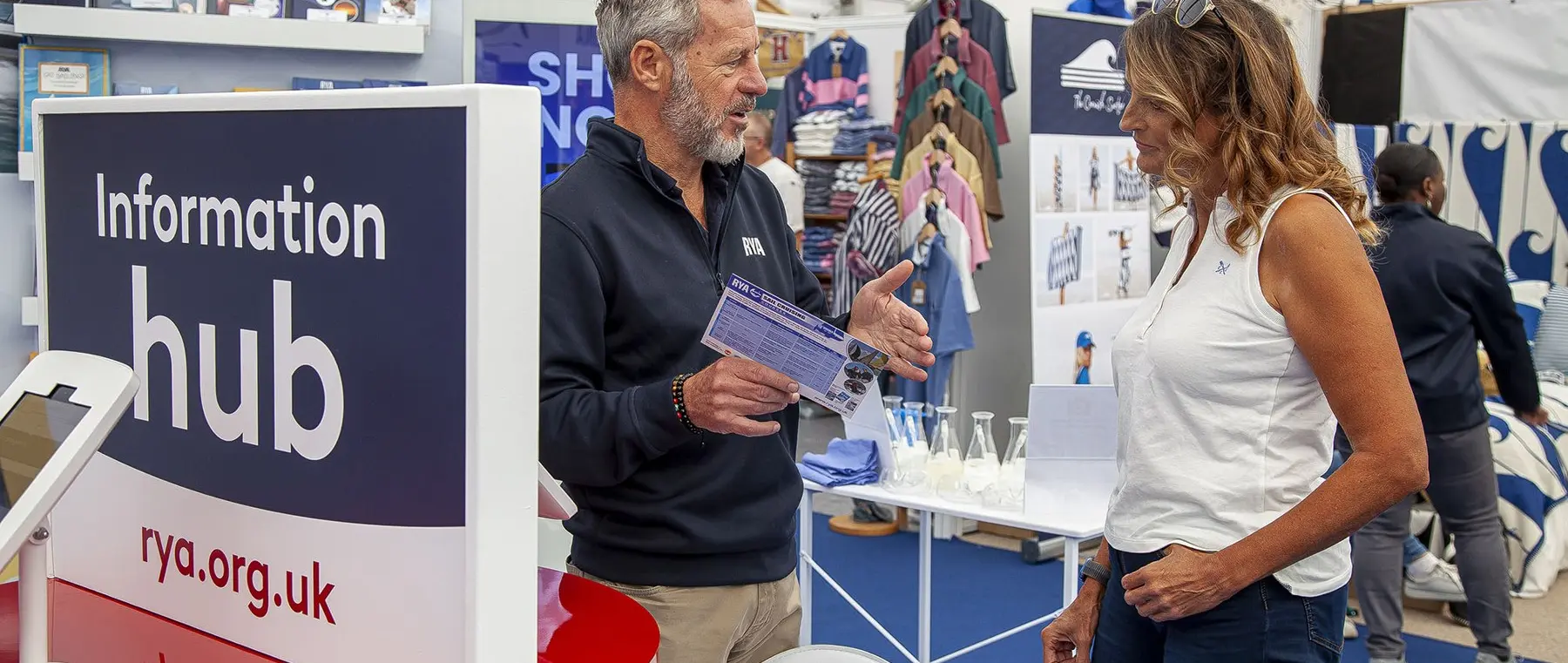
A show stand focused on participation
The Royal Yachting Association used Southampton International Boat Show, held from 18 to 27 September 2026, to highlight training opportunities and routes into marine employment. Its New Wave Hall stand offered guidance for people considering their first boating course alongside experienced sailors planning additional qualifications.
The programme was broader than the usual conversation about acquiring a boat. The RYA stressed that people can gain enjoyment and useful skills through clubs, training centres and volunteering before deciding whether ownership is appropriate. For someone considering a dinghy, RIB or small cruiser, this can be a far more manageable entry route.
Different qualifications for different uses
RYA advisers discussed pathways covering dinghy sailing, powerboat handling, motor cruising, personal watercraft, racing and sportsboat activity. Career-oriented visitors could also explore instructor and coaching roles, professional skippering and other marine jobs. The association's network includes more than 2,200 recognised training centres internationally.
A course title does not mean the same thing as a legal licence for every country or vessel. Boat owners should establish the competence requirements for their intended waters and type of craft, then select training appropriate to the way they will actually navigate. Even experienced crews can benefit from refreshers in navigation, communication and emergency procedures.
Exploring work on the water
The show programme also featured career guidance covering operators, technical roles and marine services. People drawn to boating sometimes assume that employment means working as a yacht skipper, whereas the sector needs instructors, builders, equipment specialists and other professions whose daily tasks can be quite different.
A recognised qualification can support a career move, but it does not guarantee work or bypass safety, medical and employer requirements. Training should be evaluated alongside relevant practice and professional experience. For a leisure boater, the same skills can improve confidence even without any intention of changing careers.
After the show
The published programme describes an exhibition that has already ended; it does not imply that its talks or individual advisers are still available at the stand. The RYA's normal website and recognised training network remain routes to obtain current course availability and qualifications guidance.
Southampton 2026 illustrated a theme that matters across smaller craft: boating becomes more accessible when people know where to begin, what they need to learn and where ongoing support is available. The event was one opportunity to discover that structure, rather than the only route into sailing or powerboating. People considering a course should also ask how many hours are spent practising on the water and what the instructor-to-student ratio will be. A short introductory session can be an excellent beginning, but independent seamanship develops through repeated use of the skills in different conditions.