RYA Scotland has paid tribute to Brian Wilson as he concludes six years as chair of its board, bringing a period of leadership through changing conditions for sailing clubs and recreational boating to an end. In an official update published on 12 November 2026, the association looked back at his work and the longer volunteer involvement that preceded his appointment in 2020. Wilson's final annual general meeting as chair gave the organisation an opportunity to reflect on developments since he first became involved with RYA Scotland in 2012. This is a governance and volunteer-service story, not the announcement of a boat launch or a new qualification. Its importance for small-boat readers lies in the role governing bodies play in supporting club sailing, training and access to Scottish waters.
A leadership handover after six years
According to RYA Scotland, Wilson joined the board chair role in 2020 and has now stepped back after his final AGM in that position. The organisation describes the period as involving significant challenges, including the disruption caused by the Covid pandemic, as well as ongoing work to support sailors and boating communities. No official successor is named in the source release reviewed for this article, and it would therefore be inappropriate to infer one. A change of chair involves formal governance arrangements, but the November tribute does not set out amended rules or announce a structural reorganisation. The confirmed news is the completion of Wilson's term and the association's acknowledgment of his work.
Volunteer experience before the appointment
The association traces Wilson's volunteering back to 2012, eight years before he became board chair. That longer involvement is relevant because it suggests his leadership developed within the boating community rather than beginning solely with a senior title. Many sporting organisations depend on people who understand the reality of club activity, including the difficulties of finding volunteers, keeping equipment serviceable and making opportunities available to newcomers. The announcement does not supply a complete list of every role he held between 2012 and 2020, so a report should not invent such a career history. What can be said is that the board appointment followed a period of established voluntary service and that the association considers the continuity of that commitment worth recognising.
The pandemic years and local sailing
Beginning a chairmanship in 2020 meant leading during a period when public-health restrictions and uncertainty affected organised recreation. Sailing clubs and training centres had to navigate changing requirements and disruptions, just as many other community organisations did. The official tribute refers to the challenge without supplying a detailed record of the specific operational decisions taken by Wilson's board. Those decisions should not be reconstructed from hindsight. The relevant context is that sailing depends on access to shared water, premises, instructors and volunteers, and restrictions on ordinary activity can affect all those elements at once. A governing body's role during such periods includes communication, coordination and helping affiliated organisations understand what rules apply to them.
What a regional governing body does
RYA Scotland is part of the wider system supporting sailing and recreational boating in the United Kingdom. Its work intersects with clubs, training providers, racing participants, volunteers and people enjoying the water outside formal competition. A board provides oversight and helps define organisational priorities, while qualified instructors, professional staff and volunteers deliver many of the activities people see locally. It is important not to confuse the honorary or governance responsibilities of a chair with the operational authority of a skipper or race official. Wilson's recognition concerns his organisational leadership and service rather than a change in marine safety regulations. Readers looking for specific training requirements should consult the relevant RYA scheme, not a governance tribute.
Scotland's varied boating environment
Scottish sailing communities operate in diverse conditions, from sheltered inland waters to exposed coastal areas and island passages. Smaller craft face practical questions about access, weather, training and the availability of local support. Clubs may differ widely in the type of boats they use and the experience of their members. A regional association has to recognise those differences while offering useful programmes and communication. That is why organisational leadership matters to a leisure-boat audience. The challenges of a junior dinghy programme on an inland loch are not identical to those of coastal cruising, yet both benefit from clear information and functioning relationships between volunteers, centres and national bodies. The association's update is not evidence of any specific new facility or club programme, however.
People at the centre of the message
In the RYA interview accompanying the announcement, Wilson emphasises the importance of the people who make sailing communities work. That theme is consistent with the service being recognised. A governing body may publish strategies, policies and training frameworks, but their practical value depends on committed individuals who organise sessions, repair boats, welcome beginners and keep clubs open. Such activity is often hard to measure using a single numerical indicator. It nevertheless shapes whether a person finds boating accessible and enjoyable. The source does not quantify the number of volunteers recruited under Wilson's chairmanship or attribute particular increases in participation directly to him. The broader lesson is about continuity of service rather than an unsupported claim of measurable impact.
How leadership transitions can affect clubs
When a chair steps down, member organisations may reasonably ask whether priorities or support arrangements will change. A transition need not mean a wholesale alteration of policy, just as it should not automatically be assumed that everything remains unchanged. The appropriate evidence will come from official RYA Scotland governance information and future announcements. Clubs can maintain contact with regional officers, review published guidance and participate in consultation opportunities where offered. The November tribute, however, is principally about a person completing his term rather than a new policy package. Reporting that distinction avoids turning an appreciation of service into speculation about appointments, budgets or the future direction of the association.
Support for learning and safety
A healthy club network creates opportunities for people to develop practical boating skills, from basic launching and boat handling to more advanced racing and cruising. For those operating small craft, instruction and appropriate supervision can make the difference between a confident outing and an avoidable difficulty. The quality of that support depends on instructors, volunteers, facilities and the systems that help them work together. The board's oversight exists at a different level from decisions made aboard an individual vessel, but it can influence the priorities guiding the network. It would be misleading to credit one chair personally with all the training or sailing outcomes during a six-year term. The association's tribute instead recognises a sustained contribution to the wider framework in which local activity takes place.
Why volunteers deserve recognition
Recreational boating depends heavily on unpaid work. A club race may require an officer, safety-boat crew, shore helpers, registration volunteers and people willing to maintain facilities between events. These contributions are not glamorous but can have a direct effect on whether new sailors are able to participate. The November announcement about Wilson serves as a reminder that volunteering can develop from helping at local activities to taking responsibility for an entire regional organisation. That progression is not compulsory or suitable for everyone. A successful community also needs members who undertake modest tasks reliably without seeking senior office. Recognition of experienced leaders should therefore sit alongside appreciation for the many other roles that keep boating accessible.
Assessing a term fairly
The RYA update is an official appreciation and is appropriately positive about Wilson's contribution. It should not be presented as an independent audit of the board's performance, nor as evidence that every strategic objective was met during his tenure. A balanced account can acknowledge the known dates, the Covid-era context and the organisation's stated gratitude while noting the absence of detailed metrics or a named successor. If further governance documents or participation reports are published, they can be assessed on their own terms. This approach respects the value of voluntary service without creating claims that the source does not establish. It also distinguishes the role of a public-facing chairman from the broader outcomes of an organisation with many contributors.
The image and the primary record
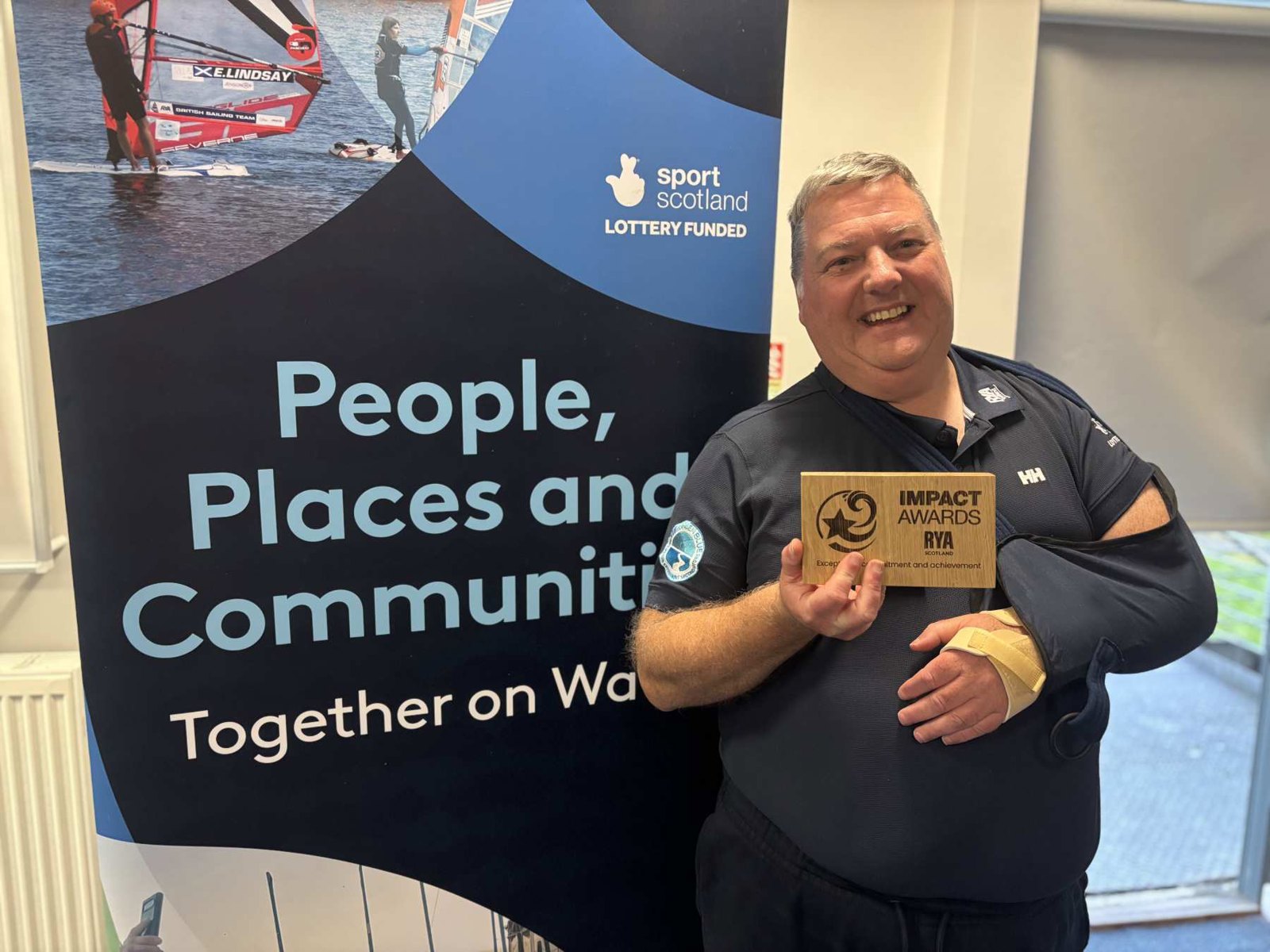
The accompanying image is a genuine RYA Scotland editorial photograph associated with Wilson's service and the association's November statement. It is not a depiction of a future appointment or a reconstructed governance event. The association's source confirms involvement dating from 2012, the chairmanship beginning in 2020, and the final AGM after six years. These are the key verifiable points. The precise start date of any successor, future board decisions and club-level programme changes are matters for subsequent official announcements. Readers should consult the organisation directly for its current elected officers and formal governance arrangements.
The relevance for small-boat communities
There is a tendency for boating coverage to focus on vessels and new equipment because they provide immediately visible changes. Yet the institutions supporting training, racing and community access are also essential. Wilson's departure from the RYA Scotland chair is one opportunity to examine that less visible infrastructure. The association's tribute highlights a long-standing volunteer who helped guide it through unusual years and whose service is now being acknowledged. It offers no grounds for predicting how future policy will change. The durable news is the completion of a six-year leadership term and the reminder that sailing's everyday experience depends on people and organisations willing to sustain it over time.
Sources and image attribution
Primary reported announcement: https://www.rya.org.uk/news/brian-wilson-impact-award/.
Official photographic provenance: https://www.rya.org.uk/news/brian-wilson-impact-award/. Image supplied by the originating organisation, credited in the photograph title; original copyright remains with the rights holder. Official image file. The photographs are documentary or clearly labelled archival illustrations, not evidence of events that have yet to happen.