The Royal Yachting Association has released a new Powerboat Handling handbook designed to help small-boat users build confidence beyond their first formal training course. Announced on 11 November 2026, the book follows the decisions involved in an ordinary day afloat, from preparation and planning through launching, operating and returning home. The publication is available from the RYA shop for £15.99, with a 15 per cent discount for eligible RYA members. Its intended audience includes people who have recently completed Powerboat Level 2, more experienced owners refreshing their knowledge and instructors seeking a practical teaching resource. Unlike the announcement of a new boat model, this is news about the skills and decisions that make small craft useful and safe. The emphasis on a complete journey is the feature that sets the handbook's approach apart.
The six-stage framework
The RYA organises the handbook around six connected stages: Prepare, Plan, Navigate, Launch, Operate, and Own and develop. Those headings are familiar activities, but placing them in one sequence helps a reader see how decisions made ashore influence what happens later on the water. A boat can be correctly equipped but poorly suited to the day's forecast. A sound passage plan can still become difficult if the crew has not practised launching or if basic mechanical checks were omitted. A successful trip therefore requires more than a collection of isolated manoeuvres. The new guide's day-afloat format is meant to connect these practical responsibilities. It complements the existing Start Powerboating title rather than replacing professional instruction or changing any qualification requirements.
Preparation begins before departure
The first stage asks boaters to think about crew, clothing and equipment. The underlying lesson is that comfort and safety frequently overlap in small open boats. People who become cold or wet may find routine decisions harder, and poor stowage can turn an otherwise tidy cockpit into an obstacle during a hurried movement. A competent pre-departure routine should include checking required safety equipment, confirming fuel or battery state, looking for visible damage and making sure every person understands basic onboard expectations. The details vary according to boat type and local law, and no handbook can provide one checklist that overrides the owner's manual. The useful habit is to make preparation deliberate, repeatable and proportionate to the trip rather than a brief glance at the boat after it is already in the water.
Planning beyond a destination on a chart
A destination is not a plan by itself. Small powerboat owners should consider route, distance, forecast, tide or current, daylight, fuel or electrical range and safe alternatives if conditions change. It is also worth identifying the practical limits of the crew. An experienced helm may be comfortable navigating a busy harbour, but an inexperienced passenger may be unsettled by short steep seas or repeated boarding from an exposed pontoon. The RYA's scenario-based presentation encourages thinking about those decisions as connected. Readers should not treat the book as a guarantee that a particular itinerary is safe. Local notices, relevant charts, official forecasts and the requirements of the vessel and operating area remain the authoritative sources. The most useful plan can be the one that includes a clear decision not to depart.
Navigation in the real small-boat environment
Electronic displays make positional information easier to obtain, but they do not remove the need to keep a lookout or understand nearby traffic. Small craft can accelerate quickly and may be used close to swimmers, paddlers, anglers and larger vessels. That mixture requires attention to speed, separation, visibility and the effect of wake. A chartplotter may help the helm orient the boat, yet local restrictions, shallow water, marks and changing conditions still require interpretation. The handbook's navigation stage sits alongside planning and operating for good reason: safe navigation is a continuous process, not simply the act of entering a destination into a device. Training and practice should also cover what the crew would do if a navigation display, communications device or propulsion system became unavailable.
Launching is an acquired skill
For many owners of trailerable boats, the journey begins at a ramp. Launching and recovery create specific risks: slippery surfaces, vehicle movement, pedestrians, nearby craft and the need to keep the trailer correctly aligned. A calm, rehearsed routine with clearly assigned tasks can make the process safer and less stressful. Novices sometimes discover that they can drive a boat confidently yet still feel uneasy at a crowded launch site. The RYA's inclusion of a dedicated Launch stage acknowledges that reality. The exact sequence depends on the trailer, boat, propulsion system and ramp rules. Owners should use manufacturer instructions and competent practical training rather than relying on a generic description alone. Good preparation also means being considerate of others waiting to launch or recover.
Operating a boat rather than merely steering
Handling a small powerboat includes low-speed control, awareness of wind and current, throttle judgement, stopping distance and the effect of changes in crew weight or load. Different hulls behave differently, and even the same craft may respond noticeably differently when lightly loaded or carrying a family and equipment. The new book is described as a practical resource for developing confidence, which should be understood as confidence founded on experience, not a promise that reading will replace time at the helm. A useful learning method is to practise in suitable conditions with competent supervision and gradually develop familiar routines for berthing, manoeuvring and responding to changed circumstances. Owners should also understand which tasks require help rather than trying to prove independence in conditions beyond their current ability.
Ownership creates ongoing responsibilities
The sixth stage, Own and develop, is especially relevant to a person considering a first purchase. The obligation to maintain equipment, meet legal requirements and choose appropriate conditions does not end after a successful training course. Boats are subject to wear, corrosion, storage problems and sometimes infrequent use, so an owner must know how to recognise faults and when to seek qualified assistance. A handbook can provide a framework for questions, but technical work should follow the relevant manufacturer's instructions and applicable safety rules. It is equally important to continue learning as circumstances change. A new operating area, unfamiliar vessel or different crew may make additional instruction worthwhile, even for a driver who has been boating for years.
What instructors may find useful
The RYA says the guide can support discussions between instructors and learners, particularly after Powerboat Level 2. That is an important educational niche. Students often remember a manoeuvre performed during a course but struggle to recognise when to apply it independently. A scenario-based handbook can prompt a conversation about judgment: why one plan offers a better margin than another, or why the same landing approach may be unsuitable in changed conditions. The book should be considered one tool among practical demonstration, supervised practice and feedback. It does not establish a new licence, grant any operating privilege or certify that its reader is competent. Training centres should confirm the current RYA syllabus and the requirements of their own courses rather than assuming the book changes official standards.
The purchase price in perspective
The stated retail price is £15.99, with a fifteen per cent RYA member discount. That is the price of an educational publication, not a course, and it may be subject to the conditions of the RYA shop. Prospective readers should check the current listing, format and delivery arrangements before ordering. The book's practical value will depend on whether it is read attentively and used to strengthen habits afloat. Some buyers may benefit most from chapters about launching, while others may use planning or ownership sections as a refresher. A book is an economical way to organise knowledge, but it cannot diagnose a boat's faults, assess an unfamiliar ramp or make decisions for the helm in rapidly changing conditions. Those are responsibilities that remain with the skipper and crew.
A practical route for first-time owners
The handbook also suggests a useful structure for anyone preparing to buy a modest motorboat. Begin by clarifying how the craft will be used and who will normally be aboard. Learn about the operating area and whether local courses are available. Inspect the boat and its supporting equipment carefully, seek a supervised trial where possible, and establish how it will be stored, launched and maintained. Then continue training after purchase. None of those steps requires a powerful or expensive vessel. Indeed, small trailer boats make a useful case for disciplined routines because their owners often manage every stage without a professional crew. This is independent practical context, not a claim that the RYA publication prescribes a single purchase process.
What the announcement confirms
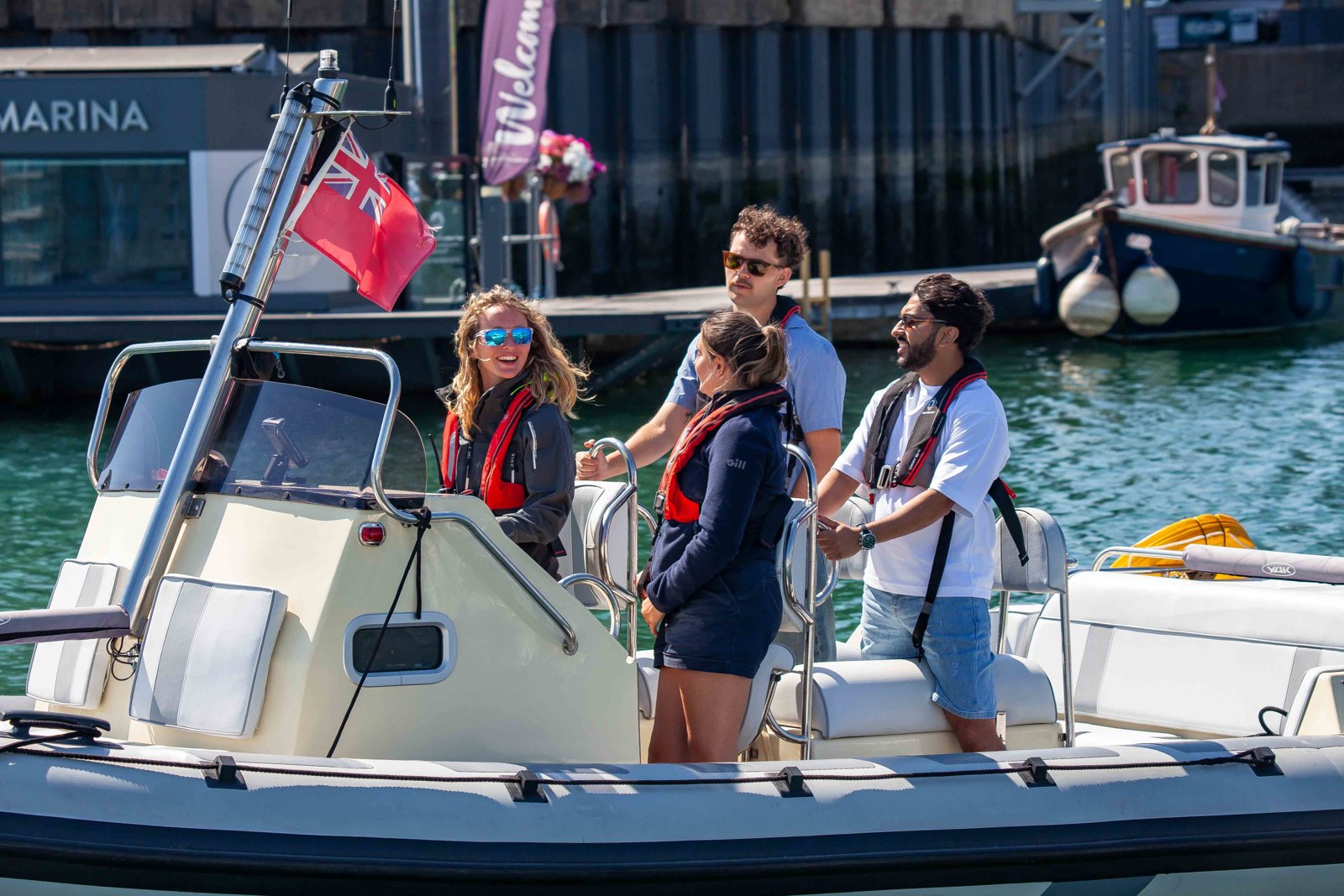
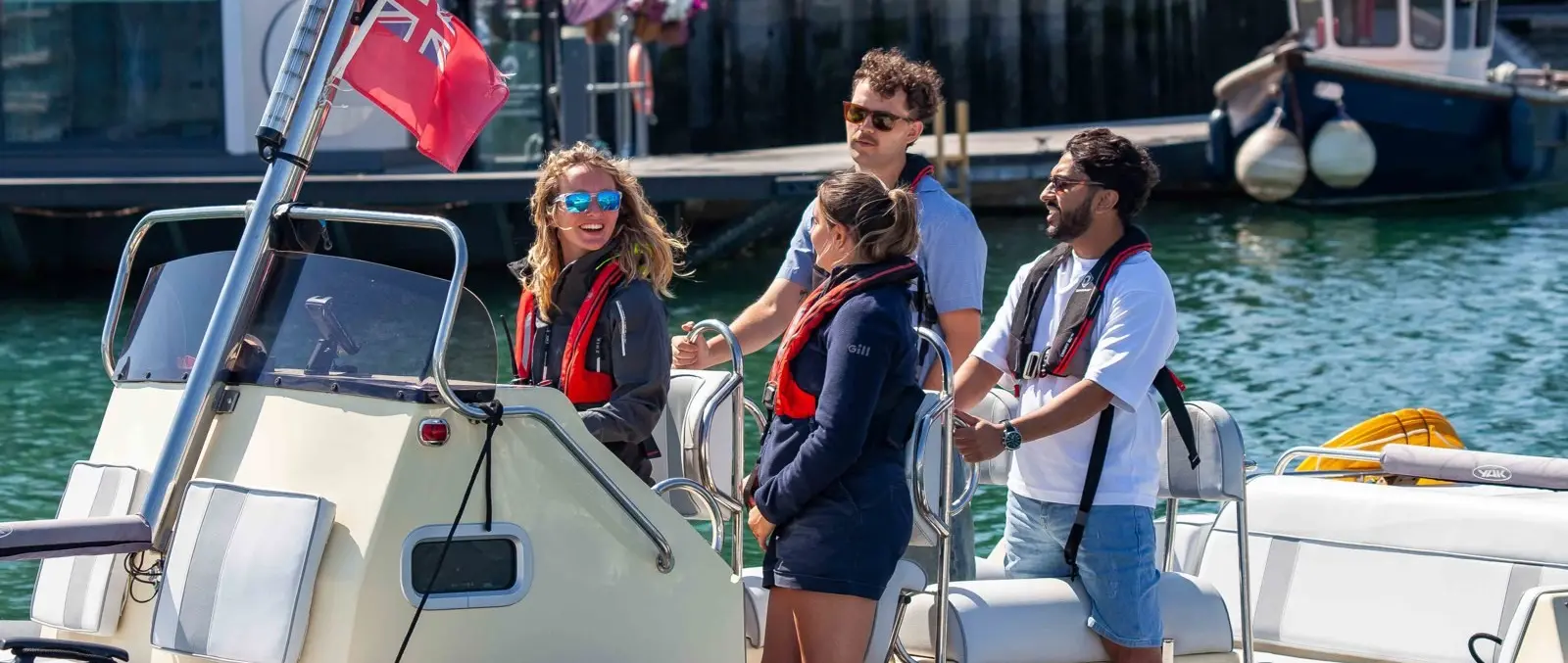
The RYA release confirms the handbook's availability, its six-part day-afloat structure, the intended use by developing and experienced powerboaters, and the stated shop price and membership discount. It does not claim that reading the book alone qualifies anyone to operate a boat, nor that a specific number of accidents will be prevented. Those limitations matter when reporting about training materials. The official photograph accompanying this article shows people aboard a powerboat and comes from the RYA's press page; it is illustrative of the activity rather than a new model launch or a measured training result. For small-boat readers, the lasting news is the association's decision to frame boat handling around a complete, realistic outing and to connect learning with the ongoing responsibilities of ownership.
Sources and image attribution
Primary reported announcement: https://www.rya.org.uk/news/take-your-powerboating-skills-further/.
Official photographic provenance: https://www.rya.org.uk/news/take-your-powerboating-skills-further/. Image supplied by the originating organisation, credited in the photograph title; original copyright remains with the rights holder. Official image file. The photographs are documentary or clearly labelled archival illustrations, not evidence of events that have yet to happen.