
Three workshops across November and December
RYA Northern Ireland has scheduled a winter programme aimed at making sailing clubs more inclusive and resilient. Its announcement of 31 October sets out three sessions dealing with Sailability volunteers, funding for accessibility improvements and club governance. The first is part of the RYA NI Connected Conference in Belfast on Saturday 7 November, followed by online-style evening dates on 11 November and 9 December. The emphasis is on the organisational work that enables people of differing abilities to enjoy sailing, rather than on introducing a new boat or a racing event.
The timetable offers a useful reminder that access to small-boat sailing depends on much more than a ramp or a suitable dinghy. Clubs need volunteers, clear management arrangements and money for appropriate facilities. The RYA describes the programme as part of its Access to Resilience work supporting Sailability organisations across Northern Ireland. It is intended for people who run and support clubs, including those beginning to consider inclusive activity for the first time.
A November opening on volunteer resilience
The first workshop, Volunteer Resilience in Sailability, is scheduled for Saturday 7 November at the RYA Northern Ireland Connected Conference in Belfast. The organiser says it will consider how clubs can sustain their volunteer teams by sharing responsibilities and supporting the people who make sessions possible. The Connected Conference is free for RYA-affiliated clubs, according to the official announcement. Any prospective attendee should check the current booking arrangements directly rather than assume places remain available at short notice.
Volunteer resilience is a concrete operational issue in inclusive boating. A club may have experienced instructors and suitable boats but still struggle if too few people are available to prepare craft, assist with boarding and remain on shore during a session. Over time, reliance on a handful of committed individuals can leave a programme vulnerable to illness, changes in work patterns or burnout. An effective club needs reliable roles and a way to welcome and train new helpers, not just enthusiasm on opening day.
Funding to improve accessibility
The second workshop is set for Wednesday 11 November at 7pm, with S3 Solutions involved in discussing funding for accessibility projects. RYA NI says it will cover where clubs might seek support, examples of improvements and approaches to preparing stronger applications. The organiser does not suggest that attendance itself provides a grant or guarantees a successful funding bid. The value is in helping clubs develop an evidence-based plan and understand what funders may expect before submitting an application.
For a small sailing club, accessibility improvements might relate to safe routes through the site, changing facilities, equipment storage, launching arrangements or adapted training resources. The most appropriate priority depends on the people who use the club and the site conditions. A funding case is stronger when it begins with consultation and a realistic costed need rather than an attractive purchase list. The workshop could help organisers turn genuine barriers into projects that are manageable, measurable and easier to explain.
Governance as a practical safety issue
The final advertised session, Good Club Governance, is scheduled for Wednesday 9 December at 7pm with Sport Northern Ireland. It is intended to address management responsibilities, policies and the foundations of a well-run club. The RYA frames strong governance as a way of welcoming new members, supporting growth and helping organisations secure funding. For inclusive sailing, the subject also connects to safeguarding, communication and the ability to make consistent decisions when volunteers or committee members change.
Governance can sound remote from the water, but a weak process often appears on the pontoon. People may be unsure who can approve equipment, how to report a safety concern or what happens when an instructor is unavailable. Good arrangements define responsibilities and ensure necessary policies are understood by those delivering activity. Clubs do not have to become bureaucratic for their own sake. They need clear, proportionate systems that allow participants and volunteers to concentrate on sailing with confidence.
Who has been invited
RYA Northern Ireland says the series is open to Sailability volunteers, coaches, committee members and club leaders, as well as people from other clubs interested in making their activities more accessible. Participants can select the sessions most relevant to their circumstances; the announcement does not require attendance at all three. This flexibility matters because a small community club may be run largely by volunteers who cannot commit to every date. Accessibility work succeeds when entry points are practical.
The invitation also broadens the discussion beyond clubs already using the Sailability name. A dinghy club with an ageing membership, a youth group considering inclusive instruction or a sailing centre seeking better volunteer support may encounter related questions. The correct approach is to listen to potential participants and use professional guidance rather than assume a standard solution fits everybody. The programme's organisational themes apply to many parts of recreational boating, even where the boats and facilities differ.
Why dinghy sailing is central to access
Small sailing craft can provide an immediate experience of steering, balance and wind awareness. For new participants, that can be empowering when the instruction and equipment suit their abilities. Some sailing programmes use specially adapted dinghies or support vessels, while others focus on techniques and clear communication. The RYA's workshop announcement is not a catalogue of equipment and does not prescribe a particular boat. Its central subject is the human and organisational capacity needed to give more people an opportunity to sail.
A boat that is appropriate for one sailor may present serious barriers for another. Transfer arrangements, seating, controls, supervision and the landing environment must be assessed by competent people for each setting. Good inclusive practice respects individual choice and avoids treating every participant as having the same needs. That is why volunteer preparation and club governance are as relevant as the hardware. The sport grows when the welcome continues after the initial invitation.
The work between training days
A workshop can introduce ideas, but the more difficult stage often follows. Clubs may need to review their existing practices, speak with participants, recruit additional helpers and create a timetable for improvements. Some actions will be inexpensive, such as clarifying responsibilities or changing how information is shared. Others may require capital funding, specialist advice or collaboration with the landowner. The challenge is to choose priorities that respond to real barriers and can be maintained beyond a single season.
A reasonable starting point is to map a participant's whole experience: finding information, booking, arriving, changing, boarding, sailing and returning home. A club might discover that the sailing session itself is well managed but the registration process or physical approach to the jetty is difficult. The RYA's three subjects—volunteers, funding and governance—provide different ways to address such findings. They are complementary, not competing ideas.
A broader lesson for leisure boating
Inclusive access has value for the wider small-boat community. Clubs that communicate clearly, look after volunteers and make equipment easier to use often create a better environment for beginners, families and older members as well. A more thoughtful arrangement can reduce confusion for people who are unfamiliar with a site. The aim is not to claim that every adaptation helps every sailor equally, but to make participation a considered responsibility rather than an occasional special project.
The Access to Resilience programme, as described by the RYA, has supported Sailability clubs in strengthening volunteer skills and club capacity. This winter series continues that emphasis. Success should ultimately be judged in the opportunities people can actually take up and sustain, not only by the number of people who attend workshops. Clubs can use the sessions as a prompt to ask participants what works, what does not and what would make their next visit easier.
Booking information and next steps
The RYA announcement provides direct registration links for each workshop and a named contact for further information. It identifies 7 November, 11 November and 9 December 2026 as the relevant dates, with a future 2027 programme to be announced separately. Because the first session falls today, availability and event arrangements should be checked on the official RYA Northern Ireland site rather than inferred from a previously published schedule. No claim is made here that places remain or that a workshop has already concluded.
For leisure-boat clubs seeking to widen participation, this is a timely programme focused on the work behind the scenes. It connects accessible sailing with volunteer wellbeing, credible funding plans and careful governance. The news is not a new regulation or a mandatory qualification; the workshops are an invitation to learn. Their practical value will come from the changes clubs make afterwards and the new people who find that the water is genuinely open to them.
Sources and image credit
Primary announcement: Royal Yachting Association. Additional official context: reference 1.
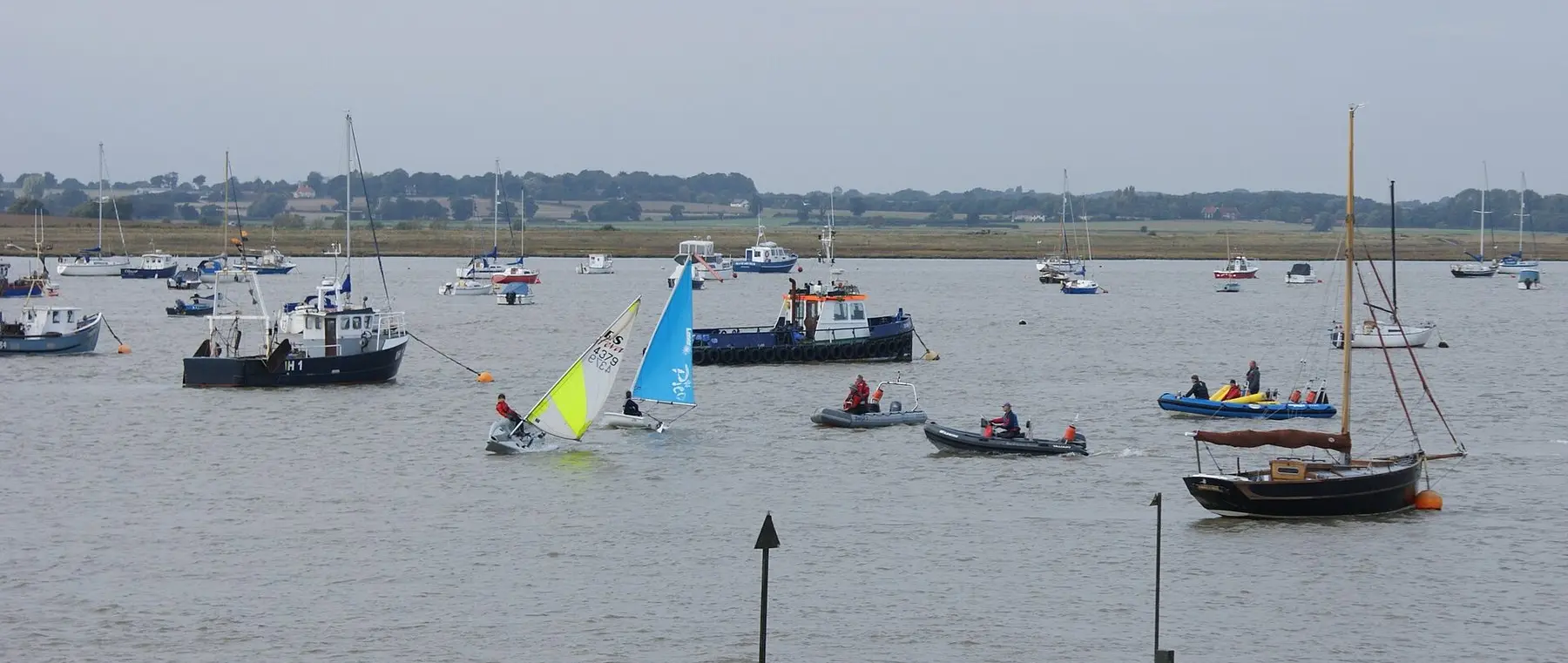
Illustrative photograph of dinghy sailing at Bawdsey Quay, not an RYA Northern Ireland workshop. Photograph: Simon Mortimer / Wikimedia Commons, CC BY-SA 2.0; resized and recompressed for web and shared under the same licence.
