Northern Ireland clubs meet to plan their future
A gathering of Northern Ireland sailing clubs has put the practical business of keeping small-boat activity healthy into focus. The Royal Yachting Association reports that 35 delegates from 16 clubs attended the RYA Northern Ireland Connected Conference at Newforge Sports Complex in Belfast on Saturday 7 November 2026. Its chosen theme, Creating a Future-Ready Network, described a challenge shared by many dinghy, junior-sailing and local watersports organisations: retaining experienced volunteers while making it easier for the next generation to take part. The official account was published on 11 November, making this a current report on a completed meeting rather than a forecast of a future conference.
The event was not a consumer boat launch and did not announce a new regulation for recreational skippers. Its importance lies in the people and systems that make boating possible. A club with sound boats, instructors, rescue provision and a well-managed waterfront can enable hundreds of hours of worthwhile sailing, even without a large commercial budget. That is why the ideas exchanged in Belfast are relevant to Leisure Boat Guide readers. Many people first encounter boats through community clubs, then develop the confidence and knowledge to sail independently or become owners themselves.
The significance of 35 delegates and 16 clubs
The RYA's attendance figures are modest compared with a national trade exhibition, but they represent a useful cross-section of club experience. Each of the 16 clubs brings different facilities, age groups and volunteer resources. A conversation that works for a busy racing club may need adapting at a small inland venue or a coastal organisation where tides, distances and launching arrangements shape the timetable. The conference was therefore an opportunity to share working methods rather than impose one standard membership model on every club.
What matters after a meeting is whether participants take practical changes home. Club committees can identify one or two ideas that address a clearly defined local problem, appoint a person to lead each task and review results during the next season. That is an editorial suggestion, not a conference resolution reported by the RYA. Sharing honest evidence about what succeeds and what fails would make future meetings more useful. There is little value in copying a sophisticated administrative system if a small club cannot maintain it with the people and finances available.
Young people enter the discussion
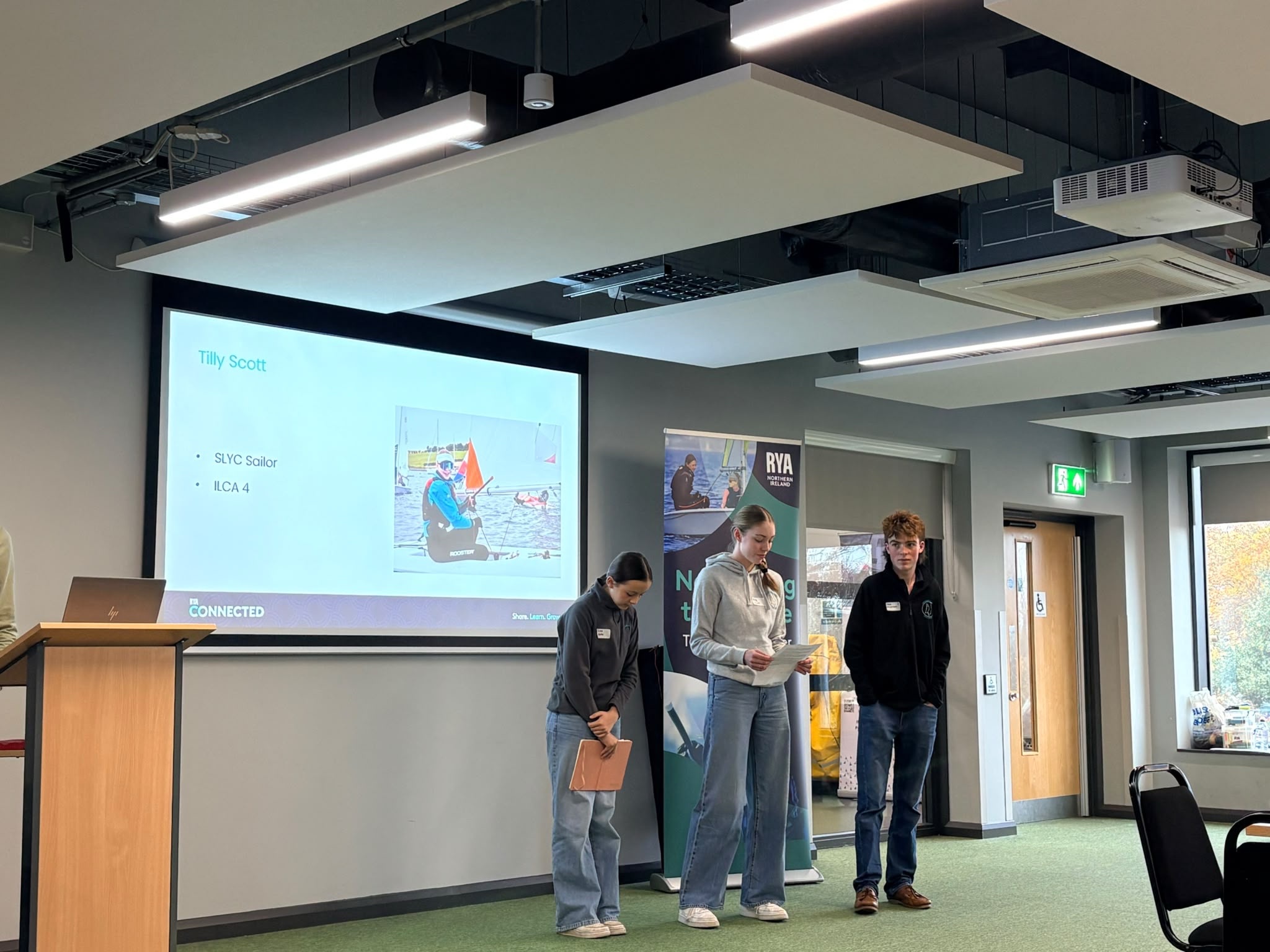
The RYA specifically notes that young people attended the Northern Ireland Connected Conference for the first time. That detail matters because junior sailors are often the subject of decisions made exclusively by adults. Giving young members a place in the conversation can reveal where a club's timetable, communications or training structure does not match the experience of the people it hopes to retain. Young participants may also identify gaps between enjoying occasional training sessions and feeling part of the wider club community.
An effective youth voice is more than inviting someone to attend and asking for a comment at the end. Clubs could consult sailors before changing race formats, invite feedback after training blocks and explain which recommendations can realistically be implemented. Safeguarding and age-appropriate supervision remain essential. The conference announcement does not say that a new national youth-governance programme was created. It establishes that younger people were present and that the Next Generation workshop considered how their participation and influence might be strengthened.
Strangford Lough Youth Series shares its experience
A presentation from the Strangford Lough Youth Series gave young sailors an opportunity to explain what organised racing has done for their development and confidence. The RYA's description does not publish race results, participant counts or a new championship date, so those should not be added as assumptions. The useful message is that local racing can provide a stepping stone between basic handling skills and more independent decision-making. Competitors learn to prepare their dinghies, manage starts, recognise changing conditions and understand how conduct on the water affects other crews.
A youth series can also help families discover an affordable route into the sport. Clubs can share equipment, arrange coaching and create events close enough to home for regular involvement. Those opportunities are especially valuable where buying and transporting a boat would otherwise be a barrier. However, racing is not the only successful outcome; some young people prefer relaxed sailing, paddling or assisting with events. Clubs should avoid interpreting attendance at one racing series as proof that a competitive programme suits every participant.
Killyleagh's five-day junior programme
Killyleagh Yacht Club described how it has developed instructors and volunteers while growing its junior sailing programme to five days a week. That frequency, reported by the RYA, is a concrete example of sustained activity rather than a one-off open day. Regular sessions may give young sailors repeated practice, different weather experiences and more opportunity to build friendships. They also create substantial responsibilities: facilities must be available, equipment maintained and suitable instructors and safety teams organised for each session.
A club considering a similar programme needs to plan for demand, staffing and the safety of beginners before increasing its advertised schedule. It might be sensible to start with a smaller number of dependable sessions and expand only when resources justify the change. The RYA report does not disclose Killyleagh's total number of trainees or the financial arrangements behind the programme, and those details cannot be inferred from the weekly frequency. The lesson is about the organisational effort required to turn a successful introduction into an activity people can practise consistently.
Belfast Lough focuses on volunteer resilience
Belfast Lough Yacht Club contributed a presentation on volunteer development and resilience. This is an important topic in small-craft boating because regular club activity often relies on a relatively small group of people qualified to instruct, operate safety boats, manage races or maintain equipment. A programme can look healthy from the outside even while critical responsibilities rest on one or two individuals. That concentration makes it harder to sustain activity when personal circumstances change or when volunteers simply need a break.
Clubs can respond by documenting routine tasks, giving newcomers supervised opportunities and planning handovers before experienced members retire from a role. Training takes time, and the person doing the training needs support too. A rota that looks complete on paper may still be fragile if several positions require the same qualification. The conference report presents volunteer resilience as an area of shared learning; it does not claim a new funding package or universal staffing solution. Local committees still need to assess their own risks.
Race management and practical small-boat operations
One of the event's two workshops covered Racing Activity and Race Management and was led by Adam Parry from RYA headquarters. For dinghy and small-keelboat clubs, race management involves far more than placing marks and recording finishing positions. Organisers must understand the conditions, provide appropriate safety cover, communicate procedures and ensure that participants know the race instructions. Volunteers operating committee boats and support RIBs have responsibilities distinct from those of the competitors, even when they are members of the same local club.
The public RYA summary does not record every exercise or technical point discussed during this workshop. Clubs wanting to apply the lessons should obtain the relevant guidance from the RYA and the current racing rules rather than treating a short news report as an operating manual. A useful post-conference action would be to review existing race-management procedures, particularly the roles that are most difficult to fill and the way newcomers learn those tasks. Good systems make local competition safer and more enjoyable for sailors across different experience levels.
The Next Generation workshop
The second workshop, The Next Generation, examined the development of junior and youth sailors, their voice within clubs and the creation of programmes that keep participants involved over time. Retention is a different challenge from recruitment. A lively introductory day may produce many expressions of interest, but that alone does not show whether children can return regularly, access suitable equipment or progress at a pace that feels rewarding. The next experience offered by the club is often more important than the first publicity campaign.
A practical progression route could include beginner sessions, supported recreational sailing, optional race coaching and chances for older juniors to assist under appropriate supervision. Such a route needs flexibility, because participants move through education, work and family commitments. The RYA does not report that the conference adopted a single formal youth curriculum. It describes a workshop where clubs explored how to support sustainable programmes. Readers should treat ideas here as useful principles for local review, not as new mandatory RYA requirements.
Three forums reflect different needs
Delegates also took part in discussion forums on Training, Yachting and Keelboat Activity, and Women and Girls. The topics show that the future of participation cannot be reduced to one headline about more members. Training centres have questions about staffing and progression; keelboat sailors may face different equipment and crewing constraints; and clubs seeking to welcome more women and girls need to consider whether facilities, culture and programme design genuinely support that aim. These topics intersect, but solutions must be tested against local circumstances.
For small-boat organisations, the challenge is to make entry pathways understandable. People should be able to discover which activities are available without already knowing a member, whether equipment can be borrowed, what training costs and how to take the next step. Clubs should be careful not to promise that a single event or campaign will overcome structural barriers. The RYA announcement confirms the subjects of the forums but does not publish a new official set of findings from each. Reporting their existence accurately is better than manufacturing consensus or unreported commitments.
Where technology helps and where it does not
The RYA identifies changing expectations, technology and sustainability among the pressures facing clubs. Digital booking and membership systems can reduce administration, but they only help when members understand them and volunteers can maintain them. A complex application that requires constant troubleshooting may create more work than a simpler, well-managed process. Data protection, payment handling and access for people who are less comfortable online should be considered at the outset. No specific new software procurement or compulsory digital platform was announced at the conference.
For families and casual participants, timely information can matter as much as a sophisticated system. A clear calendar, realistic course descriptions, weather-related updates and a straightforward contact route all make participation easier. Clubs can choose tools proportionate to their size, compare ongoing costs and retain sensible alternatives for essential communications. Technology should support the experience on the water, not become a new obstacle to it. A club whose volunteers already have too much to do is unlikely to benefit from an administrative project with no plan for long-term ownership.
Sustainability includes people as well as boats
Sustainability in a recreational boating context includes environmental responsibilities, but a viable club also needs healthy finances, maintained equipment and people willing to do the work. The RYA's report places this alongside wider sector change rather than presenting an audited environmental outcome. Different venues may focus on waste, shoreline access, maintaining boats longer or choosing suitable propulsion for their support craft. Each decision should be judged using its actual costs, operating needs and environmental consequences, not just the appeal of a label.
The social dimension is equally important. If programmes depend on members regularly giving more time than they can afford, continuity becomes uncertain. Clubs can protect valuable experience by distributing responsibilities and bringing new volunteers into meaningful roles. A durable network shares lessons across organisations while leaving room for local differences. These are practical implications of the conference themes; they should not be mistaken for a list of new measures formally approved at Newforge.
What the conference means for small-boat owners
The Connected Conference matters to Leisure Boat Guide because club infrastructure is part of the everyday small-craft economy. A well-run local club provides an accessible place to learn, store or borrow equipment, meet other sailors and develop the skills that support safer independent boating. Its influence can reach beyond members who race: trained volunteers operate safety boats, maintain waterways access and introduce new families to enjoyable activities. A confident first season may lead to regular participation, further qualifications or eventually the purchase of a boat suited to the owner's actual interests.
The immediate facts are straightforward: 35 delegates from 16 clubs met in Belfast on 7 November; youth attendees took part for the first time; presentations came from the Strangford Lough Youth Series, Killyleagh Yacht Club and Belfast Lough Yacht Club; and two workshops and three forums covered operational priorities. The more important test will be what clubs choose to change in the seasons ahead. Future reporting should focus on documented actions and outcomes rather than assuming that a productive conference automatically delivers higher participation. The RYA Northern Ireland Development team is the appropriate route for information about future Connected events.
Sources and image attribution
Primary reported announcement: https://www.rya.org.uk/news/rya-ni-connected-conference-creating-a-future-ready-network/.
Official photographic provenance: https://www.rya.org.uk/news/rya-ni-connected-conference-creating-a-future-ready-network/. Image supplied by the originating organisation, credited in the photograph title; original copyright remains with the rights holder. Official image file. The photographs are documentary or clearly labelled archival illustrations, not evidence of events that have yet to happen.