
Investment in a dinghy builder rather than a new model launch
RS Sailing says that Swedish marine investor Fredriksborgs Förvaltnings AB and the owners of British rotational-moulding specialist Rototek Ltd have invested in the company. Announced on 6 November 2026, the arrangement is intended to support the next stage of development for one of the most recognisable names in training and racing dinghies. The value of the investment and the precise equity percentages have not been disclosed in the company-authored release, and those gaps should not be filled with estimates. What RS has confirmed is more immediately useful for boaters: the existing team and British production are expected to continue, as are dealer relationships, warranties and parts support. For clubs, instructors and private owners, continuity in those services can matter more than an ownership headline.
Who the investors are
Fredriksborgs Förvaltnings is described by RS Sailing as a Swedish investment company with interests in established marine businesses. The second investment interest comes from owners of Rototek, the Nottinghamshire manufacturer whose relationship with RS hull production goes back more than twenty-five years. This is significant because a supplier familiar with tooling, moulding processes and production schedules has different knowledge from a purely financial investor. The release identifies Peter Rönnbäck as chairman of Fredriksborgs and Steff Wright as chairman of Rototek. Their involvement does not by itself reveal the structure of the transaction, any board rights or future capital spending. Those points remain unconfirmed, so the story is best understood as new industry backing with a stated continuity plan.
Why manufacturing relationships count for small craft
A racing dinghy may look simple beside a large cruiser, but repeatable production quality is particularly important where class rules and closely matched boats are concerned. Hull shape, finish, stiffness and the placement of fittings affect how a boat handles and how owners maintain it over the years. Rotational moulding introduces specific design and manufacturing considerations, while other classes use different construction methods. A long supplier relationship is therefore not just about purchasing components cheaply. It can preserve manufacturing know-how and make it easier to support existing equipment. Rototek’s owners joining the investment gives the hull-supply relationship a new context, although RS has not announced any particular new manufacturing technology as part of this deal.
The strongest reassurance is about existing boats
The company expressly says that support for existing boats and customers will continue. That should interest sailing schools that own small fleets of teaching dinghies, club members with boats several years old and families buying used training craft. Access to replacement parts, rigging pieces and clear maintenance advice keeps a dinghy useful long after its initial sale. Such reassurance is a statement of intent from the company; it is not an independent guarantee about delivery times for a particular item. Owners should continue to check stock and warranty terms with their dealer as needed. Nevertheless, naming parts and warranties in a corporate investment announcement shows that RS understands the practical concerns likely to follow a change in its financial backing.
A global fleet gives the decision wider importance
RS Sailing says that more than 40,000 of its boats are afloat and identifies fifteen active racing classes. These are figures supplied by the company, not independently audited fleet counts. Even with that qualification, they point to a large community affected by the brand’s product and service decisions. A school buying new equipment needs to know whether sails, centreboards and other consumable parts will remain available; a class association wants confidence that equipment specifications will be maintained. New capital can help a manufacturer develop products, but the benefits will be judged by real experiences at clubs and dealers. It is useful to distinguish that long-term potential from anything already delivered as a result of the investment.
The people continuing at RS
Managing director Alex Newton-Southon has publicly welcomed the backing, identifying the marine experience of both investor groups and thanking dealers, sailors, clubs and suppliers. The announcement says the current RS team remains in place, with UK production continuing. It does not describe a workforce reduction programme, closure of a factory or replacement of the existing range. Those absences should not be exaggerated into permanent assurances about every job or future product. They do, however, define what has actually been announced: investment alongside operational continuity. For readers accustomed to takeover stories dominated by restructuring, this emphasis on keeping the boating community supported is a noteworthy distinction.
What happens at sailing schools
Sailing schools rely on more than purchase prices. They need robust boats that can be rigged repeatedly, straightforward instructor training and local access to parts when a component is damaged. A fleet bought today may serve learners for many seasons. If the manufacturer can maintain product support and investment in events, it can reduce uncertainty for organisations planning future replacements. The financial announcement does not provide details of a new fleet discount or an expansion timetable, so readers should not expect either immediately. The practical question for a club remains whether its local dealer can fulfil orders, whether support is responsive and whether class equipment stays consistent. Those are measurable signs of continuity.
The significance for one-design racing
One-design fleets depend on trust that boats built at different times remain comparable under class rules. Owners invest not only in a hull but in racing communities, coaching, measurement systems and resale markets. Any substantial change in company ownership naturally raises questions about future equipment specifications and long-term supply. The company’s stated intention to continue its current boats and invest in the class community addresses those concerns at a broad level. It does not announce a new measurement rule or an immediate change to any class. Such changes would need to be communicated through the relevant class and governing arrangements. For now, the sensible reading is that RS wants continuity while exploring future development.
No deal price or ownership percentage has been released
The identities of the participating groups are clear, but the economics are not. RS has not disclosed a transaction value, the proportion of the company acquired or specific investment milestones. It would be irresponsible to present a guessed valuation as news or to label the arrangement a takeover without evidence. A reader assessing the implications should separate the confirmed investment from unknown corporate terms. The strongest evidence available concerns the industrial backgrounds of the investors and RS Sailing’s own statements about ongoing production and service. Further filings or company communications may provide more detail, but none is needed to understand the immediate significance for dinghy customers and the wider small-boat sector.
Why UK production is highlighted
Saying that production remains in the UK addresses a practical question for a builder with a large international customer base. Buyers and distributors must plan shipping, parts availability and service arrangements, often across different regulatory regions. A well-established production base supports familiar fitting methods and quality processes, while local dealers deal with the customer-facing side. That does not mean a UK-built boat has no internationally sourced components, or that delivery times will be identical in every market. The statement is best seen as a commitment to an existing manufacturing arrangement. Its real value will emerge through sustained supply, technical assistance and predictable communication with distributors as the new investment programme develops.
What the funding might enable
RS says the backing is expected to support new boat development, RS events and the class community. That is a broad agenda rather than a firm model-launch schedule. Development costs can include design, tooling, testing, documentation and dealer training long before a new dinghy appears at a show. Events require logistical support, boats and people, while class communities value reliable communication. These are areas where longer-term capital may be useful, although the company has not itemised its budget. It is reasonable to watch for updates, but premature claims about a new RS class or a specific 2027 launch would go beyond the published facts. Leisure Boat Guide will report identifiable products when the builder announces them.
The wider small-boat business lesson
Dinghy manufacturers occupy an unusual place in boating. Their customers include individual enthusiasts, training centres, youth programmes, holiday businesses and racing associations. The value of a brand extends beyond the current model catalogue into the skills, memories and community developed around its boats. Investors who understand that relationship may approach the business differently from buyers focused solely on units sold. Fredriksborgs and Rototek owners bring marine and manufacturing connections, but the outcome will depend on execution. Customers should judge the transition by parts support, boats delivered and the quality of new designs over time, not by speculation about the investment’s undisclosed size.
What sailors and dealers should watch next
The immediate next steps are straightforward. Owners should retain their documentation and use existing dealer channels for parts or warranty questions. Clubs preparing fleet purchases can seek current specifications and delivery estimates, while class organisations can monitor official notices for any approved changes. Dealers will want clear information on supply and customer support as RS’s development plans progress. For the wider industry, the announcement is an indication that outside capital is still interested in established dinghy brands with durable communities. It is not evidence that all small-boat businesses are enjoying the same conditions. RS has set out continuity as its first message; its future actions will show what the investment ultimately delivers.
Sources and photograph credit
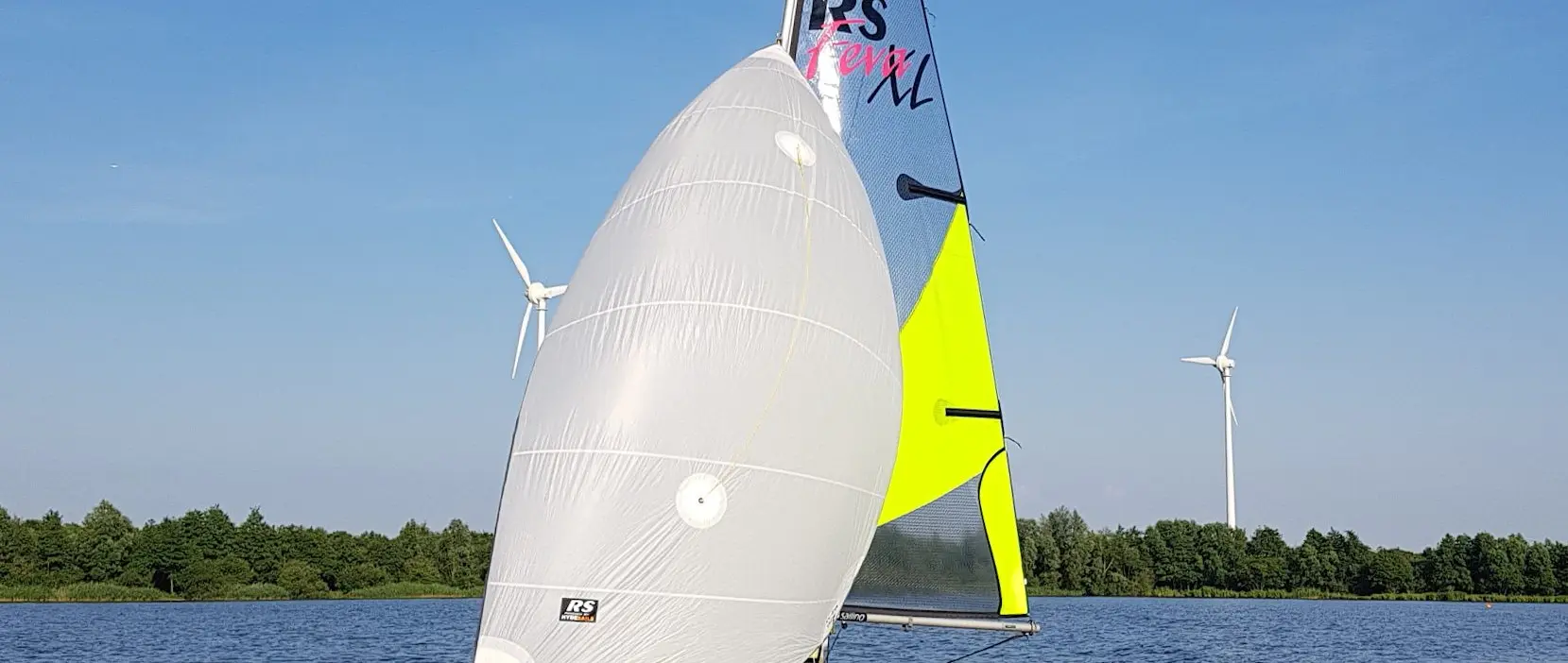
Sources: RS Sailing, company-authored release; Rototek corporate background; UK Companies House Rototek Limited. Photograph: Feva Gennaker.jpg, ChrGermany, Wikimedia Commons, licensed under CC0. This is an illustrative archive photograph of an RS Feva dinghy and does not show the 2026 investment transaction. The Commons image is resized for web use.
