
Roboat appoints a new leader for the next growth phase
Amsterdam-based marine autonomy developer Roboat has named Joshua Jordan as chief executive, succeeding company co-founder Ynse Deinema. The leadership change, announced in early October 2026, is intended to help the business expand beyond its research roots into wider deployments of navigation and skipper-assistance systems for passenger and cargo vessels. Jordan is a long-standing participant in Roboat's development and has worked with the project since it was a research initiative.
Deinema's departure from the executive position does not signal a change in Roboat's core emphasis. The company remains focused on making transport over water more efficient through assisted and increasingly autonomous operation. Its technical leadership is also continuing, with Jonathan Klein Schiphorst remaining chief technology officer and Rens Doornbusch chief product officer. Those details matter because practical marine autonomy depends on engineering continuity as well as financial strategy.
The technology is already being tested on working waterways
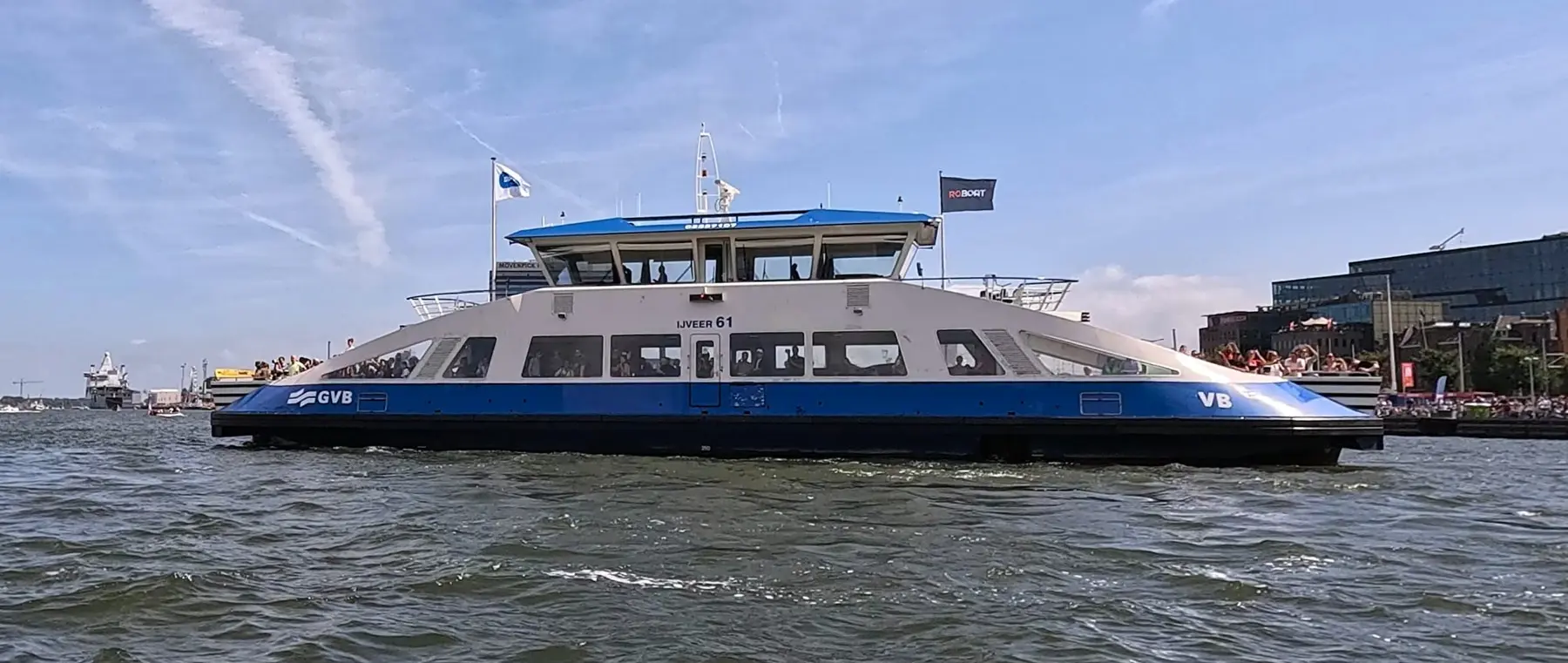
Roboat's skipper-assistance technology is already operating in connection with ferries serving Amsterdam's IJ waterway. The company has also conducted a demonstration involving an autonomous logistics barge passing through the city's central canal system. These activities show that its software and sensing hardware are being tested in environments where traffic, banks, bridges and passengers create operational complexity.
Those examples do not mean every vessel can operate without a person in command or without regulatory clearance. A skipper-support installation may provide situational awareness and manoeuvring assistance while leaving responsibility with qualified crew. A supervised logistics demonstration is likewise different from unrestricted commercial operation. Readers should assess each example against its documented scope and operating permissions.
Computer vision and sensing support the bridge team
Roboat develops a platform combining environmental sensors, navigation software and user interfaces for the person managing a vessel. Its public technology material shows a bridge-assistance display, a fleet-management dashboard and demonstrations of automated route planning. The objective is to provide information that helps operators understand nearby craft, structures and the vessel's own movement.
In a busy harbour, that can involve detecting small boats, assessing closing situations and presenting useful warnings before a manoeuvre becomes difficult. The value of such information depends on sensor performance, software reliability and clear human-machine interaction. A screen that produces excessive false alerts may distract rather than assist, while a system that fails silently could encourage misplaced confidence.
Why Amsterdam offers a demanding proving ground
Amsterdam provides a distinctive test environment because its waterways carry ferries, tour craft, service vessels and small private boats within a dense urban network. Bridges, moored craft and fixed obstacles limit manoeuvring options, while some routes are used frequently by passengers. Weather, visibility and traffic patterns vary, requiring automated functions to be assessed under more than ideal daytime conditions.
Successful development in one city does not guarantee equal performance in every harbour. A narrow canal vessel and a fast recreational powerboat have different acceleration, turning and stopping characteristics, as well as different regulatory responsibilities. Transferring a technology requires new integration work, calibration and careful verification rather than simply installing the same software on another hull.
Jordan is tasked with commercial expansion
Jordan brings experience from more than a decade in artificial intelligence and software businesses, according to the company's leadership announcement. He has been associated with Roboat since its early research phase and is expected to strengthen relationships with operators, partners and prospective investors. Roboat is raising additional capital to continue technology development and pursue a broader commercial rollout.
A fundraising process is not the same as confirmed financing. The company has not specified a completed investment round in the announcement, nor has it committed to a universal deployment date for its products. Operators evaluating the business should seek verified references, technical documentation, support arrangements and an explanation of the maturity level of each capability.
Assisted navigation is more immediate than full autonomy
For many recreational and working boat operators, the near-term value of marine autonomy may be practical assistance rather than replacing the skipper. Technology that helps with docking or provides an improved view of vessel traffic can address routine workload without requiring a craft to make every decision independently. Roboat's publicly demonstrated interfaces fit within that wider movement towards carefully supervised digital bridge tools.
Responsibility still rests within applicable navigation rules and the vessel's operating framework. Skippers need to understand what the equipment can sense, when it needs intervention and how to operate if the system becomes unavailable. Manufacturers should make failure modes and manual overrides understandable to ordinary crew, not solely to the engineers who developed the system.
New systems create maintenance and cybersecurity obligations
A navigation-assistance system adds cameras, computing hardware, communication links and software dependencies to the vessel. These components have to withstand vibration, spray, temperature changes and repeated use. Maintenance planning must include sensor cleaning, calibration, secure updates and a defined process for diagnosing faults. An interface that works well on a showroom demonstration still needs dependable service support in daily operation.
Cybersecurity also matters when systems exchange vessel position, sensor information or operational data. Remote access should be restricted, updates authenticated and the ability to control safety-critical functions considered carefully during installation. An owner or fleet operator should ask whether the product has undergone independent assessments and how the supplier manages vulnerabilities over the equipment's expected life.
What the leadership change means for boating
Roboat's new management arrangement comes as digital systems are becoming more prominent across ferries, workboats and leisure craft. Amsterdam's operational demonstrations offer a tangible example of assisted and autonomous navigation being applied to real waterways, while the new chief executive's task is to turn that experience into a repeatable business. The technological direction may eventually influence how smaller vessels operate around marinas and busy waterfronts.
At present the confirmed news is Jordan's appointment, Deinema's handover and Roboat's intention to scale. Claims about fully crewless passenger services or proven performance in all boating conditions would go beyond the announcement. For recreational boaters, the useful question is how responsibly the industry's next generation of electronic assistance is engineered, tested and supported.