
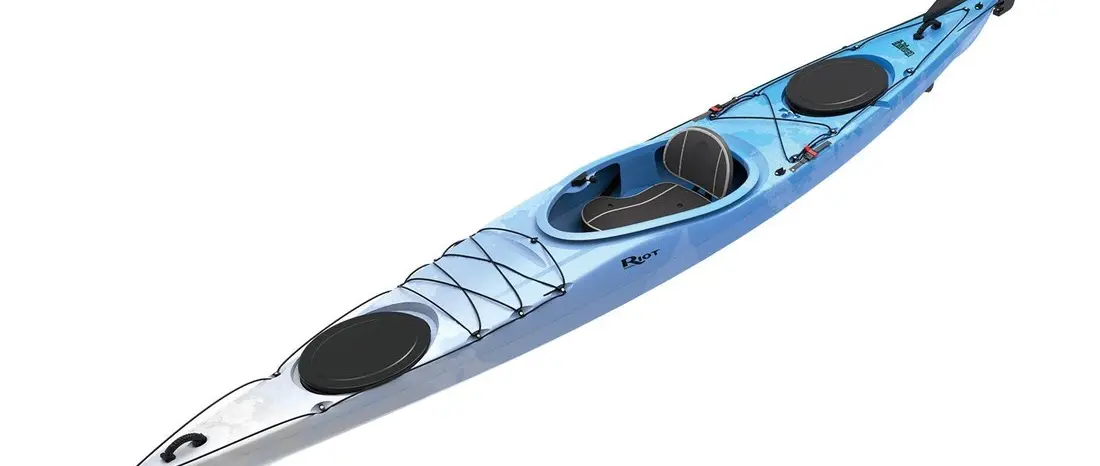
A touring kayak intended for wider use
Riot Kayaks has entered the Edge 14.5 Rudder in the Paddle Sports Show's 2027 sea-kayaking selection, highlighting a model that puts touring-oriented features into a rotomoulded hull. The 4.41-metre craft is designed for paddlers who have moved beyond short recreational outings and want a kayak capable of carrying equipment over longer routes without requiring a lightweight composite construction.
This category appeals to people who want more precise tracking, dry storage and a cockpit that supports controlled paddling. Those qualities can make coastal or lake trips more practical, but they also introduce equipment and handling characteristics that deserve proper training. A longer sea kayak is not a shortcut to the experience required for exposed-water paddling.
Dimensions shape the intended experience
The Edge measures fourteen feet six inches in length and approximately fifty-seven centimetres across the beam. Riot's official product information lists the weight at roughly twenty-five to twenty-six kilograms depending on specification, and a maximum carrying capacity of around 147 kilograms. These figures place the model between broad recreational kayaks and longer expedition craft.
A narrower beam may contribute to an efficient forward stroke, but it also changes the feeling of balance when compared with a wide sit-on-top. The paddler needs to establish a comfortable relationship between the feet, thighs and seat rather than rely solely on the hull's published stability claims. The correct route should be determined by capability and conditions.
Rudder support when wind affects a route
The model uses Riot's Pilot Rudder System, designed to help the kayak maintain direction when wind or current makes travelling in a straight line more difficult. A rudder can reduce some of the correction strokes required on an extended passage, allowing the paddler to concentrate on a consistent forward rhythm.
The device must be used appropriately. Rudder blades can be damaged in shallow water and need to be raised or protected during landing. A paddler should learn how the hull responds without steering assistance and practise manoeuvring by ordinary strokes. Navigation and safe route choice remain necessary even when the rudder is working perfectly.
Storage in both ends of the boat
Riot specifies bow and stern compartments with approximately fifteen-inch rubber hatch covers and bulkheads. This arrangement can provide a more organised way to carry camping equipment and supplies than placing everything in the cockpit. It also helps distribute weight along the hull when items are appropriately secured.
Sealed compartments should be inspected for leaks and are not a replacement for dry bags when an item must stay dry. Cargo should be balanced so that trim remains suitable, and the total load needs to include the paddler. A weekend trip may be feasible with appropriate preparation, but the boat's available volume is not an invitation to overload it.
Comfortable contact with the cockpit
The Edge uses a Flex 4 seat with Drytech fabric and a contoured backrest intended to adjust to different paddlers. Moulded thigh braces and adjustable foot pedals provide points of contact that can help the person control the kayak when turning or edging. These components deserve attention because small changes to fit may influence how confidently the boat handles.
A person should test the fit while wearing the clothing and footwear used during real trips. An uncomfortable thigh position can make a long paddle tiring, while an oversized cockpit can reduce connection to the boat. A well-adjusted seat is as much about control and the ability to exit safely as it is about comfort.
Safety fittings for the touring environment
The manufacturer includes reflective deck lines and self-rescue straps. Reflective details may help improve visibility when illuminated, while suitable straps can support recovery techniques for paddlers who have been trained to use them. None of these features guarantees safe operation in darkness or rough water.
Every sea-kayaking outing still requires proper flotation equipment, knowledge of cold-water risks and an effective plan for rescue or communication. The skipper should also consider the route and whether the kayak can be recovered after a capsize. Equipment that is present but unfamiliar provides less protection than gear that has been practised with experienced instruction.
Practicality of a rotomoulded hull
Polyethylene is a common construction choice for kayaks intended to withstand ordinary handling, beach launches and transport. It can be robust and comparatively straightforward to maintain, but it may be heavier than some composite alternatives. The Edge aims to provide touring capability at a price and durability level attractive to a broader audience.
Storage must still support the hull correctly, and dragging the boat over abrasive surfaces can cause damage. The kayak's full length also affects vehicle loading and home storage, so an owner needs a suitable rack or trailer. A carefully chosen transport arrangement can determine how often a craft is actually taken to the water.
Understanding the 2027 selection
The Edge 14.5's presence in the sea-kayaking product selection confirms its continued relevance to Riot's touring range; it should not be described as an entirely new 2027 hull or a category winner. The hero photograph comes from Riot's own product page and depicts the actual single kayak instead of a fabricated graphic or two-view montage.
The best assessment remains an on-water demonstration in conditions suitable for the customer's experience. A paddler who feels comfortable with the Edge's beam, seat and rudder may appreciate the freedom to carry supplies on longer journeys. For others, a broader recreational kayak may be a better introduction. The appropriate design is the one matched to its owner.
Support and parts over the ownership cycle
A touring craft must remain usable after the first season. Owners should ask Riot about replacement rudder components, hatch covers, footrest fittings and seat parts, particularly if they travel well beyond the nearest dealer. The availability of ordinary components can have a greater effect on long-term enjoyment than an accessory fitted at the time of sale. An informed purchase includes understanding which repairs are practical at home and which require a specialist.
A used Edge 14.5 also deserves a thorough inspection of the steering lines, hatch seals and hull. Buyers should establish the exact model specification because equipment packages can vary across production years. A competent retailer or repairer can help distinguish cosmetic abrasion from damage affecting the craft's performance. Good maintenance turns a promising touring kayak into a dependable travel companion.