
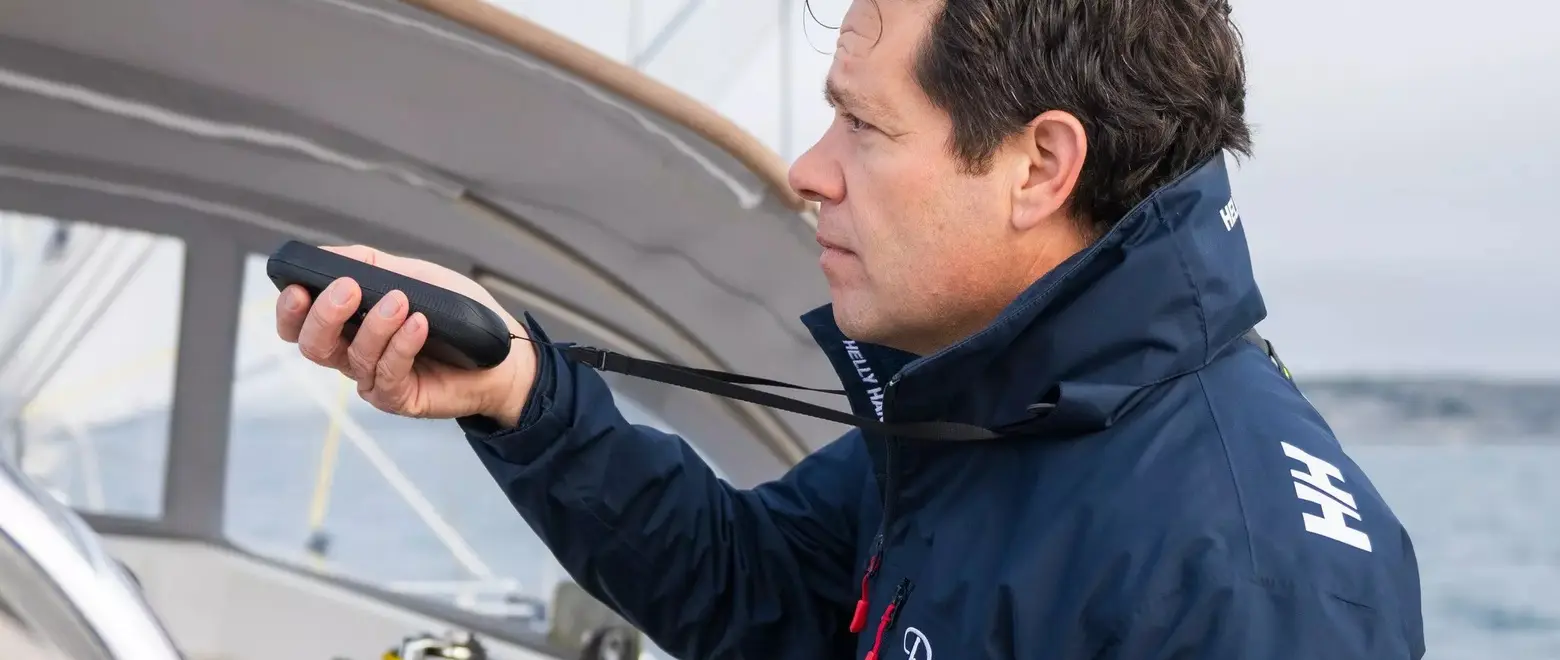
Raymarine's RCU-1 wireless autopilot remote has received a Special Mention in the Navigation and Communication category at the 2026 DAME Design Awards, drawing attention to a controller that allows a skipper to adjust an autopilot from another position aboard. The recognition, announced at METSTRADE in Amsterdam on 17 November, relates to the convenience of a portable display and the company's Point-and-Go steering feature. The system is intended for both sailing and motorboats, including smaller craft where a single person may need to supervise sailing tasks away from the fixed helm. A wireless remote is an additional way of commanding an autopilot; it is not a replacement for watchkeeping, sound navigation decisions or the ability to regain direct control immediately.
Recognition at the 2026 DAME awards
METSTRADE's official results place the Raymarine RCU-1 among the Special Mentions rather than among the category or overall winners. That distinction is important: jury recognition means the design received particular praise, but it does not provide an independent sea-trial measurement of every advertised function. The same category acknowledged several different navigation technologies, reflecting the variety of equipment available to boatowners. The RCU-1 had already been listed as a product earlier in 2026, so the current news is its award recognition at the November exhibition, not the first appearance of the hardware. Owners comparing products should keep the distinction between launch dates, endorsements and practical test evidence clear.
What Raymarine says the RCU-1 can do
The official exhibitor listing describes a wireless controller with a colour screen displaying navigation and instrument information. It is intended to issue autopilot commands for a heading, waypoint or route, while showing relevant information to the person holding it. The manufacturer also describes Point-and-Go steering, intended to simplify directional changes, and a Solo Sailor mode connected to man-overboard procedures. These are supplier statements about the product's functions. Whether the precise operations are supported on a particular existing boat depends on the installed autopilot, compatible displays or software and the integration specified by Raymarine. The listing should not be understood as confirmation of universal compatibility.
Why remote control can matter on small boats
A boat under twelve metres often has a compact helm that is convenient while cruising but not always the best position from which to watch a sail, inspect a fishing line or move around the cockpit. A controller that allows a qualified skipper to command the autopilot without standing directly at the fixed display may reduce unnecessary movement in certain conditions. However, freedom to move is not freedom to leave the vessel unsupervised. Someone must continue to maintain a proper lookout, understand the boat's position and be prepared to take the helm. The feature's value depends on how responsibly it is integrated into normal seamanship.
Point-and-Go is not collision avoidance
Raymarine's Point-and-Go description suggests an intuitive way to request a change of heading. A simpler command interface can help reduce the number of steps required to adjust an autopilot, but it cannot decide whether a turn is safe. A small boat can encounter shallow water, floating debris, other vessels and unexpected changes in wind or current. A skipper must look outside and use charts and navigation equipment appropriately before any change is made. It would be misleading to imply that the remote provides automatic obstacle detection or independent collision avoidance unless that functionality is documented in the complete installed system. The autopilot follows commands within its capabilities and limits.
Heading and route steering serve different purposes
Holding a selected compass heading is not the same as navigating to a waypoint or following a planned route. A current or wind may cause a boat to move sideways over the ground even while its bow remains on a stable heading. Route-oriented functions may use connected navigation data and can introduce their own configuration and acceptance requirements. The RCU-1 listing mentions both types of commands, but the full operational logic should be understood from the approved manual. Skippers need to know which mode is active, what information is shown and whether route changes require confirmation. A portable display should make the mode more apparent rather than hide it behind convenient controls.
Solo Sailor mode needs careful interpretation
Raymarine describes Solo Sailor mode as a safety-oriented feature that assists with man-overboard recovery for short-handed sailors. This deserves attention because the time available to respond can be extremely limited. But a feature described as assisting recovery is not a guarantee that a person in the water will be located or recovered, and it cannot replace the means of raising an alarm, keeping sight of the casualty or safely manoeuvring a vessel. Owners should request the detailed operating procedure and understand how the feature interacts with their specific autopilot installation. Any practice should be conducted under controlled conditions and in accordance with the manufacturer's safety guidance.
Wireless reliability is an installation issue
A portable remote depends on a dependable connection to the equipment that actually operates the steering. The published product summary does not describe every wireless range, interference or fallback condition for all installations. The buyer should learn what happens when the remote loses communication, its battery becomes low or a command is not acknowledged. The fixed helm needs to remain usable, and essential steering control must not depend on a single handheld device. Crew should know where the remote is kept, how it is secured against falling overboard and how to recognise that an instruction has been received. These are ordinary safety questions for any wireless marine control system.
The colour display adds responsibility
A built-in colour screen can help a skipper confirm the active mode and observe useful instruments without continually returning to the main helm. Yet displaying more information on a handheld unit can also tempt users to focus on screens when they should be looking outward. An effective interface ought to make essential data legible at a glance, including in bright sunlight, rain and movement. Buyers should ask to see an operating unit rather than judge readability from a photograph. The information supplied by any connected instrument also has limitations, so a remote display should not be treated as a substitute for monitoring the boat and its surroundings.
Engine power and autopilot control differ
An autopilot remote controls steering through a compatible autopilot arrangement. It is not a general-purpose engine throttle controller merely because it can influence the boat's heading. On a powerboat, the skipper must still be ready to manage speed and propulsion separately, especially when avoiding traffic, approaching a berth or dealing with a sudden hazard. On a sailing boat, sail trim and balance affect steering loads and may require manual attention. This distinction matters when interpreting promotional language about having full vessel control from anywhere aboard. Buyers should confirm the precise command set rather than assume that every vessel operation can be managed from the remote.
Crew practice makes features useful
For a two-person crew, a portable command device might help coordinate course changes while one person is handling a line or monitoring a sail. That convenience can become confusing if the two crew members are uncertain who has command authority. Before departure, agree who may change the autopilot setting, how changes are acknowledged and when manual steering takes priority. A system with multiple control stations needs clear operating habits. The goal is to reduce unnecessary workload without creating unexpected steering inputs. Familiarisation should include cancelling a commanded turn, moving back to manual steering and recognising alarms or indications of disconnected equipment.
What owners should verify before a retrofit
The first questions concern the exact model of Raymarine autopilot already installed, the age of its software, associated sensors and whether the RCU-1 is supported in that configuration. A product being marketed for sailboats and motorboats does not establish that it will work with every generation of autopilot. An authorised installer can confirm any required interfaces and updates. Owners should request a complete price including installation, software work and commissioning rather than compare the remote's retail price alone. They should also ask how the device is charged or powered, where it will be stored and what service support is available locally.
Short-handed sailing is the natural test case
Smaller sailing craft often require the helmsperson to move briefly to a winch, sheet or instrument, and their crews may have fewer hands available than those aboard larger yachts. A remote can be appealing where the autopilot is already well tuned and the boat is operating in suitable conditions. The safest way to assess its value is to test ordinary movements in sheltered water with another responsible crew member on watch. Practice should establish whether course commands are easy to understand and whether the operator can quickly return to direct control. The remote may improve convenience without being appropriate for every manoeuvre or every weather condition.
Environmental and deck-use limits remain
Small boats are exposed to spray, heat, ultraviolet light and occasional hard impacts in the cockpit. The product listing does not by itself establish the device's complete water-resistance rating, drop tolerance or approved operating temperature range. Buyers should obtain those figures from current Raymarine documentation. A wireless controller also needs a secure lanyard or suitable cradle if the manufacturer provides one, and its screen should not be left unprotected where it can be damaged. Regular inspection of the device and its connection status is worthwhile. The fact that a remote is used near the water does not mean it is indestructible or safe to submerge.
Comparing awards with useful operating evidence
A DAME Special Mention is a useful signal that professional reviewers found an element of the design noteworthy, but it is only one part of a purchasing decision. For a system that commands steering, buyers should place considerable weight on verified compatibility, clear failure behaviour and opportunities for supervised familiarisation. An equipment dealer may be able to demonstrate the remote aboard a representative boat, showing what changes when the operator switches between modes or loses wireless contact. Those observations will tell an owner more about day-to-day usefulness than the award logo alone. They also help distinguish the controller's own capabilities from those provided by the wider Raymarine installation.
A convenient additional control, not an unattended pilot
The RCU-1's award recognition illustrates continuing interest in making navigation electronics easier for smaller crews to use. Its colour display, remote steering commands and Solo Sailor functions could be useful where the underlying autopilot is properly designed, commissioned and understood. The sensible response is not to assume that a remote automatically makes single-handed boating safe, but to inspect the complete system and practise its limits. For leisure boats under twelve metres, reducing unnecessary trips to the helm may improve convenience while leaving the fundamental duties of navigation, lookout and immediate control firmly with the skipper.
Official source: https://www.metstrade.com/exhibitors/teledyne-raymarine/products/rcu-1-autopilot-remote-control-system