
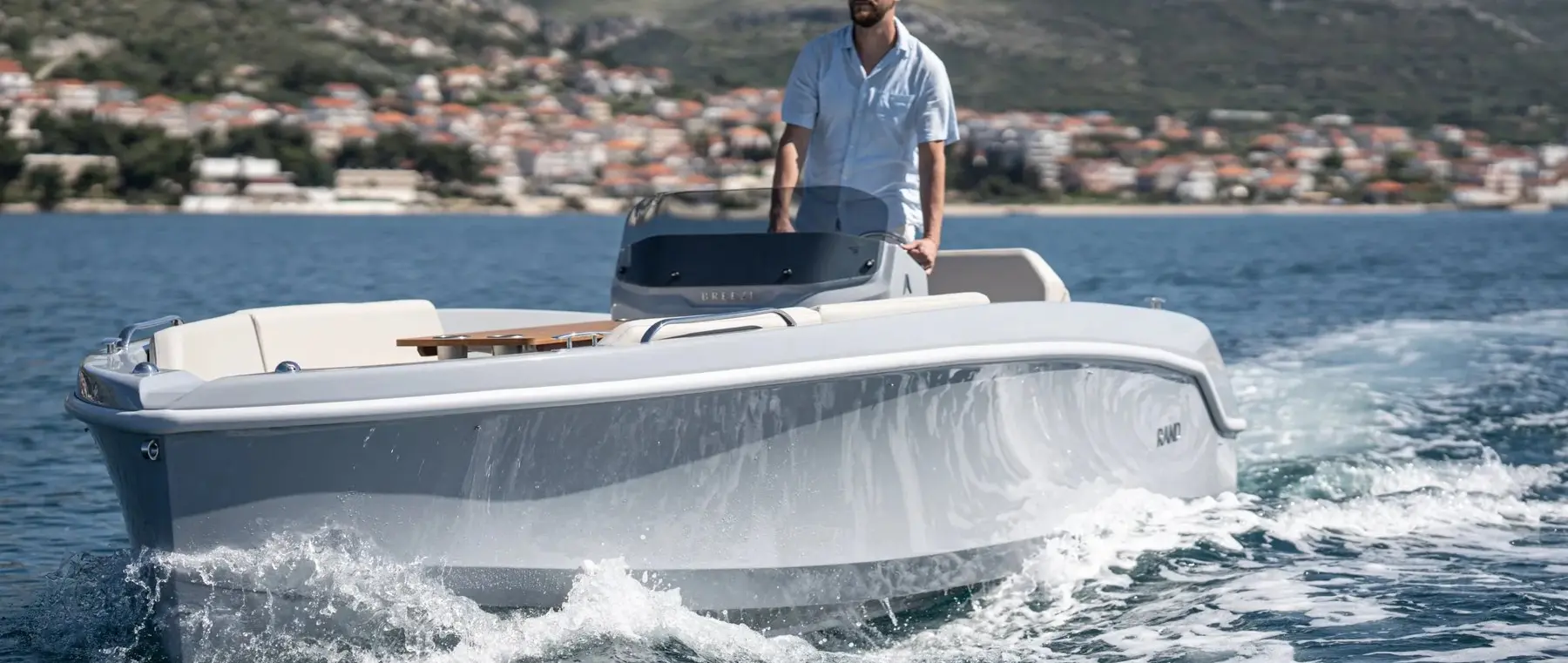
An electric boat under a new identity
RAND Boats now presents its smallest electric dayboat as the Serene 20, a model previously known as the Breeze 20. The new name belongs to a series-and-length naming approach rather than signalling that every part of the boat has changed. Buyers considering older stock should understand this distinction when comparing model years.
The Danish company positions this craft for harbours, lakes and short trips to swimming spots. Its emphasis is on conversation and uncomplicated movement, not long passages or headline speeds. That clear operating brief makes it easier for prospective owners to decide whether the boat fits their home waters.
RAND quotes an overall length of 5.99 metres and a beam of 2.25 metres. Those dimensions make it relatively manageable compared with larger family sports boats. Even so, berthing, winter storage and the comfort of a full passenger load should be considered before purchase.
Simplicity extends to the cockpit
The manufacturer describes a straightforward helm with a clear outlook and social seating for short excursions. Much of a dayboat's time is spent slowing down, tying up or waiting at anchor rather than travelling at speed. Comfortable places for people to sit are therefore part of the design's central appeal.
Published capacity is eight people and the CE design rating is category C. The number eight is a certified maximum rather than a promise that every group will be comfortable with bags, swimming equipment and refreshments. A skipper should set a practical passenger limit according to conditions and safe movement.
A quoted draft of 35 centimetres may attract owners of shallow lake moorings or sheltered harbours. The full propulsion arrangement and the effects of loading must nevertheless be considered. Shallow draft does not remove the need to check local depths and the position of underwater obstacles.
Electricity without imaginary range figures
The Serene 20 is presented as an electric-only model, offering a quieter experience and no local engine exhaust while operating. Broader environmental performance depends on the source of electricity and the craft's complete lifecycle. For an owner, reliable charging access and realistic operating reserve are more immediate concerns.
RAND says it will publish measured speed and range figures once they are documented on the water. It would therefore be irresponsible to promise a particular number of kilometres, knots or hours from the current model page. Buyers should seek a measured performance sheet for the precise battery and motor configuration.
Charging arrangements at the home berth, turnaround time and the effect of wind and current all deserve scrutiny. An electric boat used near home can be highly convenient when charging is dependable. The same craft can become unsuitable if a planned route regularly stretches beyond the demonstrated safe range.
Who should look closely
The builder lists dry weight excluding engine as 650 kilograms, with 12.5 degrees of deadrise. Those figures help define the boat's design but do not replace an on-water demonstration. Comfort, noise and handling at the modest speeds likely to be used matter more than an exaggerated acceleration test.
RAND lists a starting price of €49,900, with the final quotation dependent on configuration and local dealer terms. Buyers should ask what is included in the battery system, charging equipment, warranty and commissioning. They should also clarify servicing arrangements before they need the first repair.
Serene 20 is an appealing proposition for predictable leisure days close to appropriate facilities. Its most convincing argument is the pleasure of a quiet, shared trip without turning boating into a complicated performance exercise. The responsible purchase decision begins with measured range and a dependable home charging plan.