
An Italian sea kayak aimed at practical touring
Rainbow Kayaks has presented the Dea Expedition among the Paddle Sports Show's 2027 sea-kayaking products, introducing a design intended to balance efficient forward movement with comfort and storage. The manufacturer describes the craft as suitable for extended paddling trips as well as fitness outings, a useful combination for owners who want one kayak for different forms of recreation.
The Dea has been developed by CS Canoe and manufactured by Rainbow Kayaks. Its design seeks to make a relatively narrow hull manageable for a range of paddlers while retaining space for equipment. A boat can only deliver that combination in real life if the person fits the cockpit and understands how to manage it under changing conditions.
Just under five metres long
The Dea measures approximately 4.95 metres in length and 58 centimetres in width, with a listed weight of about 27 kilograms and a total hull volume of 400 litres. These dimensions place it firmly in the sea-touring category rather than among short recreational sit-on-top designs. Its length may contribute to smooth tracking over distance.
A comparatively narrow beam can also affect the way a novice experiences balance. Stability is a combination of hull shape, movement and loading, so a number on a specification sheet does not fully describe the feel on water. Rainbow says the Dea may suit taller paddlers or those weighing more than 70 kilograms, but an individual fitting is still necessary.
A shallow central V shapes the handling
The manufacturer describes a slight central V in the hull, seeking a practical compromise between directional stability and responsiveness. The shape is intended to allow an efficient cruising pace without making the boat cumbersome to turn. Rainbow quotes a solid base speed around eight kilometres per hour in its product description, though actual speed depends on the paddler and environment.
A promotional speed figure is not a guarantee of what every owner will achieve. Wind, waves, current and the boat's load can alter progress substantially. A comfortable, sustainable paddling rhythm matters more to most travellers than a short demonstration at maximum effort.
Storage for trips beyond an afternoon
The Dea comes with two substantial storage compartments at the bow and stern, elastic deck netting and a smaller watertight space ahead of the cockpit. The intention is to help organise supplies for longer journeys while keeping frequently required personal items closer to hand. Suitable dry bags remain advisable for important electronics and clothing.
The boat should be packed so that its trim remains balanced, and equipment must stay secure during a capsize. A large hatch does not necessarily make heavy cargo easy to reach on the water. Before an overnight trip, owners should test how the loaded craft handles and verify that all closures remain properly fitted.
Seating made for sustained paddling
Rainbow specifies a padded seat with an adjustable backrest, footrests and thigh supports, allowing a paddler to establish a stable position in the cockpit. These are important details because effective torso rotation and leg contact contribute to comfortable long-distance technique. A person who cannot sit naturally may tire much earlier than the available daylight or water conditions require.
A showroom fitting is a starting point, but a water trial can reveal pressure points and awkward movements. Paddlers should check that the footrests remain secure and that it is possible to leave the cockpit during a capsize. Comfortable controls are part of a safe fit, not merely extra luxury.
A touring boat requires a transport plan
A 4.95-metre kayak may be relatively light for its length but still needs suitable handling and storage. Owners should assess the roof rack or trailer that will carry it, together with the length available at home. A long sea kayak can be awkward in narrow access areas, and lifting a hull alone may be unsafe for some people.
The right storage position also helps preserve the hull's shape. Supports should be arranged according to the manufacturer's advice, and the boat should not be left where strong heat or prolonged stress may cause damage. Transport convenience can determine whether an attractive kayak becomes a regular part of a person's life.
The sea demands more than a touring label
The model's name and storage options may suggest an expedition, but exposed coastal water requires suitable training and equipment. Navigation skills, cold-water clothing, flotation and rescue methods remain central to trip preparation. A guide can help a developing paddler understand when a sheltered route is appropriate and when the forecast makes staying ashore the better decision.
There is also an environmental responsibility. Paddlers should avoid disturbing wildlife and use permitted access points when exploring sensitive coasts. A low-powered or manually propelled craft can still damage habitat or cause disturbance if handled carelessly.
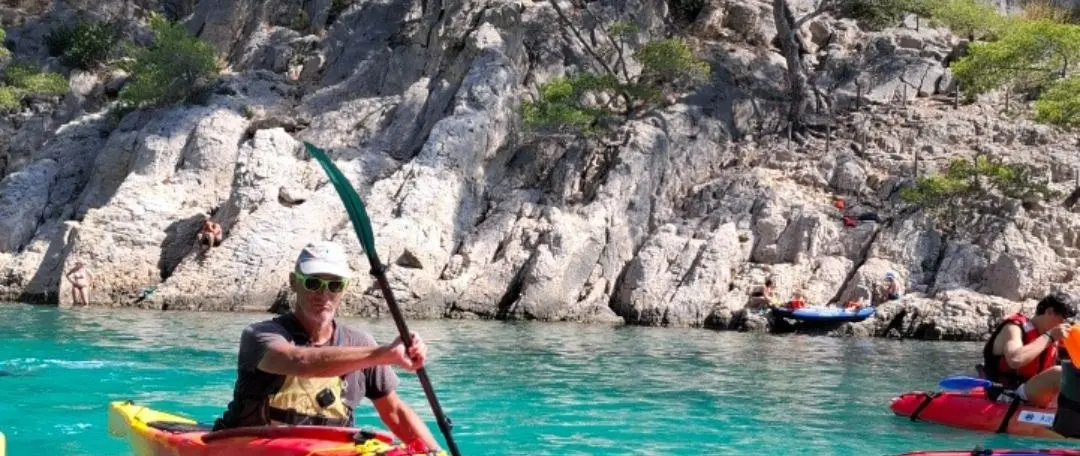
An official image of the Dea at sea
Rainbow Kayaks' own product gallery includes photographs of the Dea paddled in coastal water. The image chosen for this article shows the actual kayak in use rather than a studio montage of unrelated models. This connects the reported product with a genuine example of its intended activity, although a photograph cannot establish handling performance or safety in every sea state.
The 2027 Paddle Sports Show entry confirms the Dea is being presented in the sea-kayaking category; it is not evidence of an award win. Buyers should obtain current details about available configurations, dealer support and warranty from Rainbow. An experienced on-water demonstration offers the most useful basis for comparing the Dea with other touring craft.
Balancing fitness training with travelling
A sea kayak used for fitness may spend much of its time lightly loaded on familiar water, while the same hull on an overnight journey must accommodate food, clothing and camping supplies. The Rainbow Dea may respond differently when loaded for these distinct activities, particularly in how it accelerates and changes direction. Owners should test both configurations before planning a demanding route, allowing time to adjust the location and security of equipment.
Long-term practicality also depends on local support. Customers considering a relatively specialised touring kayak should ask whether replacement hatch covers, seat components and other fittings can be obtained through nearby dealers. Such details rarely dominate a product photograph but become important as the craft ages. A good boat earns its place through regular comfortable outings rather than a single impressive test.