
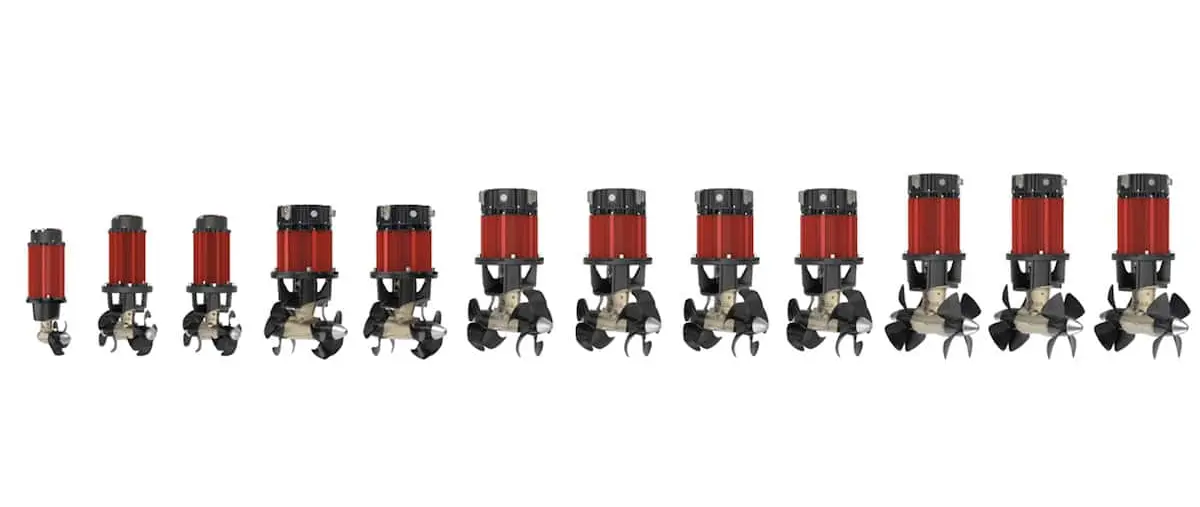
The range now starts with a 140mm tunnel
The smallest unit is the 12V BT QSY 140-50, producing 50kgf of thrust through a 140mm tunnel. The family extends through larger voltages and tunnel sizes, with a new 215mm option filling the gap between existing 185mm and 250mm installations.
Quick says applications begin around seven-metre centre-console boats, making the lower end directly relevant to LBG. Actual sizing still depends on windage, hull shape, displacement and the manoeuvring performance the owner expects. That gives smaller-boat installers more room to match the system to the actual hull rather than oversizing hardware.
Brushless motors provide proportional response
QSY thrusters use synchronous brushless motors with integrated inverters, immediate torque response and proportional control. The company says the architecture is intended to reduce noise, maintenance and power consumption compared with older approaches.
Proportional control can be especially useful when a small boat only needs a gentle correction rather than full thrust. It gives the helm more control in marinas and can make short-handed handling less abrupt. Owners should also allow for battery capacity, cable sizing and the physical tunnel installation when comparing systems.
Pacific controls connect with third-party systems
The new Pacific controller family offers diagnostics and proportional operation and can connect with manoeuvring systems from companies including Volvo Penta, Mercury Marine and Xenta. NMEA 2000-compatible gateways support integration with other electronics.
That matters as small boats gain joysticks and integrated helm systems once reserved for much larger yachts. Owners should still avoid adding complexity unless the equipment solves a real handling problem in their normal berths. Open interfaces matter because many modern helms combine equipment from several manufacturers rather than one brand.
QCentric provides a common CAN architecture
Quick's QCentric platform is intended to connect thrusters and, later, products such as windlasses and stabilisers on one scalable CAN-based architecture. Pacific is the first control family to use the system.
For builders, a common network can simplify wiring across several models. For owners, the benefit should be easier control and diagnostics, but long-term value will depend on compatibility, serviceability and continued support for third-party equipment. The practical measure of the architecture will be whether future products remain easy to diagnose and replace.
Official sources: marinebusiness.news.