
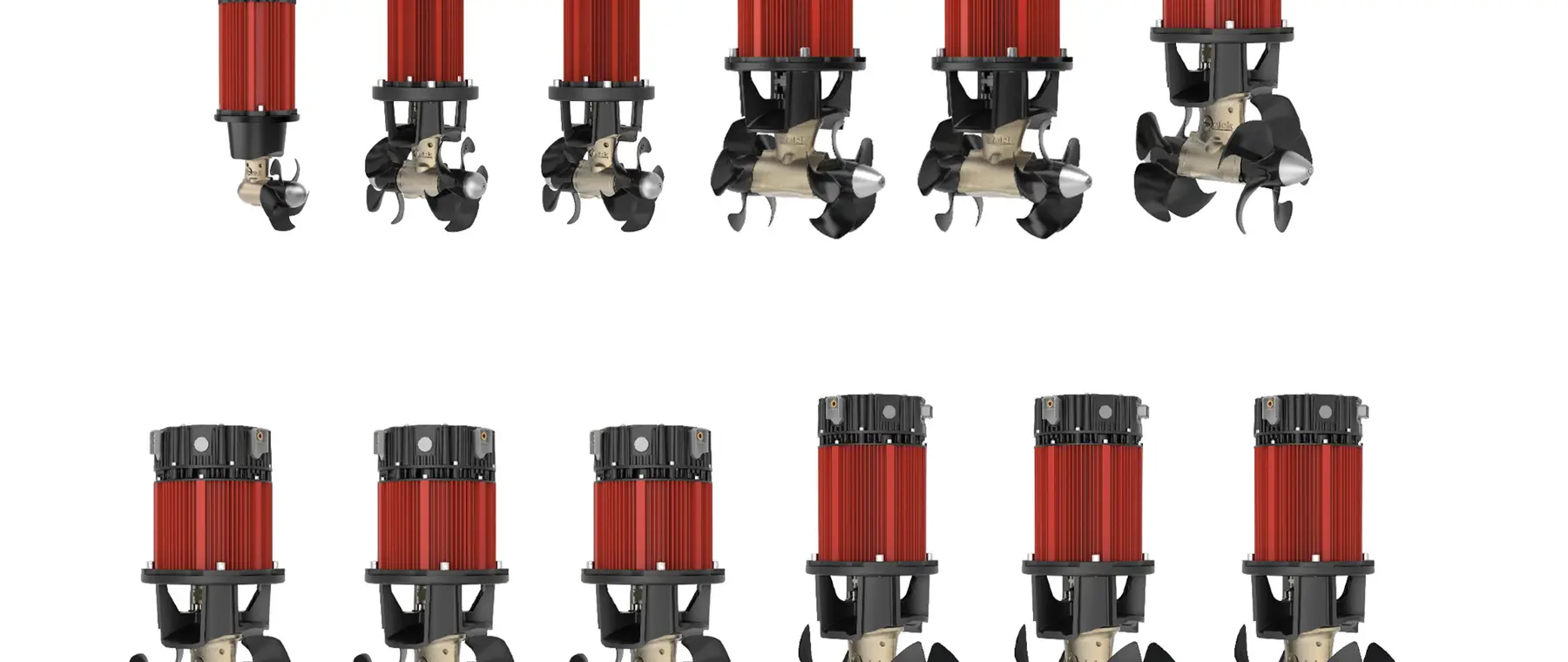
Quick Group has expanded its QSY electric-thruster family to cover a broader range of boats, including craft from roughly seven metres upward. The range uses brushless motor technology and is being paired with the company’s new QCentric integration platform.
The products were presented as a complete range during the 2026 European show season. For smaller leisure boats, the important change is that proportional electric bow and stern thrusters are becoming available further down the size range.
Brushless motors support proportional control
QSY thrusters use brushless electric motors designed for variable-speed operation rather than simple on-off thrust. Proportional control can make low-speed manoeuvring smoother because the driver can apply only the amount of thrust needed.
The practical benefit is most noticeable around tight berths, crosswinds and short-handed docking. A thruster remains an aid rather than a substitute for understanding prop walk, windage and the boat’s normal steering response.
QCentric links equipment through CAN bus
Quick’s QCentric platform is designed to connect compatible onboard equipment through a central CAN-based network. That allows controls and status information from different Quick systems to be integrated more consistently.
Networked systems can simplify operation but also make installation planning more important. Power distribution, cable sizing, network termination and service access should all be considered before equipment is added to an existing boat.
Seven-metre boats move into the target market
Quick says the expanded QSY family reaches boats from around seven metres, bringing the technology into a large part of the LBG market. That includes many family cruisers, RIBs and cabin boats where close-quarters handling can be challenging.
Owners considering a retrofit should first check available tunnel space, battery capacity and structural requirements. The smallest suitable unit is not automatically the best choice if windage, displacement or installation geometry demand more thrust.