
Quick Group has brought its Intelligent Anchoring System to METSTRADE in Amsterdam, presenting a new approach to controlling windlasses and monitoring anchor deployment. The company announced the development on 13 November 2026 ahead of the exhibition, which ran from 17 to 19 November. The system combines Quick's QCentric network architecture with Pacific W1XL and W2XL windlass controls and proportional motor technology, aiming to provide smoother chain movement and more information at the helm. For owners of small recreational cruisers that use powered windlasses, the idea is worth examining, although boat size, equipment compatibility and installation cost will determine whether the technology makes sense in practice. The announcement is not evidence that every conventional windlass can be upgraded immediately.
Anchoring is an ordinary task with demanding details
Dropping anchor involves much more than pressing a switch. The skipper must consider water depth, seabed type, available swinging room, weather, current and the length of chain or rope deployed. A small crew may need to coordinate a person at the helm with someone working on the foredeck, especially when the bow cannot be seen clearly from the steering position. Errors can lead to poor holding, excessive strain or damage to the windlass and deck. Quick's new system focuses on improving information and control during this routine manoeuvre. It should not be described as a replacement for seamanship or as a guarantee that an anchor will hold in unsuitable conditions.
The traditional windlass has simple controls
Many electric windlasses are operated through an up/down switch or a remote control that runs the motor at a largely fixed speed. This approach is straightforward and has served boaters for years, but it provides limited information about what the chain is doing. A separate chain counter can help, though the accuracy of that counter depends on installation and calibration. Quick argues that integrating the windlass with vessel data and more sophisticated controls can make the operation more predictable. Whether the benefit is significant depends on the existing equipment and the owner's anchoring habits. A small boat with a light anchor and simple manual arrangements may not require an elaborate system.
Proportional control is the first major difference
The Intelligent Anchoring System is designed to use proportional motor operation, allowing the speed of deployment and retrieval to change rather than remain fixed. In principle, that can support smoother handling as an anchor approaches the seabed or the bow. The company describes acceleration and deceleration profiles intended to limit abrupt movement. The mechanism still has to work within the windlass's rated limits, the weight of the ground tackle and the boat's electrical capabilities. Owners should not interpret proportional control as permission to work near a moving chain or bypass safety devices. The equipment must be installed and operated according to the manufacturer's instructions.
QCentric provides the digital framework
Quick's QCentric is described as an open, scalable CAN-bus architecture connecting the company's equipment with compatible external systems. The manufacturer says it can draw on vessel information carried through networks that include NMEA 2000. This kind of integration can allow a windlass controller to access position, heading, speed and depth information rather than relying solely on commands from a button. The prospect is attractive, but compatibility should never be assumed from the presence of a single network socket. Different devices may transmit different data, and the system must deal safely with missing, stale or inaccurate inputs. An installer needs a complete understanding of the vessel's electronics before specifying the equipment.
The Pacific controllers are part of the package
The company identifies the Pacific W1XL and W2XL as control units intended for windlass management within its wider Pacific control range. These are separate from the Pacific controls introduced for proportional thrusters earlier in 2026, though the products share an emphasis on digital control and integration. The names can be confusing to an owner comparing catalogues, so the exact model and function should be verified. The company says the architecture can support straightforward connection of operating stations, but the wiring requirements of any particular boat must be assessed. A controller is only one part of a complete anchoring system that includes the windlass, circuit protection, chain measurement and mechanical retention.
Information before deployment may reduce mistakes
Quick says the system is designed to check the status of the windlass, chain counter and retention devices before anchor deployment begins. This is intended to help identify conditions that would make operation unsafe or ineffective. Such checks could be useful on a boat where several different crew members use the equipment. Yet automated warnings are limited by what the sensors can detect. The system cannot establish that the chosen seabed has adequate holding characteristics or that another vessel will not swing into the anchoring area. Visual inspection, chart information and judgment about weather and tidal conditions remain essential. A pre-deployment check is an additional layer of information, not a complete decision-making system.
Controlling payout speed is central to the design
During deployment, Quick describes monitoring the length of chain released along with vessel position, speed, heading and water depth. The control algorithm is intended to manage payout speed as conditions change. This could help avoid uncontrolled movement of the chain, but the operator must understand the system's limitations. Rapid changes in current, an unexpected gust or incorrect sensor data may require immediate intervention. The company says crew can intervene at any time. That is an important design principle for marine automation: the operator should remain able to stop or change the operation without navigating a confusing menu. Real-world demonstrations will be needed to show how intuitive that process is.
Scope remains a matter of seamanship
The system is designed to calculate a suggested scope ratio using depth and parameters selected by the user. Scope is the relationship between the deployed rode length and the vertical distance from the bow roller to the seabed. It is a critical consideration in establishing suitable anchor holding. However, there is no universally correct ratio that works in every situation. Chain weight, rode composition, seabed, wind, tidal variation, swinging room and the anchor itself all matter. A system-generated suggestion is only as useful as the assumptions behind it. Owners should understand those assumptions and continue to apply appropriate anchoring guidance rather than treat a numerical recommendation as a guarantee.
Retrieval can place high loads on the bow
Raising an anchor can be physically demanding for the windlass, especially if the boat has moved over the anchor or the ground tackle is fouled. Quick says the system will slow the anchor progressively as it approaches the bow, reducing impacts and wear. Smoother final movement may help protect the roller, fittings and adjacent surfaces, but the operator must not use the windlass as a substitute for manoeuvring the boat into an appropriate position. Pulling the vessel towards the anchor solely with the windlass can overload equipment. A skipper should follow the maker's specified working loads and the procedures appropriate to the installation. The new system does not eliminate the mechanical realities of anchor recovery.
Diagnostics could make problems easier to understand
The official announcement refers to anchoring diagnostics and warnings for abnormal conditions, missing sensors or incorrect operating states. These features might help an owner recognise a problem before it results in damage. The value will depend on how clearly the warnings are presented and what actions the system recommends. Excessive alerts can become distracting, while vague messages are difficult to interpret. A well-designed marine control should distinguish urgent faults from information that can be reviewed later. The skipper still needs to understand how to stop the operation safely if the electronics become unreliable. Manual procedures and crew training remain important parts of any automated installation.
The helm display may reduce communication difficulties
Quick says information from the system can be shown on compatible multifunction displays. On a small cruiser, this could make it easier for the person at the helm to understand what is happening forward without relying entirely on shouted instructions. It cannot, however, provide the same information as a direct view of the anchor and chain. There are circumstances when a second crew member at the bow remains necessary, particularly in confined or crowded anchorages. A good installation should make useful data available while preserving the operator's ability to look outside and manage the boat. The objective is improved coordination, not the replacement of basic watchkeeping.
A simpler cable arrangement is an intended advantage
The company says its CAN-bus architecture can reduce the amount of wiring needed between operating stations, describing a single cable per station and plug-and-play connection of compatible devices. This may be attractive during a new build, where cable runs can be planned before the deck and interior are finished. In an existing boat, the situation can be different. Access panels, electrical distribution, the location of the windlass and the condition of previous wiring may complicate installation. Owners should obtain a vessel-specific quotation rather than assume that an advertised simplified network will make a retrofit inexpensive. The cost and labour associated with a digital system can be substantial compared with replacing a conventional switch.
Integration with thrusters is a separate issue
Quick has been developing its proportional thrusters and Pacific control range during 2026. The company describes the Intelligent Anchoring System as another element in that broader ecosystem. It would be misleading to say that a small boat must have Quick thrusters to use a windlass controller or that the new system automatically takes control of the vessel's propulsion. Exactly which components can communicate and what control functions are authorised should be established from current technical documents. Owners should distinguish between displaying information from multiple devices and allowing software to command those devices. The safety implications of the two arrangements are not identical.
Check the power and mechanical installation
A powered windlass places significant demands on an electrical system, especially when retrieving a heavy anchor and chain. An owner considering an upgrade should have the battery capacity, cable sizes, circuit protection, deck hardware and chain arrangement assessed by a competent installer. A sophisticated controller cannot compensate for an undersized supply cable, a damaged gypsy or badly installed bow roller. Maintenance remains essential, including inspection of corrosion, mechanical wear and the condition of safety restraints. The most useful automation is built on a sound physical installation. Upgrading the control interface while ignoring the underlying equipment would be an incomplete approach.
What METSTRADE confirms and what it does not
Quick presented the Intelligent Anchoring System as a new development for METSTRADE 2026. The company supplied details of the intended features, control architecture and operational benefits, but the announcement does not provide independent sea-trial results for a range of small recreational boats. It also does not establish universal pricing, delivery dates or compatibility with all existing windlass models. Those are questions that owners and boatbuilders should put to the manufacturer or an authorised installer. The exhibition is a valuable introduction to the concept, not proof that every feature is ready for immediate retrofit aboard every boat.
Small-boat applications will need careful selection
On a boat below twelve metres, the benefits of an integrated windlass system depend on the frequency of anchoring and the size of the equipment already fitted. A cruiser used for long coastal passages and regular overnight stops might gain more from detailed chain information than a small runabout that anchors only briefly in sheltered water. Boats with limited electrical capacity or simpler manual anchors may have little reason to add complexity. The decision should begin with a review of actual use: crew numbers, anchor weight, available space and whether current equipment is difficult or unreliable. Technology is most useful when it solves a real operational problem rather than creating a new source of maintenance.
A promising approach that needs practical proof
Quick's Intelligent Anchoring System combines proportional windlass control, network information and designed-in diagnostics with the aim of improving one of boating's most important everyday operations. Its METSTRADE debut provides an opportunity for builders and owners to assess a new approach before specifying equipment. The key questions are practical: does it work reliably with the boat's sensors, can the operator take immediate control, and is the complete installation properly engineered? For small-boat owners, the announcement signals useful progress in how anchoring equipment may be designed. Its long-term value will depend on installation quality, service support and the ability to assist sound seamanship without giving the crew a false sense of certainty.
Official sources and photography
Reporting independently based on Original primary publisher announcement.
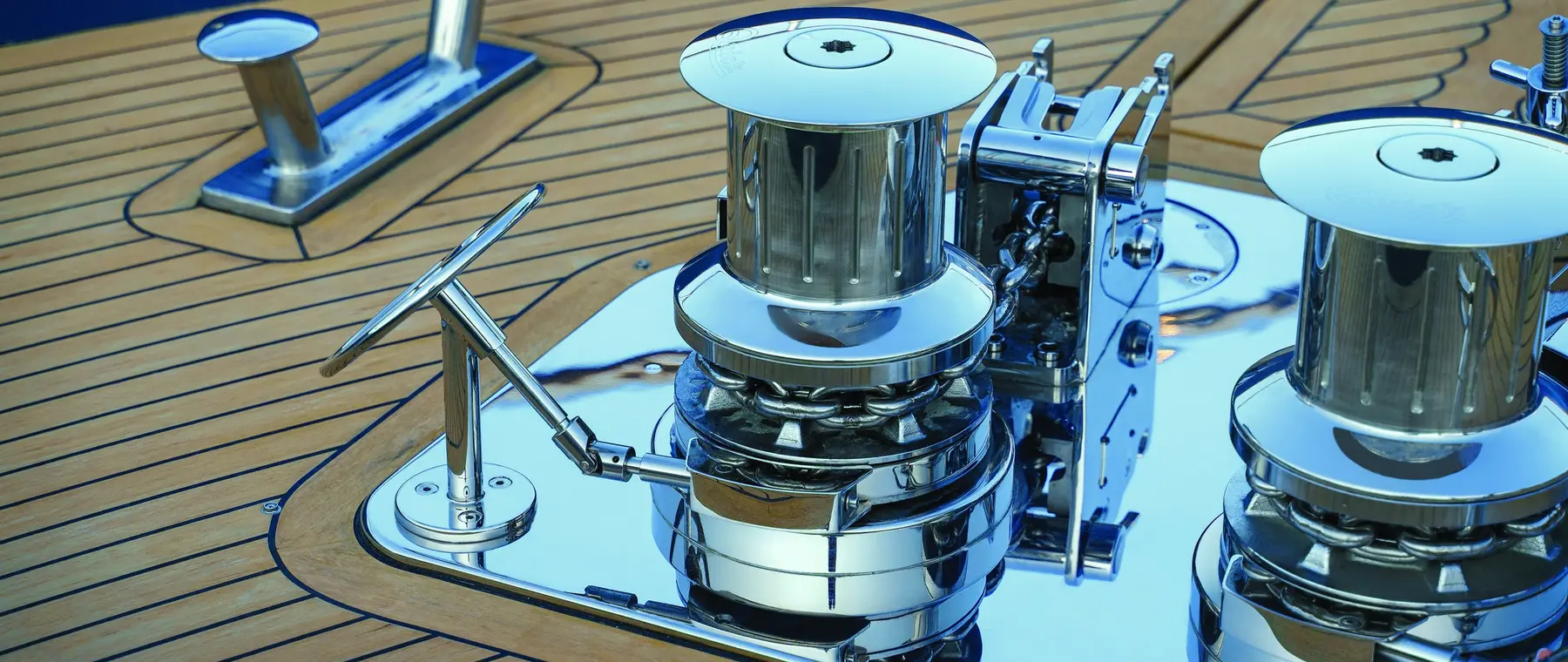
Original lead manufacturer archive photograph of existing windlass hardware, not the new IAS controller: Quick Group windlass equipment installed on a boat, official manufacturer archive photograph illustrating anchoring hardware, NOT the new Intelligent Anchoring System controller. Original image rights remain with the source publisher and photographer. Official press-image source.
