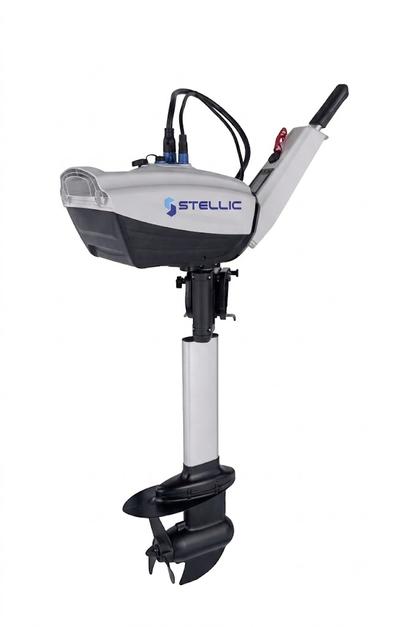
PRETECH MARINE is showing its STELLIC e-craft 1.2 electric outboard in the current METSTRADE 2026 equipment catalogue, offering a compact approach to propulsion for dinghies and other lightweight leisure craft. The South Korean marine equipment company describes a 1.2-kilowatt motor with an integrated removable battery, folding tiller and easily carried installation. The published product page does not identify a precise November 2026 first-release date, so this is a report on the manufacturer's current trade offering rather than an unsupported announcement of a world premiere. Its significance for owners is the practical balance between portability, stored energy and reliable short-distance movement.
What the manufacturer's listing actually says
The official STELLIC e-craft 1.2 listing emphasises an all-in-one electric outboard design in which the battery is integrated with the motor arrangement but can be detached for charging. PRETECH describes a compact structure, foldable tiller and quiet, efficient operation suitable for small boats. Those are product claims that can be checked during a demonstration; they do not establish exact range, speed or battery capacity without an accompanying model-specific technical sheet. Buyers should avoid inferring figures from the 1.2kW name alone. A responsible comparison starts with the intended vessel, its power allowance and the official current production specification.
Why removable energy storage matters
A dinghy stored on a davit, foredeck or trailer may not have convenient access to an electrical outlet. Carrying the battery ashore can simplify charging and avoid trailing a shore-power cable to the tender. It may also let an owner secure the most valuable electrical component separately from a boat left unattended. The convenience depends on the pack's actual weight, locking system, connector design and carrying handles. Repeatedly lifting a battery from a wet stern can still be difficult, particularly after dark. An owner should attempt the removal and reconnection process before purchase, rather than assuming every detachable battery is equally easy to manage.
Integrated design can reduce rigging clutter
An outboard combining motor and battery into a compact package may avoid separate high-current cables running around the cockpit. That can make an inflatable or small dinghy tidier and reduce the number of loose components to stow. However, internal integration also raises questions about access for servicing, battery replacement and fault isolation. A system that is easy to carry when new should remain maintainable throughout its intended life. Owners should ask whether the battery can be ordered separately, what a replacement costs and whether the motor can be repaired without replacing an entire sealed assembly. Simplicity is most useful when it includes after-sales support.
The folding tiller is a small but important feature
PRETECH identifies a foldable tiller handle as one of the e-craft 1.2's distinguishing characteristics. On a tender where the driver sits close to other passengers, a fixed protruding tiller can obstruct boarding or make transport awkward. Folding the handle may improve storage inside a locker or vehicle and help protect it from accidental impact. But any folding mechanism must lock securely in its prescribed operating position and remain clear of the boat's side tubes or transom fittings. The helm position should be tested with an actual passenger load. A tidy photograph cannot show whether the tiller is comfortable for a lengthy low-speed journey.
Output power does not equal a guaranteed speed
The model name indicates a 1.2-kilowatt class outboard, yet actual boat speed depends on the available propulsive power, propeller characteristics and resistance of the hull. A lightly loaded dinghy on flat water can behave quite differently from the same craft carrying provisions and three passengers into a breeze. The supplied battery's state of charge and temperature can also influence performance. A purchaser should request manufacturer test data for a similar boat and, ideally, conduct a trial with realistic loading. Rated electrical input is not automatically interchangeable with a conventional petrol-outboard horsepower figure, especially when comparing systems with different operating characteristics.
Plan the battery reserve for the return trip
A common error with compact electric propulsion is to focus on how far the boat travels on a calm outward passage. The return trip may face more wind, current or passengers, consuming more energy. Operators should determine usable battery capacity, not merely nominal stored energy, and establish a conservative reserve. A simple route log recording departure charge, distance, loading and remaining charge can help an owner develop realistic expectations. The onboard gauge should be interpreted with caution, particularly if it estimates remaining range from recent consumption. Reliable planning includes an alternative route or assistance if the power reserve proves insufficient.
A removable pack still needs correct charging
The ability to carry a battery indoors is convenient, but safe charging depends on using the manufacturer's approved charger and following its temperature, ventilation and placement instructions. A battery should not be charged on a wet cushion or beside combustible equipment simply because its connector fits a convenient plug. Owners should inspect charging contacts, keep the pack dry as instructed and stop using damaged equipment. Different battery chemistries and protection circuits require different procedures, so assumptions borrowed from another electric outboard are unsafe. The dealer should provide a complete charging demonstration and explain what the indicator lights and warnings mean.
Portability includes the complete assembly
PRETECH describes the e-craft 1.2 as ultra-lightweight and compact, but the catalogue excerpt does not provide a full independently verified mass breakdown. Buyers should ask for the weight of the motor, battery and mount separately as well as the assembled total. A motor can seem manageable on a shop floor but become awkward when lifted from a rolling dinghy or lowered into a small vehicle. Carrying handles and balanced lifting points matter as much as the headline kilograms. A prudent owner should consider whether two people are needed for installation under normal conditions, and should not put crew at risk to save a few minutes preparing the tender.
The transom must be suitable for the mount
Even a small outboard generates thrust and steering loads, so a correct transom mounting arrangement is essential. The boatbuilder's maximum engine weight, power and recommended mounting dimensions should take precedence over generic product marketing. A short-shaft configuration may not suit a deep transom, while an unsuitable long shaft may create unnecessary drag. Owners should check propeller clearance, engine tilt and the position of the tiller throughout its travel. Secure retention is especially important on inflatables whose transoms can experience repeated vibration. A dealer should confirm exactly which parts and any safety tether are included in the package.
Quiet propulsion does not eliminate navigation duties
Electric outboards may reduce noise and exhaust at the point of use, making them attractive for early-morning movements in crowded harbours or wildlife-sensitive locations. Nevertheless, a quieter engine can be less noticeable to nearby swimmers and other small craft. The skipper remains responsible for maintaining lookout, using appropriate lights after dark and navigating at a safe speed. A compact electric tender also needs lifejackets, communication equipment and any equipment required by the operating area. The absence of a petrol tank should not lead to an assumption that the vessel is inherently risk-free or that ordinary boating rules are less important.
How this model differs from PRETECH's larger motors
The company's current METSTRADE catalogue also shows STELLIC models with higher power ratings, including a 6.0-kilowatt electric outboard. Those products target different boat sizes and installation requirements. The e-craft 1.2 focuses on portability and integrated battery convenience rather than the externally powered arrangements used by some larger motors. Model names and compatible accessories must not be mixed. A larger outboard's performance, warranty or electrical requirements cannot be assigned automatically to the smaller unit. Owners should obtain a written package specification identifying the exact motor, battery, propeller, charger and mounting hardware before comparing offers.
Total ownership cost needs more than an electricity estimate
A compact electric outboard avoids some petrol-engine maintenance tasks, yet owners still face battery replacement, propeller inspection, corrosion protection, electrical servicing and storage responsibilities. The initial price may or may not include a spare energy pack, charger and accessories. The cost comparison should reflect annual boating hours, the availability of local service and the price of replacement components rather than a simplistic fuel-versus-electricity calculation. On a tender making short predictable passages, convenience can matter more than minimum cost per mile. For a boat used continuously throughout a long day, charging logistics may be the deciding limitation.
The first-party photograph is a studio product image
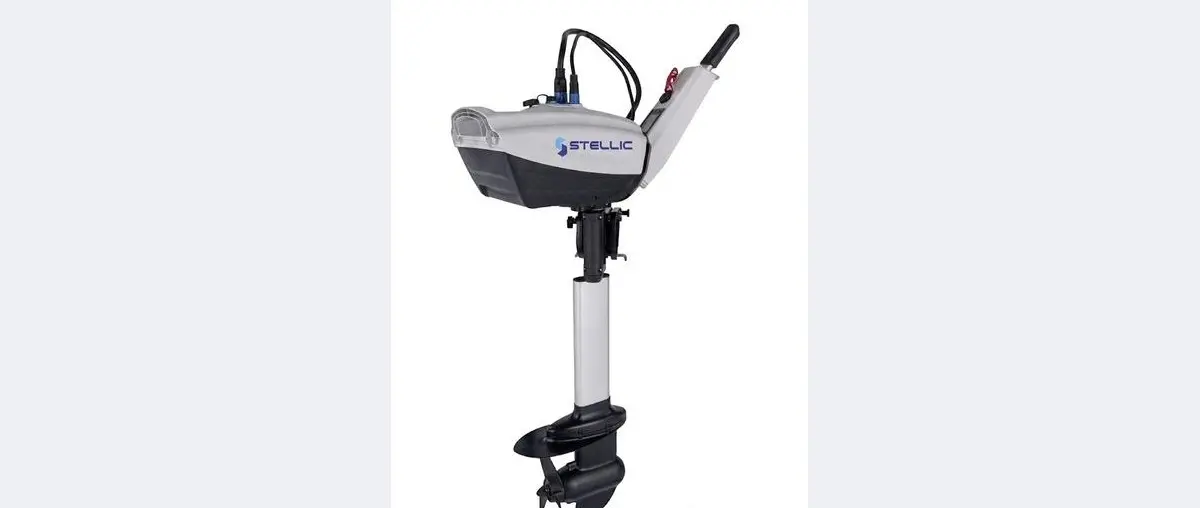
The lead photograph supplied through PRETECH's METSTRADE exhibitor listing shows the actual STELLIC e-craft 1.2 outboard against a plain background, including its physical tiller and shaft arrangement. It is not an operational photograph and does not demonstrate speed, range or suitability for any particular hull. The accompanying article interprets the company's published specifications and product positioning while identifying the tests a buyer should request. The catalogue does not provide sufficient evidence to claim a new independent award, an official certification result or a precise market availability date, and no such claim is made here.
What buyers should confirm before ordering
A useful evaluation of the STELLIC e-craft 1.2 begins with a demonstration of battery removal, tiller folding, transom installation and the stopping procedure. Next, confirm the correct shaft configuration, battery capacity, full package weight and recommended boat types in writing. Request local warranty, spare-parts and service information. Finally, trial the motor on the intended dinghy with ordinary crew loading and realistic sea conditions. The product illustrates how electric propulsion is being made more approachable for short leisure journeys, but the right choice remains the outboard that safely completes the owner's actual programme with adequate reserve and dependable support.
Original industry sources and image credits
Reporting based on PRETECH MARINE manufacturer-authored STELLIC e-craft 1.2 current METSTRADE exhibitor product catalogue; no independent claim of a 2026 first launch, range or weight..
Lead image: PRETECH STELLIC e-craft 1.2 Brings Portable Power to Small Tenders — genuine first-party manufacturer product or boating photograph. © PRETECH MARINE / STELLIC. Original supplier image.