
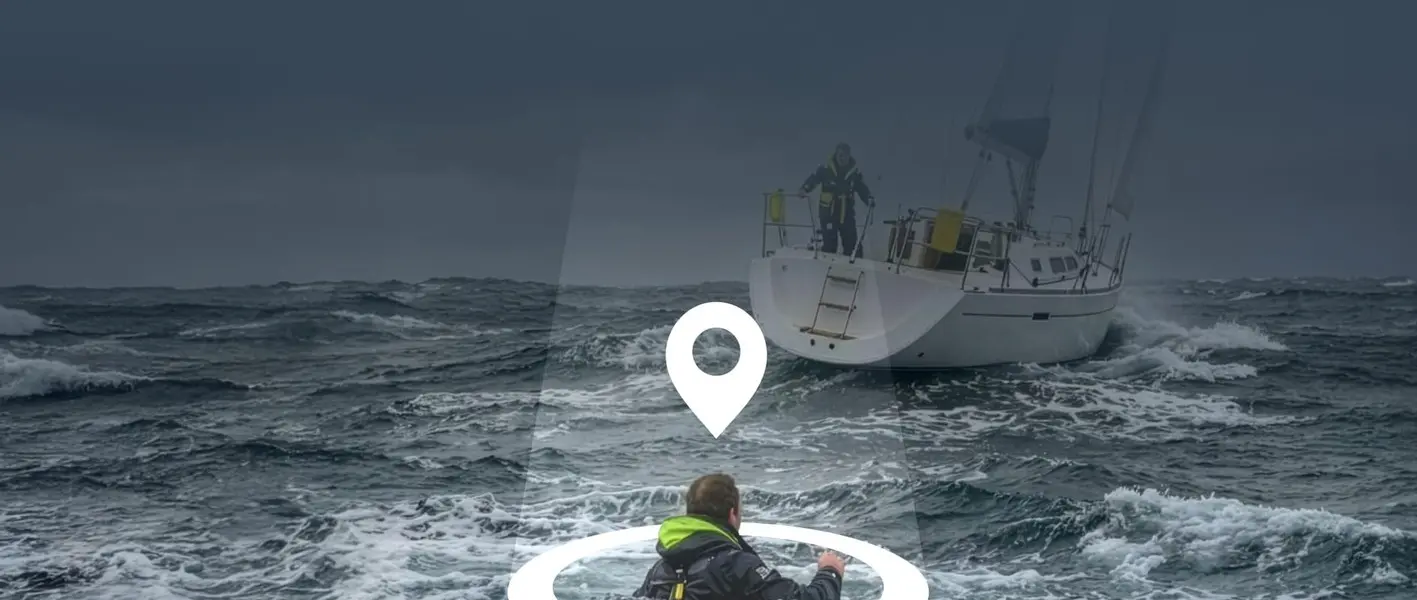
A new connected approach to a serious safety problem
PredictWind has launched a Man Overboard App designed to identify when a connected crew member may have fallen off a vessel and draw the attention of others aboard. The company is integrating the app with its DataHub Pro equipment and the wider PredictWind ecosystem.
A man-overboard incident requires an immediate and coordinated response. The operator must maintain awareness of the vessel, the person in the water and the surrounding conditions, and any electronic warning system should be considered one part of a proper safety procedure.
PredictWind is marketing the app as an addition to equipment that some cruising sailors already use for navigation, tracking and weather services. A purchaser should confirm the required hardware and subscription rather than assuming it operates independently on every phone.
Wi-Fi disconnection initiates the alert
The product is designed to detect the loss of a crew member’s device connection to the DataHub Pro network, treating that event as a possible person overboard. The service then generates a local alert and can record the approximate position associated with the incident for the boat’s response process.
The company describes simultaneous warnings to compatible connected watches and smartphones, together with marking on a compatible chartplotter. The app can operate with a smartphone without requiring every crew member to wear a watch.
The method is dependent on device connectivity and correct system configuration, which raises practical questions about the handling of ordinary Wi-Fi dropouts and other potential false alarms. Crews should test their own installation and understand the indications before setting out.
A DataHub Pro and subscription are required
PredictWind states that the Man Overboard App requires a DataHub Pro and one Professional-level PredictWind subscription per boat. That equipment distinction is important for existing users who may have an earlier DataHub device but not the Pro version.
Owners should check compatibility with the installed plotter and whether any network configuration is needed to display the marked incident position. They should also establish which features work locally without internet access and which notifications depend on a connection to external services.
A safety product should not depend on assumptions about mobile signal offshore. The vessel needs a planned response that remains usable even when a subscription service, shore network or internet connection is unavailable.
Training must accompany connected safety technology
The presence of an app is not a replacement for lifejackets, safe deck procedures, emergency drills or dedicated rescue equipment. A boat crew still needs to practice turning back toward a casualty, maintaining visual contact and carrying out recovery without placing additional people at risk.
Owners should identify who receives alarms, how the system is armed and what to do if one of the crew’s devices loses its connection for an ordinary reason. Clear responsibilities can prevent confusion when everybody is under pressure.
For family boating, awareness may be particularly useful, but the app should only be deployed after confirming that it fits the vessel and passengers. Not every crew member will necessarily carry a suitable device in every circumstance.
A step towards more integrated boat safety
Boat monitoring systems are moving from passive displays toward more active alerts and coordinated information. PredictWind’s app shows how connected hardware may be used to draw attention to a potential emergency and provide a useful reference position. The crew will still need to put its practiced recovery procedures into action.
The effectiveness will depend on the user’s setup and the accuracy with which an event can be identified. The company’s own documentation and practical trials should guide expectations, rather than a claim that any electronic device will detect all man-overboard incidents.
For leisure boat owners considering an upgrade, the most useful questions are whether the equipment works with their network, how false alarms are handled and which parts of the rescue process remain the crew’s responsibility. These points deserve a full demonstration before a crew relies on the system.