
A Welsh sailing venue recognised
Plas Heli, the Welsh National Sailing Academy and Events Centre in Pwllheli, has received a Welsh Sailing Impact Award as the Royal Yachting Association renews its recognition of the venue's contribution to the sport. The RYA's 26 October 2026 announcement says the centre has staged more than 47 UK, European and world championship events since opening in July 2015. That tally reflects years of organising sailing fleets, support craft and shore facilities rather than a single successful regatta.
The award recognises the venue's volunteer team and its service to sailors and event organisers. Successful racing requires more than an attractive stretch of water: launching arrangements, rescue cover, equipment checks, briefings, race officers and shore accommodation must all work together. The fresh recognition also comes as Plas Heli looks towards the Topper national and world championships expected in 2027.
The news matters especially to the smaller-boat community. Dinghies and youth racing classes depend on a network of reliable facilities where competitors can sail unfamiliar waters without their families and coaches having to improvise every detail ashore. Plas Heli offers a working example of a specialist sailing centre built around those practical needs.
Cardigan Bay as a championship setting
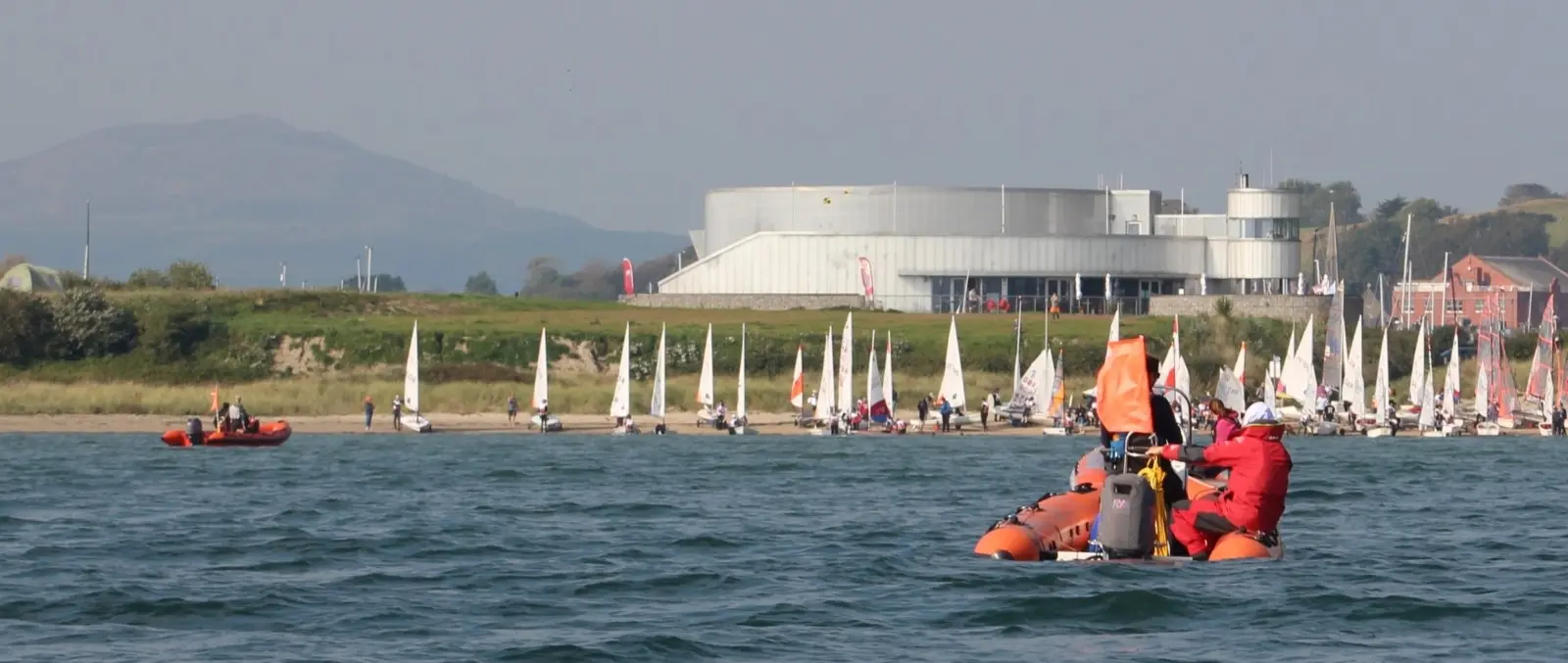
Plas Heli stands beside Hafan Pwllheli Marina, with a launching beach and direct access to Cardigan Bay. The RYA describes a position sheltered from prevailing south-westerly winds, with racing areas a relatively short sail from shore and no major commercial traffic running through the core event area. The mountains of Eryri provide a remarkable backdrop, but the real attraction for race organisers is the relationship between shoreline, launch area and course.
Good geography does not remove the need for local knowledge or weather assessment. Even a sheltered launching area can be affected by changing wind, sea state and tide, while different dinghy classes have different operating limits. Visiting sailors should follow the event's current sailing instructions, briefing and safety guidance instead of assuming the description of the venue replaces their own passage or race-day planning.
Fast turnaround can be particularly valuable for junior classes, whose events may involve several short races or separate fleets using different courses. When shore support and the racing ground are close together, organisers have more flexibility to reconfigure a course or return a fleet when conditions change. That is a practical asset for novice and experienced competitors alike.
A full range of 2026 regattas
The 2026 season provides concrete examples of the academy's role. The RYA says more than 225 junior sailors took part in the RS Feva and RS Tera national championships at Plas Heli earlier this year. A separate mid-season report published by the centre also identifies Welsh ILCA racing and the Cadet national championship among its major meetings.
Welsh Sailing's official information confirms that the Welsh Youth and Junior Championships took place at Plas Heli on 12 and 13 September 2026. The event offered a coached regatta fleet for less experienced competitors as well as a main racing fleet for sailors ready for more demanding competition. These two formats illustrate why the centre needs adaptable race management, not a single standard template.
The pathway from coaching to competitive racing depends on well organised events where young sailors can test themselves while receiving suitable support. For a family committing to travel, a clear division between training and championship fleets also helps set reasonable expectations about time afloat, lunch arrangements and supervision. That part of the venue's work is easy to overlook when attention falls only on title-winning sailors.
Working support boats rather than showpieces
Plas Heli's own support-craft information says its fleet comprises 13 rigid inflatable boats, with 11 active and in service in an August 2026 update. It separately identifies two committee boats and supporting equipment available for organised water-based events. The current RYA release likewise refers to 11 RIBs and two committee boats, providing an independent consistency check on the operational figures.
Different boats fulfil different duties during a substantial regatta. Some may be allocated to coaching or on-water safety, others to laying and moving marks, carrying race officers or supporting communications around the course. Operators need the relevant training and briefing, and actual craft assignments remain the responsibility of the event organisers under the venue's published terms.
Race management is also supported by an elevated control position overlooking the pontoons and launch area, VHF communications and multiple sets of marks. The RYA says the equipment makes simultaneous courses possible where the event plan and conditions allow. That can reduce congestion between fleets and give race officers greater flexibility, particularly when different classes require different course shapes.
What happens on shore
The centre's role continues well beyond the waterline. Secure boat and trailer areas, free parking, rigging space, registration facilities and rooms for meetings or measurement contribute to the smooth running of a major event. A sailor's competitive experience can be undermined by a difficult launch or a poorly organised shore compound just as readily as by problems with the racecourse.
The RYA describes a main hall, smaller meeting rooms, a café and restaurant, and viewing balconies overlooking the activity. Its announcement also identifies more than 60 camping pitches with electric connections for visiting participants. Together these facilities can help sailors, volunteers and families remain close to the venue during a week-long championship, although availability and booking rules must always be checked.
Plas Heli has been improving lounge and meeting spaces, grassed camping areas, wash-down surfaces and landscaping. Such investments may appear mundane beside a race-winning dinghy, but practical details determine how many people a venue can accommodate and how comfortably volunteers can work. The centre's ongoing programme signals a commitment to maintaining the entire event experience.
Next year's Topper programme
Plas Heli's published mid-season programme names the International Topper Class Association's national and world championships for 2027, a plan also highlighted in the new RYA statement. Exact dates, entry requirements and fleet arrangements should be obtained from the organisers when those details are final. What is already clear is that the venue expects to welcome further substantial youth and small-boat gatherings.
Topper racing belongs firmly within the under-12-metre sailing world served by Leisure Boat Guide. The class gives young competitors opportunities to build boat-handling skills, learn starting tactics and become comfortable in larger fleets. Events at national and international level also connect local clubs and volunteer networks to a wider sailing community.
The centre is not exclusively about championships. It accommodates training squads, club activity and community use, including links with Pwllheli Sailing Club and local youth programmes. Using a specialist waterfront facility throughout the year can strengthen the wider sport by giving equipment, volunteers and buildings a role between headline regattas.
A practical guide for prospective visitors
Anyone planning to take part in a Plas Heli meeting should first read the relevant notice of race and sailing instructions. Documents for a particular class will specify entry conditions, permitted equipment, support-boat registration, launch arrangements and safety responsibilities. The venue's RIB instructions make clear that operating a support craft involves briefing and compliance with its procedures, rather than simply collecting a boat key.
Families should examine trailer logistics and accommodation early, especially if they hope to use an on-site camping pitch during a busy championship. A coached fleet may follow a different daily schedule from the main racing fleet, so participants should avoid assuming all sailors leave and return together. Organisers and the venue can provide current details that an older event report cannot.
The award and RYA recognition ultimately celebrate the structure behind enjoyable small-boat sailing: trained volunteers, safe operating procedures, usable support craft and a shore base capable of welcoming many different sailors. Plas Heli's 2027 programme will provide another opportunity to see those elements working together on Cardigan Bay.
Verified sources and image
The primary source is the RYA announcement of 26 October 2026. The 2026 and 2027 competition programme was checked against Plas Heli's own mid-season report, and operational fleet figures against its published support-RIB information. The accompanying photograph was published by the RYA and credited there to Mark Hogan; it is an official image rather than generated or stock imagery.