
New Zealand recognises inclusive sailing pioneer
Remy Thomassen has become the inaugural recipient of Yachting New Zealand's Hesketh Henry Inclusive Sailing Award, announced at the 2026 Barfoot & Thompson Yachting Excellence Awards in Auckland on 6 November. The award recognises approximately three decades of work supporting sailing at Evans Bay Yacht and Motorboat Club, volunteering with Sailability and helping develop a small accessible sailing boat known as the ParAble. This is news about the infrastructure that allows more people to sail, not another report on the evening's high-profile performance trophies.
The recognition follows a new inclusive-sailing award category that Yachting New Zealand introduced earlier in 2026. It explicitly acknowledges coaching, advocacy, leadership and the creation of opportunities for sailors with disabilities. For a publication focused on boats below twelve metres, the story is particularly relevant because accessible sailing frequently happens in compact dinghies and purpose-designed small craft, supported by community volunteers rather than the resources of a large professional team.
The ParAble is a 4.1-metre sailing project
A 9 November report from Boating New Zealand explains that the ParAble emerged from a search for a boat with more space, stability and adaptability than existing options for some sailors. It describes a 4.1-metre design with a self-draining cockpit and a stated 240-kilogram payload, able to launch directly from a beach trolley. Those are published project characteristics, not a substitute for the applicable builder's operating instructions or a demonstration with a particular user's equipment.
The boat's size places it firmly within the small-craft sector, but its design priorities differ from those of a performance racing dinghy. Ease of boarding, stable seating arrangements, manageable controls and a suitable launching method can be central to whether a person can participate. A nominally lightweight boat may be difficult to use if the launching pathway, pontoon height or crew support is wrong. Accessibility therefore depends on the complete system, not just the hull.
Development took sustained volunteer effort
The ParAble project is described as a roughly thirteen-year initiative involving more than NZ$600,000 in fundraising. According to the published account, the first production boats reached Sailability's Seaview base late in 2025. That timescale illustrates how long it can take for a community group to progress from identifying a need to delivering a vessel suited to a range of sailors. Designing for accessibility involves repeated engagement with users and can require specialised construction and support.
A fundraising total does not necessarily represent the retail price of an individual boat. Development costs may include prototyping, testing and organisational expenses beyond the manufacture of a single hull. Similarly, a first production delivery is a milestone, not proof of mass-market availability. Anyone wishing to acquire or support the design should consult the project and class authorities about current specifications, suppliers, eligibility and operating guidance.
Sailability Wellington provides the setting
Sailability Wellington operates from Evans Bay, Seaview and Onepoto in Porirua, according to the November report. It says the organisation has 27 Hansa yachts and approximately seventy volunteers, with sessions scheduled up to six days per week. That is substantial community capacity for small-boat sailing. Each session requires more than boats: trained helpers, suitable shore facilities, weather assessment and a system to help sailors embark, return and recover equipment safely.
The ParAble is an addition to that context rather than a replacement for every existing Hansa boat. Different sailors may benefit from different hulls, seating arrangements and levels of assistance. A strong inclusive programme can offer options based on a person's needs and goals, whether they want an introductory sail or a competitive experience. The award recognises people whose patient organisational and technical work makes those choices possible.
A national class status gives the boat visibility
Boating New Zealand reports that Yachting New Zealand now recognises the ParAble as a national class. Recognition can help a design develop shared rules and a coherent identity within sailing, but it should not be taken to mean that the boat is automatically appropriate for every disabled sailor or every venue. A sailor's mobility, seating support, control reach and local launching infrastructure all affect whether an individual setup is suitable.
Class status can nevertheless matter for the long term. It gives clubs and organisers a clearer basis for discussing equipment, participation and possibly future racing formats. Designers also benefit when users can describe improvements against a shared platform. The ParAble's community-led development shows how small craft may evolve from specific practical needs rather than from the conventional cycle of replacing one commercial model with a more powerful one.
Thomassen's award is about sustained service
Yachting New Zealand's official announcement identifies Thomassen as the first winner of the inclusive sailing honour and specifically cites thirty years of contributions at Evans Bay, Sailability volunteering and involvement in the ParAble class. That is a distinct achievement from the athletes who collected medals and performance awards at the same event. The award reflects continuity, mentoring and attention to access, all essential to a healthy recreational sailing community.
Volunteers often work without the public profile attached to international racing success. They prepare boats, manage the shore operation, teach safe handling and adapt equipment so participation is possible. Their decisions can determine whether someone has a safe and enjoyable first day on the water. The recognition of that work is meaningful to many other clubs, particularly smaller organisations with limited budgets and a strong dependence on unpaid helpers.
Recognition extends across the support network
The 2026 awards also included a Yamaha service award for Lynn Porter of Lowry Bay Yacht Club, recognised for her long involvement as a bosun with Sailability Wellington. Other volunteers across New Zealand were honoured for maintaining clubs, running events and supporting sailors. The pattern matters because an inclusive programme needs administration and practical maintenance as much as headline technical innovation.
At a small-boat club, routine work such as checking buoyancy, servicing launching trolleys, inspecting fittings and preparing safety boats underpins every successful session. Accessibility improvements may also require communication with sailors and carers, appropriate supervision and careful management of transfer equipment. An award ceremony cannot quantify all that work, but it can make the contributions more visible to the wider marine community.
Boat design should start with users
The ParAble project offers a useful design lesson for manufacturers and amateur builders: defining the actual user's needs should precede choices about racing performance or visual styling. Cockpit space, load distribution, ingress and egress, self-draining arrangements and safe transfer points can all become primary engineering requirements. Such features are not merely comforts, because they may be decisive in enabling a sailor to board and handle a boat.
At the same time, accessible design is not a single universal formula. A wider cockpit can create different structural or handling considerations; a heavier stabilising arrangement can influence transport and launching; equipment changes must be assessed for safety. Professional evaluation and user testing should guide modifications. It would be unwise for a club to copy a feature from a publicity photograph without understanding the engineering and support needs behind it.
The awards also recognised schools and coaching
At the 6 November ceremony, Dean Stanley received the AON Sustainability Award for his contribution to Yachting New Zealand's RŪNĀ education programme, including a pilot site at Worser Bay Boating Club. Jenny Armstrong and Andrew Brown were recognised as B&G Performance Coaches of the Year, while Blair Park was named Official of the Year. These achievements show the range of people whose work supports sailing beyond competitors crossing a finish line.
The RŪNĀ schools programme is relevant because introductory boating experiences often happen through clubs, educational partnerships and small accessible craft. Good teaching introduces more than sail trim: it can cover water awareness, environmental care and respectful use of shared coastlines. The skills and confidence gained through such programmes create routes into recreational sailing for people who might otherwise have no practical opportunity to try it.
What the inaugural award demonstrates
Remy Thomassen's 2026 recognition highlights the connection between a dedicated volunteer, a community sailing organisation and the development of a 4.1-metre boat designed with accessibility in mind. The ParAble's lengthy development, fundraising and national-class recognition form part of the story, but they do not replace a careful technical assessment of the craft itself. Its published characteristics remain useful reference points for clubs exploring inclusive sailing options.
The wider message for Leisure Boat Guide is that small-boating progress need not be measured only in sales, speed or new electronics. A suitable dinghy, a well-run launching site and consistent volunteer support can expand who gets onto the water. The newly established award records that achievement while encouraging attention to the people and practical arrangements that allow inclusive sailing programmes to survive and grow.
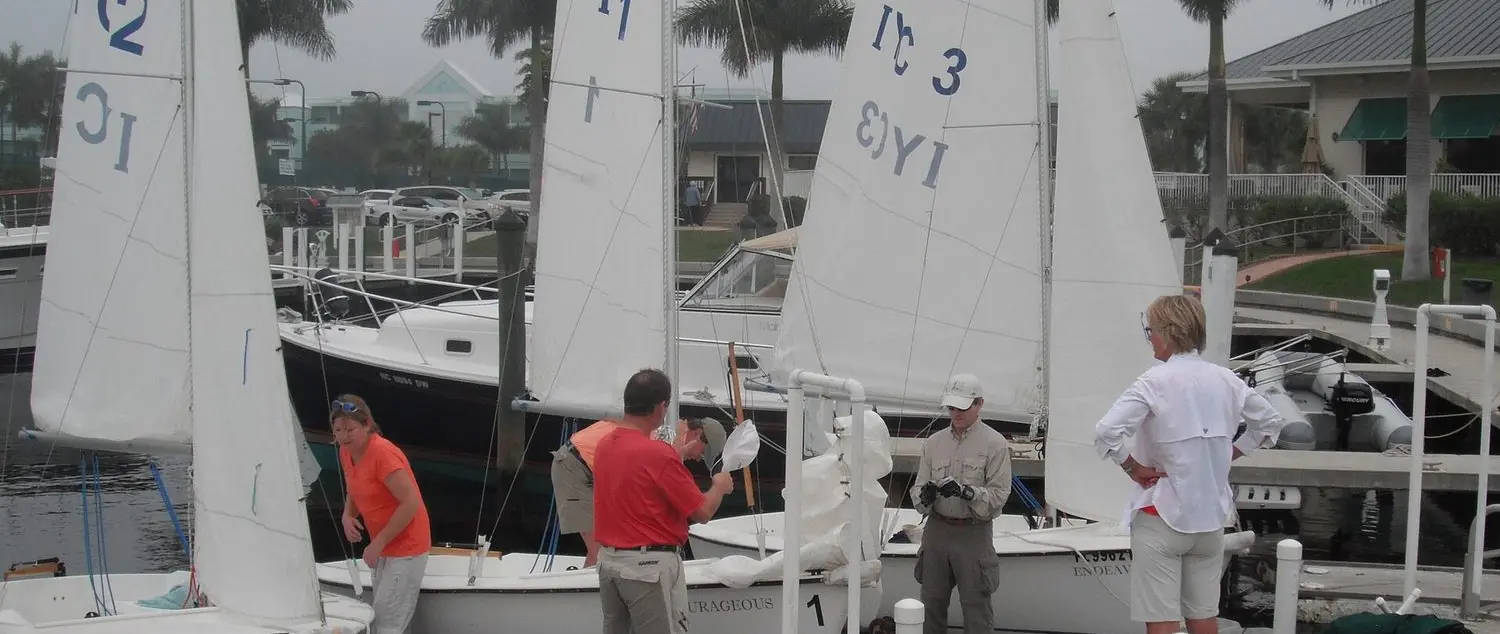
Sources: Yachting New Zealand, official 2026 award recipients and Boating New Zealand, 9 November 2026. Photograph: an earlier small-dinghy sailing activity by Isles Yacht Club, Wikimedia Commons, CC BY 2.0. This is not a picture of Thomassen, the ParAble or the awards ceremony.
