
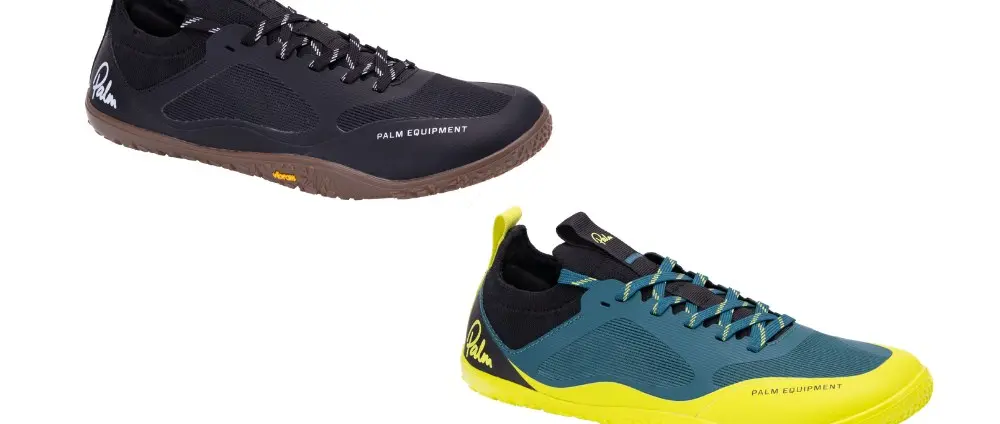
A low-profile shoe for paddling environments
Palm Equipment has presented the Flex Moc watershoe in the 2027 Paddle Sports Show apparel and equipment selection, describing footwear intended for active days moving between a boat, shoreline and other outdoor activities. The design uses a low-profile shape with a flexible platform and wet-grip sole, reflecting the specific demands of paddlers who want shoe protection without the bulk of a conventional boot.
Small-boat passengers may step on wet decks, uneven riverbanks or smooth slipways several times in a day. A shoe that feels comfortable on a dry shop floor may provide insufficient traction when the surface is covered in water or algae. Palm's product is aimed at addressing that practical requirement while remaining light enough to wear for ordinary walks ashore.
Vibram Idrogrip at the sole
The Flex Moc uses a Vibram Idrogrip outsole developed for traction on wet surfaces. Palm says the tread incorporates lugs intended to grip mixed terrain while shedding debris, which may help when moving between pebbles, rock and a slipway. The sole is the most technically important component because a slip while carrying equipment can become more serious than an uncomfortable step.
No rubber compound prevents every accident. Wet algae, oil, mud and polished metal can all reduce grip, and a person should still move carefully when entering or leaving a boat. Buyers should test the fit and look at the particular surfaces they are likely to encounter rather than treat a well-known sole brand as a universal guarantee.
A zero-drop shape changes the feel
The shoe is described as having a zero-drop platform, meaning the heel and forefoot remain at a similar height instead of using a raised heel. The maker also specifies a broad toe box, providing room for the foot to spread naturally. This approach can create a more direct feeling of contact with the ground and may suit people accustomed to flexible outdoor footwear.
The design will not feel equally comfortable to everyone. A person used to substantial cushioning or a structured boot may need time to adapt to a low-profile sole. Anyone with existing foot or balance concerns should assess the footwear carefully and seek appropriate professional guidance rather than assume a barefoot-inspired shape is automatically beneficial.
Reinforced mesh and secure ankle cuff
Palm uses a reinforced mesh upper and a stretch-knit ankle cuff intended to hold the shoe securely without a heavy closure system. Such materials can reduce bulk and make the footwear more adaptable to a cramped kayak cockpit. The company has also considered the practical need for shoes that can be worn between paddling and ordinary activities ashore.
The upper still needs to tolerate repeated wetting, grit and movement around boat fittings. Owners should follow cleaning and drying instructions, particularly after saltwater use. A good fit should not create rubbing at the ankle or allow the heel to lift excessively while climbing over a low dock or walking along a shore.
Developed from whitewater feedback
The manufacturer's presentation links Flex Moc development to feedback from paddlers using different forms of kayaks, including technical creek boats and smaller playboats. In those settings, bulky footwear can interfere with the fit of the cockpit or footrests, especially where an athlete needs precise control through the feet and legs. The low-profile shape aims to avoid that problem.
This origin is relevant to recreational boaters even when they never enter whitewater. Compact dinghies, sit-in kayaks and paddleboards all place different demands on footwear than a spacious motorboat cockpit. A shoe that works in a confined setting may also be convenient for short trips where passengers want protection without carrying a separate pair of bulky boots.
Protection is about more than traction
A flexible shoe can reduce direct contact with rough surfaces, but buyers should consider whether it provides enough protection from sharp stones or hard impacts for their activity. A thin sole may give sensitivity yet offer less insulation from cold terrain, while a heavier boot may provide more structure. The correct compromise depends on the environment and the person's confidence moving over it.
It is also important to avoid loose laces or straps near pedal drives, rigging and other moving equipment. Whatever the footwear, the wearer should be able to move safely around a boat without becoming caught on a fitting. A properly fitted shoe helps, but the overall layout of the vessel remains part of preventing slips and entanglement.
Use between boat and shore
The Flex Moc is designed to remain comfortable beyond the immediate paddling session. The maker explicitly mentions boat decks, shorelines and coffee stops, reflecting how many small-boat outings include time ashore. For travellers packing lightly, one suitable pair of water-resistant shoes can be more practical than multiple specialised options.
The convenience depends on how quickly the shoes dry and whether they retain grip and comfort after repeated immersion. Customers should inspect the construction and check available sizes rather than choose solely from the official photograph. Fit, sole stiffness and ease of cleaning will influence whether the design works for the user's regular outings.
The 2027 selection is not a safety rating
Palm's entry confirms the Flex Moc has been presented as a specialist paddlesports product for the 2027 selection, but it is not a declaration that every surface has been tested or that the shoe has won the final award. The official manufacturer image shows the actual footwear in two colour options, providing an accurate visual reference without an unrelated promotional graphic.
For Leisure Boat Guide readers, the story is a reminder that appropriate shoes are an important part of small-craft equipment. A reliable grip and unobtrusive design can improve everyday movement around a boat, but sensible choices about where and how to step remain just as necessary as the product itself.