
A new power-catamaran chapter for Oyster
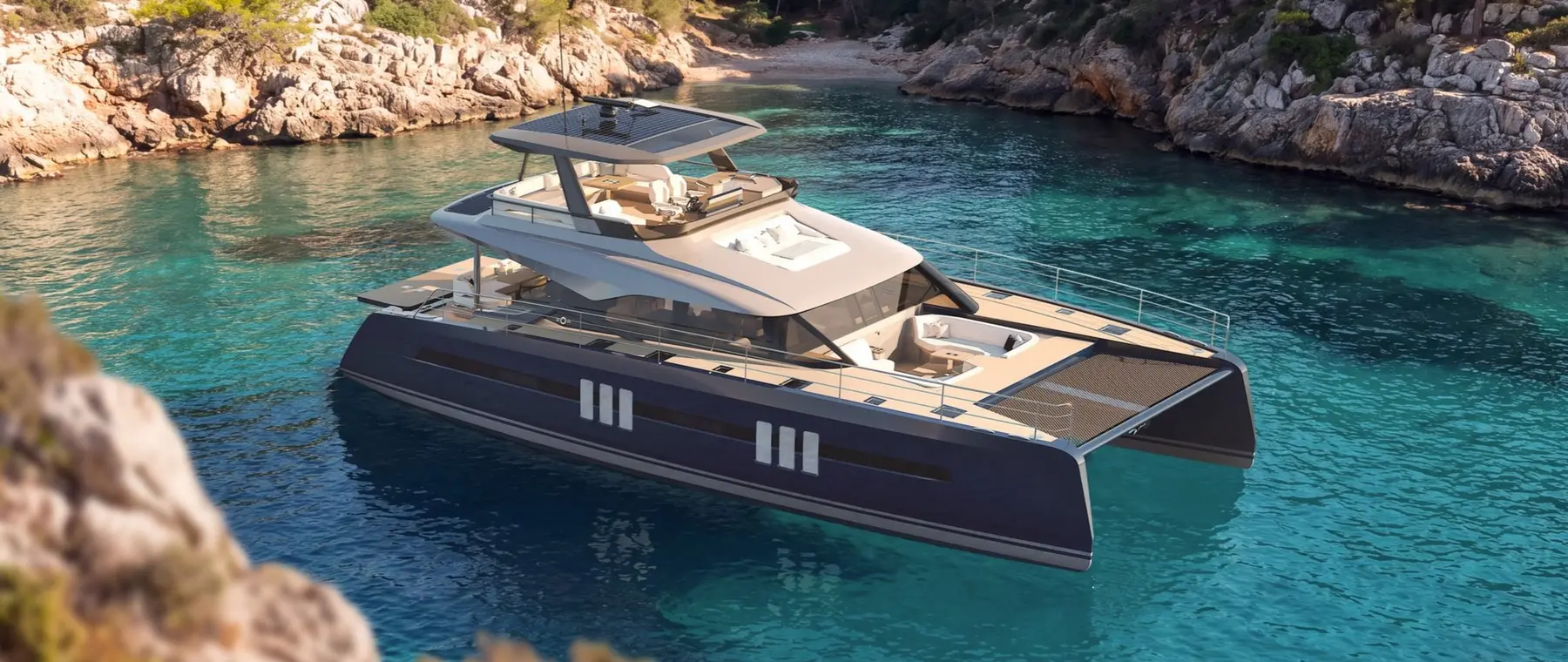
Oyster Yachts used the Fort Lauderdale International Boat Show on 29 October 2026 to present the P60, a 60-foot power catamaran that moves the British builder into a category distinct from its long-established sailing yachts. The design was developed with the French multihull specialists Berret Racoupeau Yacht Design. It is being pitched as a long-distance cruising boat, with a layout intended for owners who want generous living space and extended voyages without relying on sails. The announcement concerns a newly unveiled model, not a report that a completed production boat has been launched into the water.
The move comes during a period in which Oyster has introduced several different yacht propositions. Its sailing C60 catamaran was announced at Cannes in September, followed by a 36-metre flagship presentation in Monaco. The P60 takes the same broad bluewater theme into powered cruising, potentially reaching experienced motor-yacht owners as well as sailors who want to change their style of passage-making. For prospective buyers, the central question is whether the promised ocean-going range and practical owner support translate into a comfortable vessel at the size and price eventually offered.
A 3,500-mile range is the design target
Oyster is targeting a maximum range of up to 3,500 nautical miles, an ambitious figure for a 60-foot power catamaran. The company points to the roughly 3,000-nautical-mile Galápagos-to-Marquesas leg of its World Rally as an example of the passages the boat is intended to tackle. The specification also lists fuel capacity of 6,000 litres and fresh-water capacity of 1,000 litres. Together, these figures describe the design's endurance ambitions, but buyers should remember that a target range is not a guarantee of what any individual trip will achieve.
Actual cruising distance will depend on speed, load, sea conditions, reserve policy and the final propulsion package. Oyster's initial announcement does not provide independently verified sea-trial consumption, a standard cruising speed or full engine specifications. It would therefore be premature to calculate a guaranteed Atlantic crossing time or to compare operating costs precisely with a particular monohull. A serious long-range buyer should request the builder's eventual performance curves, tank reserve assumptions and commissioning-test results before shaping an itinerary around the headline number.
Wide beam and a different kind of onboard space
The P60's 9.35-metre beam gives its designers a broad platform for living and entertaining. Oyster identifies 121 square metres of social areas spanning the flybridge, aft cockpit, saloon and forward cockpit. This is a notable way to organise life aboard a boat of this length because two hulls free up a wide central deck and allow outdoor rooms to connect with the main interior. The space can be especially appealing to families who spend long periods at anchor and want separate places for quiet time, dining and swimming.
Beam is also a practical ownership consideration, not merely a selling point. A vessel more than nine metres wide will need suitable berths, haul-out facilities and manoeuvring allowances, and local marina costs can vary substantially. Oyster specifies a bridgedeck clearance of one metre at half load, intended to mitigate wave impacts beneath the central structure. That figure is relevant to comfort offshore, but the eventual ride will still depend on sea state, hull form, loading and operating speed. Owners should examine the completed boat's handling as carefully as its attractive deck plans.
Flexible cabins for different cruising crews
Inside, Oyster describes a light-filled saloon as the connection between the main social spaces and the water outside. The accommodation plan includes an 18-square-metre owner's suite with its own access to the aft deck, alongside a choice of two or three guest cabins. There are galley-up and galley-down arrangements, and provision can be made for crew accommodation. Those choices matter because a couple making long passages may prioritise storage and a separate working galley, while a family making shorter trips may prefer extra guest space and an open communal layout.
Layout flexibility does not mean every option can be fitted to the same hull simultaneously. Buyers will need to compare drawings for the configuration they prefer, including circulation, privacy, ventilation and access to machinery and service systems. On a passagemaking yacht, the usefulness of a cabin also changes when the sea becomes lively. A good review should consider where guests sleep underway, how easily crew can work without crossing private spaces and whether food preparation remains safe. Oyster has outlined the broad plan, but final equipment and specification decisions require detailed discussions with the yard.
A flybridge and cockpit built for daily life
The 33-square-metre flybridge combines a central helm with bar and lounge facilities, a forward-facing daybed and a hardtop. Oyster's intention is to keep the person navigating within the social setting rather than separating the helm into an isolated working station. This is attractive for relaxed coastal cruising, although visibility, weather protection and communication between helm positions will remain essential considerations when assessing the final layout. The elevated level should also give guests a different perspective on anchorages and coastlines without requiring everyone to move indoors.
Aft, the company proposes a 40-square-metre cockpit that can operate as a shaded dining room, a sunning area or a base for fishing and water sports. A hydraulic tender platform is intended to serve as a swim platform when the boat is stationary, bringing the water closer to the living deck. The flexibility is useful on extended trips, where the cockpit may change purpose several times in a day. Buyers should confirm the final platform's tender capacity, lifting arrangements, safety features and the effect of carrying equipment on usable deck area and weight distribution.
Ownership support and the questions still open
Oyster is positioning the P60 within the same ownership ecosystem it uses for sailing yachts. The company cites commissioning support, training through its Bluewater Academy, after-sales service, a global service network and opportunities to join owner events. These services can be particularly valuable for a yacht intended to roam far from its home berth. They do not replace independent surveys or technical preparation, but reliable access to familiar support may help owners approach complex passages and maintenance decisions with greater confidence.
The debut announcement leaves several important purchasing details to be confirmed, including the production timetable, propulsion specification, final performance figures and price. Oyster's presentation is nevertheless a significant statement of direction: a well-known bluewater sailing builder wants to offer the range and social space of a luxury power multihull under the same ownership umbrella. The P60 deserves attention as a new model, but the most meaningful verdict will come when a completed boat can be inspected and tested. Until then, its attractive promises should be read as design intentions, with the 3,500-nautical-mile figure clearly understood as a target.