
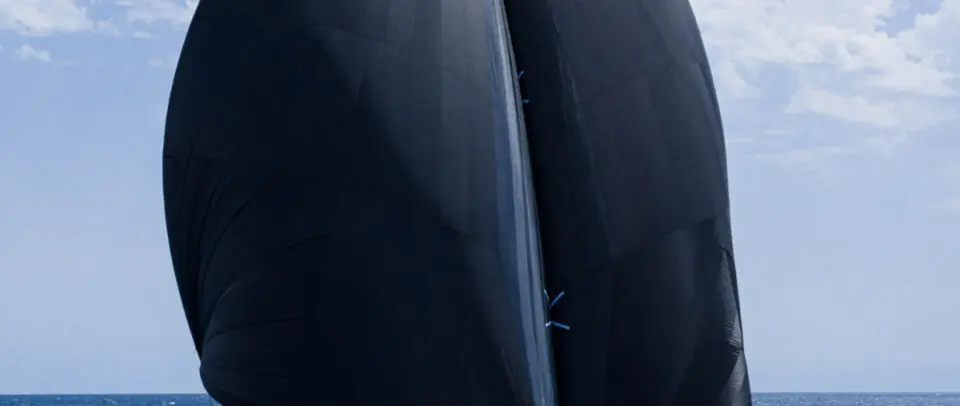
Sailing downwind can feel settled once a boat is correctly trimmed, but large sails are not always straightforward to set and recover with a small crew. OneSails has published further guidance on its IFS Multi Tradewind Sail, a twin-sail arrangement that revisits the wing-on-wing concept using an integrated furling structure.
The approach is intended to combine balanced running with simpler handling than some conventional large downwind sails. It is an equipment-development story rather than a guarantee that the system suits every rig.
Twin sails on opposite sides
The concept sets two symmetrical panels to work on opposite sides of the boat, presenting sail area on a broad run. That can give cruising sailors a different way to use following wind without relying entirely on a conventional spinnaker.
The correct trim and suitable apparent-wind range remain important. A sailor should use the manufacturer guidance and the vessel's own stability and rig limits.
What the structure changes
OneSails' Integrated Furling Structure brings load-bearing elements into the sail design, seeking a more controlled hoist and recovery process. Furling features are particularly interesting for short-handed cruising crews.
Good line leads, enough deck space and crew practice still determine whether an operation is safe. A mechanism does not remove the risks of loaded running rigging.
A small-boat perspective
For an under-12-metre cruiser, the relevant question is whether the chosen size and hardware match its rig and crew. Installation needs approval from the sailmaker and an appropriate assessment of attachment points.
LBG uses OneSails' official product story and named-sail photography, without implying a ready-made specification for every boat. Actual options should be established against the individual sail plan.